
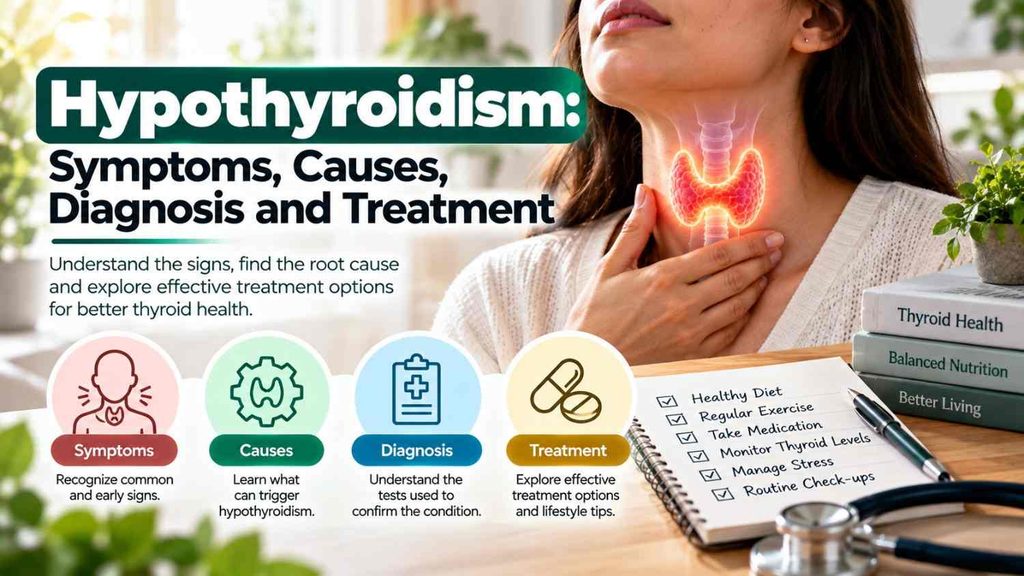
Hypothyroidism, also known as an underactive thyroid, occurs when the thyroid gland does not produce enough thyroid hormones to meet the body’s needs. These hormones help regulate how the body uses energy and support the normal functioning of the heart, brain, muscles, digestive system, and other organs.
Because thyroid hormones affect many body systems, hypothyroidism can cause symptoms such as persistent tiredness, sensitivity to cold, constipation, dry skin, hair changes, and unexplained weight gain. However, these symptoms can also occur with other health conditions, and some people with hypothyroidism have few noticeable symptoms.
What Is Hypothyroidism?
The thyroid is a small, butterfly-shaped gland located at the front of the neck. It produces hormones, mainly thyroxine (T4) and triiodothyronine (T3), that help regulate metabolism and support normal body functions.
The pituitary gland, located in the brain, releases thyroid-stimulating hormone (TSH) to signal the thyroid to produce hormones.
When the thyroid produces too little hormone, many body processes may slow down. This is called hypothyroidism.
Doctors commonly distinguish between two forms:
- Primary hypothyroidism: The thyroid gland itself cannot produce enough hormone. This is the most common form.
- Central hypothyroidism: A problem involving the pituitary gland or hypothalamus affects the signals needed for normal thyroid hormone production. This is less common and may require a different approach to testing.
Hypothyroidism can develop gradually, so symptoms may be subtle at first. Some people discover the condition through blood tests before they notice clear changes in their health.
7 Common Symptoms of Hypothyroidism
Hypothyroidism symptoms vary from person to person. They may develop slowly and become more noticeable over time. Having one or more symptoms does not necessarily mean that your thyroid is underactive.
1. Persistent Tiredness and Low Energy
Feeling unusually tired is one of the common symptoms of an underactive thyroid. You may feel exhausted even after sleeping or find that everyday tasks take more effort than usual.
Thyroid hormone deficiency can affect the body’s energy use. However, fatigue can also be caused by sleep problems, anaemia, stress, depression, medication effects, and other medical conditions.
If tiredness persists or affects your daily life, arrange a medical assessment rather than assuming that your thyroid is responsible.
2. Unexplained Weight Gain
Some people with hypothyroidism gain weight because a slower metabolism and changes in how the body handles salt and water can contribute to weight changes.
However, hypothyroidism does not explain every case of weight gain, and the amount of weight gained varies. Changes in eating patterns, activity, sleep, medicines, and other health conditions may also play a role.
If you are gaining weight without an obvious explanation, a clinician can review your symptoms and determine whether thyroid testing is appropriate.
3. Increased Sensitivity to Cold
Do you feel cold when other people are comfortable, or find that you need extra layers more often than before?
Reduced thyroid hormone levels can affect heat production and the body’s response to cold. This may make some people with hypothyroidism feel unusually cold.
Cold intolerance can also occur with other conditions, including anaemia. It should be considered alongside other symptoms and your medical history.
4. Dry Skin, Hair Thinning, or Hair Loss
Hypothyroidism can affect the skin and hair. You may notice dry or rough skin, brittle hair, or increased hair shedding.
These changes can be distressing, but they are not specific to thyroid disease. Nutritional deficiencies, scalp conditions, hormonal changes, and other health issues can cause similar problems.
If these symptoms are persistent or occur with fatigue, cold intolerance, or menstrual changes, discuss whether thyroid testing is appropriate.
5. Constipation and Slower Digestion
Thyroid hormone deficiency can slow digestive activity, leading to constipation or less frequent bowel movements.
Constipation may also be related to insufficient dietary fibre, dehydration, low activity, certain medicines, or other medical conditions.
Seek medical advice if constipation continues despite reasonable self-care. Severe abdominal pain, vomiting, or an inability to pass stool or gas requires urgent assessment.
6. Low Mood, Brain Fog, or Difficulty Concentrating
Some people with hypothyroidism experience low mood, forgetfulness, difficulty concentrating, or a feeling of mental sluggishness.
Thyroid hormone deficiency may contribute to these symptoms, but depression, anxiety, poor sleep, stress, and other conditions can cause similar changes.
Persistent mood or concentration problems deserve attention in their own right. A clinician can assess whether thyroid testing or another form of support is needed.
7. Heavy or Irregular Periods and Fertility Problems
Hypothyroidism can affect menstrual patterns and reproductive health. Some people experience heavier or irregular periods, while others may have difficulty becoming pregnant.
Not all menstrual changes are caused by thyroid problems. Conditions such as PCOS, fibroids, and other hormonal disorders can also affect periods and fertility.
If your menstrual cycle changes significantly, or you are experiencing fertility difficulties, speak with a healthcare professional about appropriate assessment.
Other Possible Symptoms
Depending on the severity and duration of hypothyroidism, additional symptoms may include:
- Muscle aches, cramps, or joint discomfort.
- A hoarse voice.
- A slower-than-usual heart rate.
- Puffiness around the face.
- Difficulty tolerating exercise.
- An enlarged thyroid gland, known as a goitre.
Some people have only a few symptoms, and others may have none that are obvious. A blood test is needed to assess thyroid function.
What Causes Hypothyroidism?
Several conditions and treatments can reduce thyroid hormone production. Identifying the underlying cause helps the clinician understand whether the condition is likely to be temporary or long-lasting.
1. Hashimoto’s Disease
Hashimoto’s disease is an autoimmune condition in which the immune system attacks the thyroid gland. The resulting inflammation can gradually damage the gland and reduce its ability to produce hormones.
It is a common cause of hypothyroidism in many countries. Family history and other autoimmune conditions may be relevant when assessing risk.
A clinician may recommend thyroid antibody testing if Hashimoto’s disease is suspected.
2. Thyroid Surgery or Radioactive Iodine Treatment
Hypothyroidism may develop after surgery that removes part or all of the thyroid gland. It can also occur after radioactive iodine treatment used for certain thyroid conditions.
When the gland can no longer make enough hormone, thyroid hormone replacement may be needed long term.
3. Thyroiditis
Thyroiditis means inflammation of the thyroid gland. Some forms can cause stored thyroid hormone to leak into the bloodstream initially, followed by a period of low thyroid hormone production.
Postpartum thyroiditis can occur during the first year after childbirth. Some people recover thyroid function, while others develop persistent hypothyroidism and require ongoing monitoring or treatment.
4. Certain Medicines
Some medicines can affect thyroid function. Examples include lithium and amiodarone, although the effects vary between individuals.
Tell your healthcare professional about all prescription medicines and supplements you take. Do not stop a prescribed medicine without medical advice.
5. Iodine Imbalance
The thyroid needs iodine to produce thyroid hormones. Too little iodine can contribute to hypothyroidism, while excessive iodine can also disrupt thyroid function in susceptible people.
Do not assume that taking extra iodine will improve an underactive thyroid. High-dose iodine supplements and some seaweed products can worsen certain thyroid conditions.
Discuss iodine supplements with a healthcare professional, especially if you have a diagnosed thyroid disorder or are pregnant.
6. Hypothyroidism Present at Birth
Some babies are born with an underactive thyroid, a condition called congenital hypothyroidism. Newborn screening helps identify many cases early, allowing treatment to begin before thyroid hormone deficiency affects development.
7. Pituitary or Hypothalamic Problems
Rarely, hypothyroidism occurs because the pituitary gland or hypothalamus does not provide the signals needed for normal thyroid function. This is called central hypothyroidism.
In this situation, TSH results may not follow the usual pattern seen in primary hypothyroidism. Clinicians interpret TSH alongside free T4 and the person’s medical history.
Who Is More Likely to Develop Hypothyroidism?
Hypothyroidism can affect people of any age or sex, but certain factors may increase the likelihood of developing it.
Risk factors include:
- A family history of thyroid disease.
- An existing autoimmune condition.
- Previous thyroid surgery or radioactive iodine treatment.
- Certain medicines that affect thyroid function.
- A history of thyroiditis.
- Pregnancy or the period after childbirth.
- Previous radiation treatment involving the head or neck.
Having a risk factor does not guarantee that you will develop hypothyroidism. If you have relevant symptoms or a medical history that increases your risk, ask a clinician whether thyroid testing is appropriate.
How Is Hypothyroidism Diagnosed?
Symptoms alone cannot confirm hypothyroidism because many overlap with other conditions. Doctors usually review your medical history, examine you when appropriate, and use blood tests to assess thyroid function.
1. TSH Test
The thyroid-stimulating hormone test is commonly the first test used to assess suspected primary hypothyroidism.
TSH is produced by the pituitary gland. When the thyroid cannot make enough hormone, the pituitary generally releases more TSH to encourage the thyroid to work harder.
In primary hypothyroidism, TSH is often above the laboratory reference range. However, the result must be interpreted in context, including pregnancy, medicines, existing health conditions, and the laboratory’s reference range.
2. Free T4 Test
A free T4 test measures the unbound portion of thyroxine circulating in the blood.
In overt primary hypothyroidism, TSH is typically elevated and free T4 is low. In subclinical hypothyroidism, TSH is elevated while free T4 remains within the reference range.
These patterns help distinguish different forms of thyroid dysfunction, although results can be affected by certain illnesses and medicines.
In central hypothyroidism, free T4 may be low while TSH is low, normal, or occasionally mildly elevated. This is one reason thyroid tests should not be interpreted in isolation.
3. Thyroid Antibody Testing
A thyroid peroxidase antibody (TPOAb) test may be recommended when Hashimoto’s disease is suspected.
A positive antibody result can support an autoimmune cause, but it does not by itself establish how well the thyroid is functioning or mean that medication is always required. Thyroid hormone results and the person’s clinical situation remain important.
4. Other Tests When Needed
Depending on your symptoms and test results, your clinician may consider additional investigations. A thyroid ultrasound is generally used when there is a structural concern, such as a thyroid lump or goitre, rather than as a routine test for every person with hypothyroidism.
What Do Thyroid Test Results Mean?
| Test pattern | Possible interpretation |
|---|---|
| High TSH and low free T4 | Often indicates overt primary hypothyroidism |
| High TSH and normal free T4 | May indicate subclinical hypothyroidism |
| Low free T4 with low or inappropriately normal TSH | May suggest central hypothyroidism or another issue requiring assessment |
| Normal TSH | Often makes primary hypothyroidism less likely, but interpretation depends on the clinical context |
Reference ranges and treatment decisions can differ in pregnancy, in children, and in certain medical situations. Your clinician should interpret your results rather than relying on a generic online chart.
Hypothyroidism Treatment: What Are the Options?
Treatment depends on the cause, thyroid test results, symptoms, age, pregnancy status, and other health conditions.
1. Levothyroxine: The Standard Treatment
Levothyroxine is the standard treatment for most people who need thyroid hormone replacement. It is a laboratory-made form of T4, a hormone normally produced by the thyroid gland.
The medicine replaces the hormone the thyroid cannot make in sufficient amounts. Many people with established hypothyroidism need long-term treatment, although some temporary forms of thyroiditis may improve over time.
Your clinician determines the dose based on your needs and adjusts it according to follow-up tests. Do not start levothyroxine or change your dose without medical guidance.
2. How to Take Levothyroxine Correctly
Consistent use helps your body absorb the medicine reliably.
Common instructions include:
- Take it with water on an empty stomach, usually 30–60 minutes before breakfast, or follow your clinician’s specific instructions.
- Take it consistently at the same time each day.
- Keep calcium and iron supplements separated from levothyroxine, commonly by at least four hours, because they can reduce absorption.
- Tell your clinician about antacids, supplements, and other medicines that may interfere with absorption.
- Ask your pharmacist or doctor what to do if you miss a dose rather than taking extra medicine without advice.
Different formulations may have different practical instructions. Follow the directions supplied with your medicine and the advice of your treating clinician.
3. Monitoring and Dose Adjustment
Thyroid hormone levels do not stabilize immediately after starting treatment or changing a dose.
Doctors commonly repeat TSH testing about six to eight weeks after starting levothyroxine or changing the dose in adults with primary hypothyroidism. The timing may differ in pregnancy, children, central hypothyroidism, or other circumstances.
Once a suitable dose has been established, monitoring is usually less frequent but continues over time. Your dose may need review if your weight, health, medicines, or pregnancy status changes.
4. Is Treatment Always Needed for Subclinical Hypothyroidism?
Not everyone with a mildly raised TSH and normal free T4 requires immediate treatment.
The decision may depend on the degree and persistence of TSH elevation, symptoms, thyroid antibodies, age, pregnancy or fertility considerations, and other health factors. Some people are monitored with repeat blood tests, while others may benefit from medication.
Do not begin thyroid hormone treatment solely because of fatigue or weight gain without appropriate assessment.
5. What About T3 Medicines and “Natural” Thyroid Supplements?
Levothyroxine alone is the usual first-line treatment. Some products contain T3, animal-derived thyroid hormones, or combinations of thyroid hormones. These are not suitable for everyone and are not routinely recommended as a replacement for standard treatment.
Products marketed as thyroid boosters, metabolism enhancers, or natural thyroid cures may have uncertain ingredients or inappropriate iodine levels. They can interfere with treatment or cause harm.
Discuss any supplement or alternative treatment with your healthcare professional before using it.
Hypothyroidism During Pregnancy
Thyroid hormones are important for the pregnant person’s health and the developing baby’s brain and nervous system. Untreated hypothyroidism, especially when significant, can increase the risk of pregnancy complications.
If you are pregnant, planning a pregnancy, or discover that you are pregnant while taking thyroid medication, contact your healthcare professional promptly. Thyroid hormone requirements can change during pregnancy, so closer monitoring and dose adjustments may be necessary.
Do not stop levothyroxine because you are pregnant. Your clinician will advise on testing and treatment appropriate to your situation.
What Happens If Hypothyroidism Is Left Untreated?
Untreated or inadequately treated hypothyroidism can contribute to health problems over time. Depending on severity, possible complications include:
- Elevated cholesterol and increased cardiovascular risk.
- Menstrual irregularities and fertility difficulties.
- Pregnancy-related complications.
- Reduced energy and quality of life.
- In severe, prolonged cases, a rare life-threatening condition called myxoedema coma.
Myxoedema coma is a medical emergency associated with severe hypothyroidism and can involve extreme drowsiness, confusion, low body temperature, and slowed breathing. It requires emergency hospital treatment.
Not everyone with untreated hypothyroidism will develop these complications. Appropriate diagnosis, treatment, and monitoring can substantially reduce the risks.
When Should You See a Doctor?
Arrange a medical appointment if you have persistent fatigue, unexplained weight changes, unusual sensitivity to cold, constipation, skin or hair changes, menstrual changes, or several symptoms that could be related to an underactive thyroid.
Testing may be particularly relevant if you have a history of thyroid disease, thyroid surgery, autoimmune disease, or medicines known to affect thyroid function.
Seek urgent medical attention if you develop severe confusion, extreme drowsiness, difficulty breathing, or a markedly low body temperature, particularly if you have known untreated thyroid disease. These can be signs of a serious medical emergency.
Frequently Asked Questions
1. What are the earliest symptoms of hypothyroidism?
Early symptoms may include tiredness, cold intolerance, constipation, dry skin, hair changes, or difficulty concentrating. These symptoms are not specific to thyroid disease, and some people have no obvious symptoms.
2. Can hypothyroidism cause weight gain?
Yes, it can contribute to weight gain, partly through changes in metabolism and fluid balance. However, the amount varies, and weight gain alone cannot diagnose an underactive thyroid.
3. Is hypothyroidism a lifelong condition?
It often is, particularly when caused by Hashimoto’s disease or removal of the thyroid gland. Some cases, such as certain forms of thyroiditis, may be temporary. A clinician can determine whether treatment and monitoring remain necessary.
4. Can hypothyroidism be treated without medication?
Established hypothyroidism that causes inadequate thyroid hormone production usually requires thyroid hormone replacement. Healthy eating and exercise support general health but do not reliably replace the hormone the thyroid is unable to produce. Some people with mild subclinical hypothyroidism may be monitored without immediate medication.
5. Which test confirms hypothyroidism?
TSH and free T4 blood tests are the main tests used to assess thyroid function. Their interpretation depends on the clinical situation, including whether primary or central hypothyroidism is suspected.
6. Can hypothyroidism affect fertility?
It can contribute to menstrual irregularities and fertility difficulties. If you are trying to conceive or are experiencing irregular periods, discuss thyroid assessment with your healthcare professional.
7. Should I take iodine supplements for an underactive thyroid?
Not unless a healthcare professional recommends them. Too much iodine can worsen certain thyroid conditions, and most cases of hypothyroidism are not appropriately treated by simply taking extra iodine.
Take the Next Step for Your Thyroid Health
Hypothyroidism can affect energy, digestion, skin, hair, mood, and reproductive health, but effective treatment is available for most people who need it. The most reliable way to determine whether your thyroid is underactive is to combine an appropriate medical assessment with thyroid blood tests.
If you are experiencing persistent symptoms or have concerns about your thyroid function, speak with a qualified healthcare professional about whether testing and treatment are appropriate.
Explore the Diabetes & Endocrine Health section of Ghaziabad Clinic for more educational resources on hormone and metabolic health.

Pingback: Hashimoto's Thyroiditis: 7 Symptoms, Diagnosis & Treatment
Pingback: Thyroid Problems During Pregnancy: Tests & Treatment