
Living Healthy: Essential Habits for Everyday Well-Being
Living healthy does not require a perfect routine or drastic lifestyle changes. Small, consistent habits—such as eating a balanced diet, staying physically active, getting enough sleep and managing stress—can support your overall well-being.
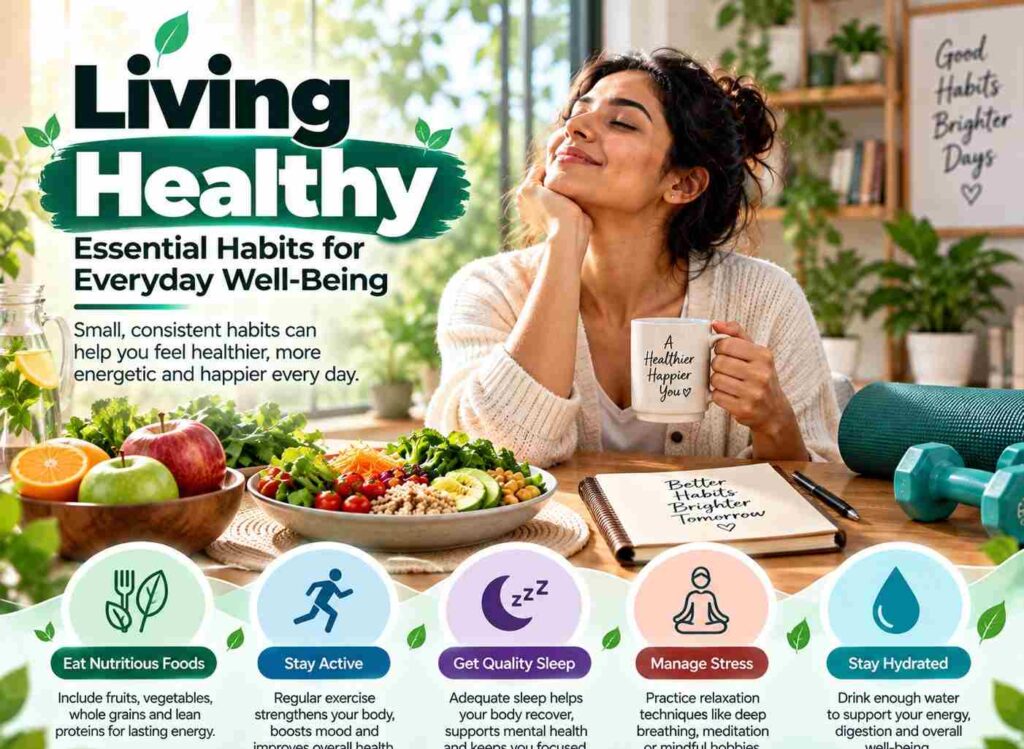
Living healthy isn't about one big change — it's a handful of daily habits around food, movement, rest, and stress that add up over time. Here's what actually matters, backed by common patterns doctors see, not fad advice.
Nutrition & Diet
1
Balance matters more than restriction
- A mix of proteins, whole grains, vegetables, and healthy fats supports long-term health
- Cutting out entire food groups isn't necessary for most people
2
Portion size adds up over time
- Consistent overeating, even of "healthy" food, contributes to weight gain
- Eating slowly helps your body register fullness accurately
3
Hydration is easy to underestimate
- Mild dehydration can show up as fatigue or headaches, not just thirst
- Water needs vary by activity level, climate, and body size
4
Small, consistent swaps beat drastic diets
- Replacing sugary drinks with water is often more sustainable than a full diet overhaul
- Gradual changes are more likely to stick long-term
Facts vs myths
| Myth | Fact |
|---|---|
| "Carbs are always bad for you" | Whole grains and complex carbs are an important energy source — refined sugar is the real concern |
| "Skipping meals helps you lose weight faster" | Skipping meals often leads to overeating later and can slow metabolism over time |
| "Fat-free always means healthier" | Fat-free products often replace fat with added sugar — check the label, not just the claim |
Physical Activity
1
Consistency beats intensity
- 30 minutes of daily movement matters more than occasional intense workouts
- Walking counts — it doesn't have to be a gym session
2
Strength training isn't just for athletes
- Builds bone density and muscle mass that naturally decline with age
- Even bodyweight exercises count as strength training
3
Movement supports more than physical health
- Regular activity is linked to better mood and lower stress
- Helps regulate sleep quality as well
4
Start where you are
- Sudden intense exercise without a base level of fitness increases injury risk
- Gradually building up duration and intensity is safer and more sustainable
Facts vs myths
| Myth | Fact |
|---|---|
| "No pain, no gain" | Sharp pain during exercise is a warning sign, not a sign of progress |
| "You need an hour a day to see benefits" | Even 20–30 minutes of daily movement provides real health benefits |
| "Cardio is the only exercise that matters" | Strength training is equally important for long-term health, especially as you age |
Sleep & Rest
1
Sleep quality matters as much as quantity
- Most adults need 7–9 hours, but frequent interruptions reduce sleep's benefit
- A consistent sleep schedule helps regulate your body's internal clock
2
Screens before bed disrupt sleep
- Blue light from phones and screens can delay your body's natural sleep signal
- A wind-down routine without screens can improve sleep onset
3
Poor sleep affects more than energy
- Linked to mood, concentration, and immune function
- Chronic sleep debt is associated with higher long-term health risks
4
When to seek help
- Ongoing difficulty falling or staying asleep despite good habits
- Loud snoring or gasping during sleep (possible signs of sleep apnea)
Facts vs myths
| Myth | Fact |
|---|---|
| "You can catch up on sleep over the weekend" | Weekend catch-up sleep doesn't fully reverse the effects of weekday sleep debt |
| "Alcohol helps you sleep better" | Alcohol may help you fall asleep faster but reduces overall sleep quality |
| "Older adults need less sleep" | Sleep needs stay fairly consistent with age — quality just tends to decline |
Stress & Mental Wellbeing
1
Stress affects the body, not just the mind
- Chronic stress is linked to headaches, digestive issues, and disrupted sleep
- Recognizing physical symptoms early can help you address the underlying cause
2
Small daily habits help manage stress
- Short breaks, deep breathing, or a walk can lower stress in the moment
- Regular movement and sleep both support better stress resilience
3
Connection matters
- Talking to someone you trust can ease stress that builds up silently
- Isolation tends to make stress and low mood worse over time
4
When to talk to a professional
- Stress or low mood that persists for weeks and affects daily life
- Difficulty coping despite trying self-care strategies
Facts vs myths
| Myth | Fact |
|---|---|
| "Stress is just something you have to live with" | Chronic stress is manageable with the right habits and support — it's not something to just endure |
| "Talking to a therapist is only for serious problems" | Therapy and counseling can help with everyday stress too, not just crises |
| "Staying busy is the best way to avoid stress" | Overloading your schedule often increases stress rather than distracting from it |