
Aging Well: Simple Ways to Stay Healthy and Active as You Grow Older
Aging well is about more than living longer. It means supporting your physical health, mental well-being, mobility and independence at every stage of life. Explore practical healthy aging tips, preventive care guidance and everyday habits that can help older adults maintain their quality of life.


What Does Aging Well Mean?
Aging well means maintaining your health, independence and quality of life as you grow older. It involves caring for your physical health, supporting mental well-being, staying socially connected and adapting to changes that may come with age.
Healthy ageing looks different for everyone. While some age-related changes are natural, regular physical activity, balanced nutrition, quality sleep, preventive healthcare and meaningful social connections can help support overall well-being.
7 Essential Habits for Healthy Aging
Healthy aging starts with everyday choices. Building sustainable habits can help older adults support their physical health, mental well-being and independence as they grow older.
Stay Physically Active
Include activities such as walking, gentle stretching or balance exercises suited to your abilities and health needs.
Eat a Balanced Diet
Choose a variety of nutritious foods, including fruits, vegetables, whole grains and protein sources, to support your changing nutritional needs.
Prioritise Quality Sleep
Maintain a consistent sleep schedule and discuss persistent sleep difficulties with a healthcare professional.
Keep Your Mind Active
Enjoy reading, puzzles, learning new skills or other activities that challenge your mind and keep you engaged.
Stay Socially Connected
Make time for family, friends and community activities to maintain meaningful relationships and reduce social isolation.
Attend Regular Health Check-Ups
Discuss preventive screenings, vaccinations, medications and ongoing health concerns with your healthcare professional.
Make Your Home Safer
Improve lighting, remove tripping hazards and use appropriate support rails where needed to help reduce the risk of falls.
Nutrition for Healthy Aging
Good nutrition plays an important role in healthy aging. As nutritional needs change with age, eating a variety of nutritious foods can help support muscle strength, bone health, energy levels and overall well-being.
Choose Nutrient-Rich Foods
Include vegetables, fruits, whole grains, protein-rich foods and appropriate sources of calcium and vitamin D as part of a balanced diet.
Get Enough Protein
Protein helps maintain muscle mass and supports everyday activities. Individual needs may vary, especially for people with certain medical conditions.
Stay Hydrated
Older adults may not always notice thirst as readily. Drink fluids regularly unless your healthcare professional has advised you to restrict them.

Adapt Your Diet to Your Needs
Dental problems, difficulty swallowing, reduced appetite, medications and chronic conditions can affect eating habits. A healthcare professional or registered dietitian can help you find suitable options.
A balanced diet should be tailored to your health, preferences and nutritional requirements. Avoid taking supplements without professional advice when you have existing medical conditions or use regular medication.

Mental Health and Brain Health as You Age
Keep Your Mind Active
Reading, learning new skills, playing games and pursuing hobbies can provide mental stimulation and keep everyday life engaging.
Maintain Social Connections
Spend time with family and friends, join community activities or participate in interests that help you stay connected with others.
Manage Stress and Emotions
Make time for relaxation, enjoyable activities and adequate rest. Speak with someone you trust or seek professional support if emotional difficulties persist.
Recognise Changes in Memory or Mood
Occasional forgetfulness can occur, but persistent memory problems, confusion, ongoing low mood or changes that interfere with daily life should be discussed with a healthcare professional.
Supporting brain health involves a combination of healthy habits, social engagement and appropriate medical care. No single activity can guarantee protection against cognitive decline.
Preventive Healthcare and Regular Check-Ups for Older Adults
Preventive healthcare is an important part of aging well. Regular medical check-ups can help identify certain health concerns, review existing conditions and ensure that care plans remain appropriate as your needs change.
Stay Up to Date With Health Screenings
Ask your healthcare professional which screenings are appropriate for your age, medical history and individual risk factors.
Review Medications Regularly
Discuss your medicines, supplements and possible side effects with your doctor or pharmacist. Never stop or change prescribed medication without professional advice.
Keep Vaccinations Updated
Ask your healthcare professional about recommended vaccinations based on your age, health conditions and vaccination history.
Monitor Existing Health Conditions
Follow your care plan for ongoing conditions such as diabetes, high blood pressure or heart disease, and attend recommended follow-up appointments.
Discuss Changes in Your Health
Seek medical advice for persistent pain, unexplained weight loss, recurring falls or changes in memory, mobility or daily functioning.

Common Health Changes as You Age
Growing older can bring changes in strength, mobility, vision, hearing, sleep and memory.
Changes in Strength and Mobility
Muscle strength and balance may change with age. Suitable physical activity and professional guidance can help support mobility and everyday independence.
Changes in Vision and Hearing
Some people experience difficulty seeing clearly or hearing conversations. Regular assessments can help identify problems and determine whether treatment or assistive devices may help.
Changes in Sleep
Sleep patterns may change over time, but persistent insomnia, excessive daytime sleepiness or loud snoring with breathing pauses should be discussed with a healthcare professional.
Changes in Memory
Occasional forgetfulness can occur, but worsening memory, confusion or difficulty managing familiar daily tasks deserves medical evaluation.
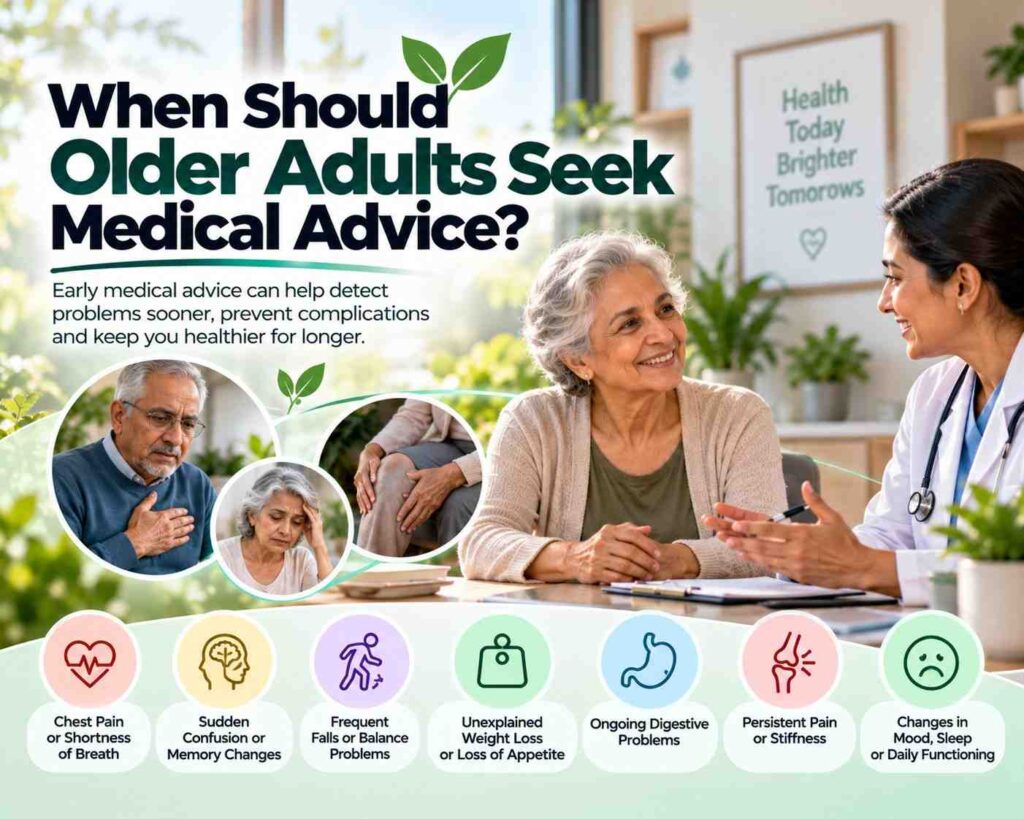
When Should Older Adults Seek Medical Advice?
Regular health monitoring can help older adults recognise changes that need attention. Seek medical advice for new or worsening symptoms rather than assuming they are a normal part of aging.
When to seek emergency care: Sudden chest pain, severe difficulty breathing, new facial drooping, weakness on one side of the body or sudden difficulty speaking require immediate emergency assistance.
Early assessment can help identify the cause of symptoms and guide appropriate care. If you are concerned about your health or a loved one’s well-being, speak with a qualified healthcare professional.

Make Healthy Aging a Priority
Aging well begins with small, consistent steps. Staying active, eating balanced meals, maintaining social connections and attending regular health check-ups can help support your health and independence as you grow older.
Every person’s needs are different, so focus on habits that suit your lifestyle and seek professional guidance when health concerns arise.
Take charge of your well-being at every age. Make your health a priority and take a positive step towards a healthier future.
Frequently Asked Questions About Aging Well
Find answers to common questions about healthy aging, maintaining independence and knowing when to seek medical advice.
01 What does aging well mean?
Aging well means supporting your physical health, mental well-being, independence and quality of life as you grow older.
02 What are the most important habits for healthy aging?
Regular physical activity, balanced nutrition, quality sleep, social connections and appropriate preventive healthcare can support healthy aging.
03 How can older adults maintain their independence?
Staying active, managing existing health conditions, making the home safer and seeking support when needed can help older adults maintain independence.
04 Why are regular health check-ups important as you age?
Regular check-ups allow healthcare professionals to review health concerns, medications and preventive care according to individual needs.
05 When should an older adult consult a doctor?
Consult a healthcare professional for persistent pain, unexplained weight loss, repeated falls, worsening memory or other symptoms affecting daily activities. Sudden or severe symptoms may require emergency care.
