
Drugs and Supplements: A Guide to Uses, Benefits and Safety
Medicines and dietary supplements can play different roles in health and wellbeing. Understanding how they work, their possible side effects and their interactions can help you make more informed decisions about your health.
Explore reliable information about prescription medicines, over-the-counter drugs, vitamins, minerals, herbal supplements and medication safety. Learn what to discuss with a healthcare professional before starting a new product or changing your existing treatment.
Medicines & supplement education
Explore Drugs and Supplements by Health Topic
Find practical, easy-to-understand information about medicines, dietary supplements and responsible health decisions.
Prescription and Over-the-Counter Medicines
Understand the differences between prescription medicines and non-prescription products, including why correct use matters.
Vitamins and Dietary Supplements
Explore vitamins, minerals and other supplements, their intended uses and the importance of assessing individual nutritional needs.
Medication Side Effects
Learn about possible unwanted reactions, warning signs and when to contact a healthcare professional.
Drug Interactions and Precautions
Understand why medicines, supplements, food and certain health conditions may affect one another.
Supplement Benefits and Risks
Explore what supplements may help with, where evidence is limited and why more is not always better.
Safe Medication Use
Learn how to read labels, follow prescribed instructions, store medicines correctly and avoid common medication mistakes.
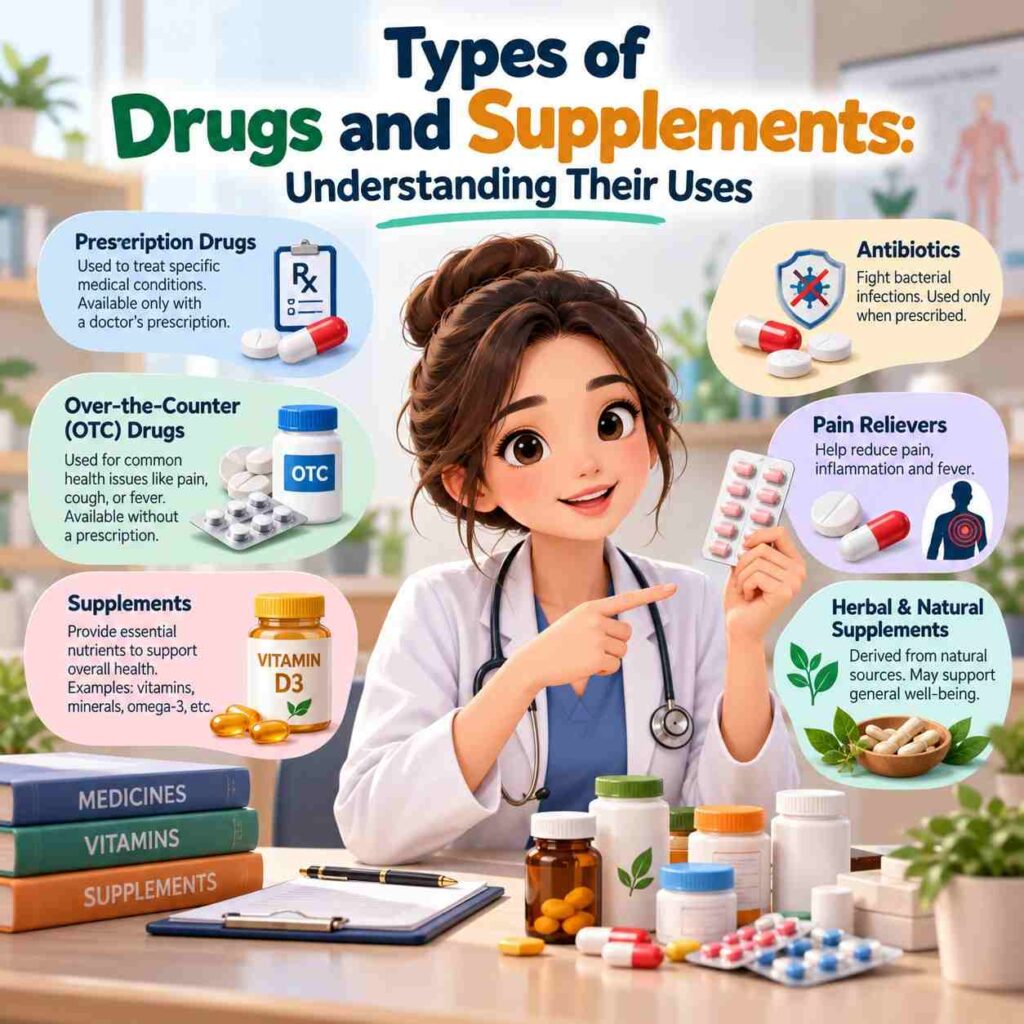
Types of Drugs and Supplements: Understanding Their Uses
Medicines and supplements are not interchangeable. Medicines are used for specific medical purposes, while dietary supplements may help address nutritional gaps or other defined needs. Their suitability depends on the individual and the available evidence.
Prescription medicines: Treatments prescribed by an authorised healthcare professional for specific conditions.
Over-the-counter medicines: Products available without a prescription for certain uses, subject to their labels and local regulations.
Vitamins and minerals: Nutrients that the body needs for normal function. Supplements may be useful in particular circumstances, including diagnosed deficiencies.
Herbal supplements: Products made from plants or plant extracts. Their effects, quality and interactions vary.
Probiotics and other specialised supplements: Products marketed for particular health purposes, with evidence that differs by product and intended use.
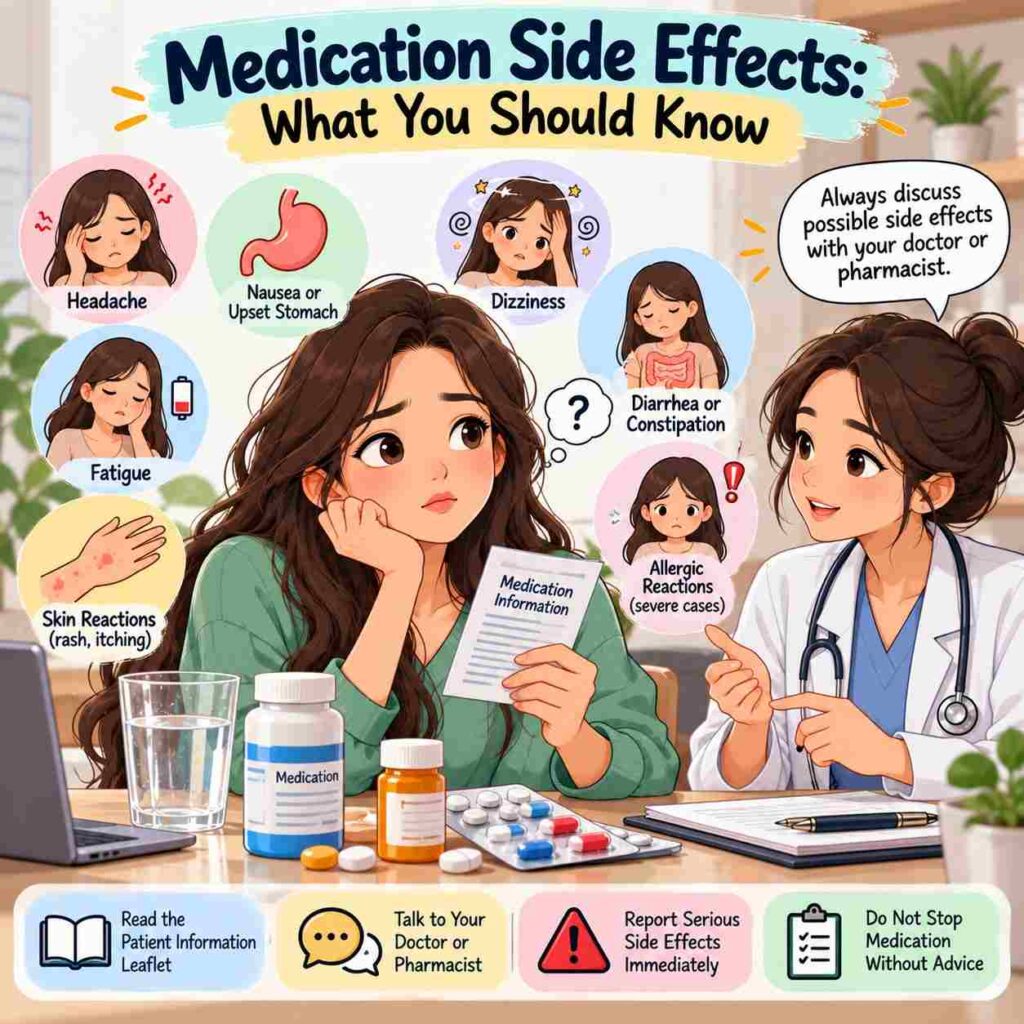
Medication Side Effects: What You Should Know
A medication side effect is an unwanted effect that may occur when a medicine is used. Side effects vary depending on the drug, dose, individual health factors and other products being taken.
Possible reactions can include digestive discomfort, dizziness, drowsiness, skin reactions or changes in appetite. Some reactions are mild, while others can be serious.
Seek urgent medical help for signs of a severe allergic reaction, such as difficulty breathing or swelling of the throat.
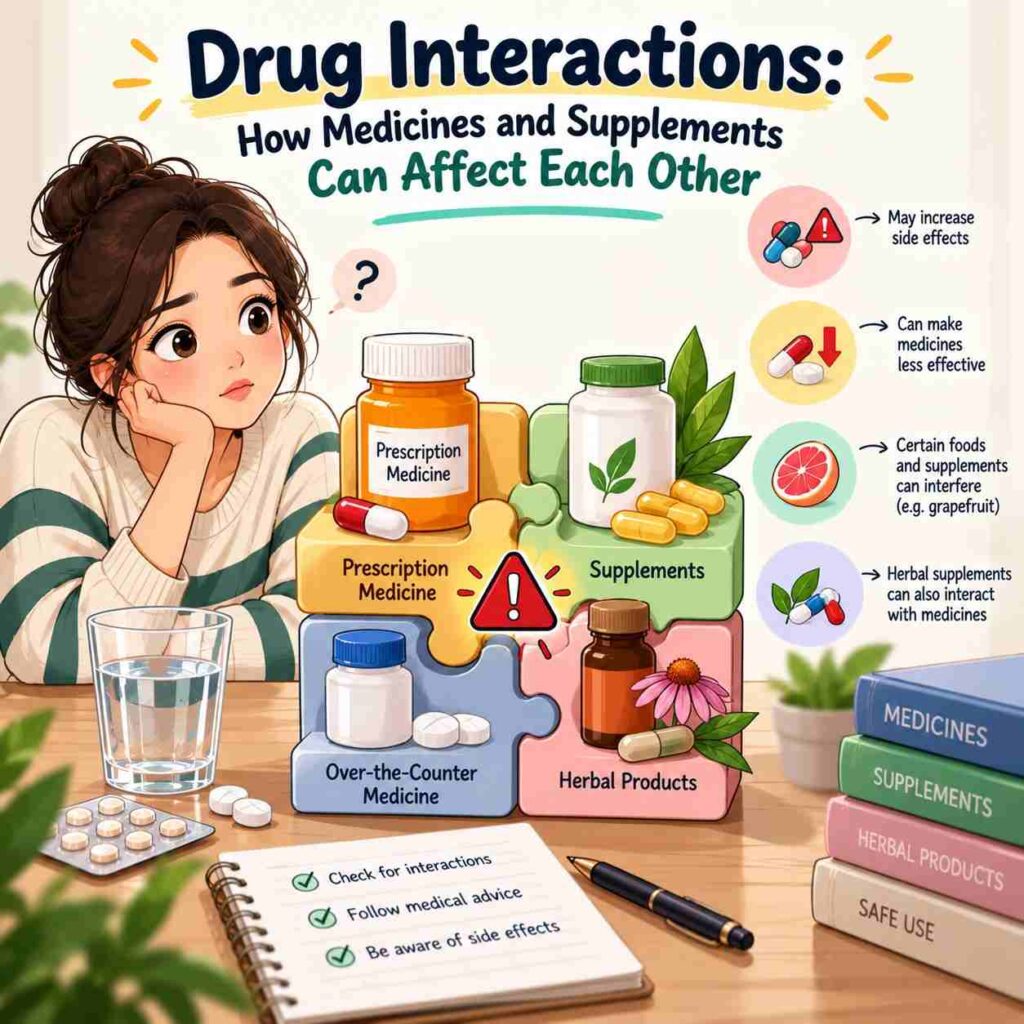
Drug Interactions: How Medicines and Supplements Can Affect Each Other
A drug interaction happens when a medicine’s effects change because of another medicine, supplement, food or health-related factor. Interactions can increase side effects, reduce treatment effectiveness or create other risks.
Examples include:
Medicine-to-medicine interactions: Two medicines may affect each other’s action or side effects.
Medicine-to-supplement interactions: Certain herbal products, vitamins or minerals can interfere with medication.
Medicine-to-food interactions: Some medicines have specific food or drink restrictions.
Health-condition interactions: A medicine may be unsuitable for people with particular medical conditions.
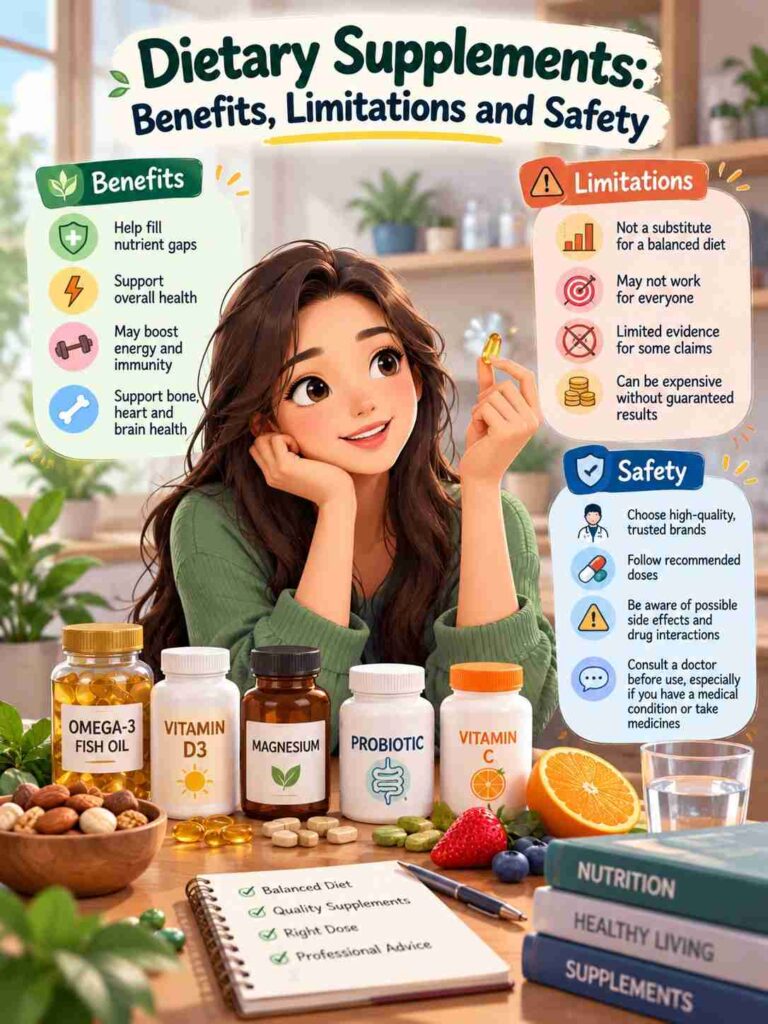
Dietary Supplements: Benefits, Limitations and Safety
Dietary supplements include vitamins, minerals, herbal products and other ingredients intended to supplement the diet. Some can be beneficial when they address a genuine nutritional need, but benefits depend on the ingredient, dose, health condition and quality of evidence.
Before choosing a supplement, consider the following:
Your nutritional needs: A varied, balanced diet is the foundation of good nutrition, although supplementation may be appropriate in certain situations.
Evidence for the intended use: Look for reliable evidence rather than relying solely on marketing claims or testimonials.
Product quality: Check the full ingredient list, serving information, expiry date and manufacturer details.
Potential interactions: Supplements can affect prescription medicines and existing health conditions.
Appropriate intake: Excessive amounts of some vitamins and minerals can be harmful.
Be cautious of products that promise guaranteed weight loss, rapid muscle gain, disease cures or dramatic results without credible evidence.

When Should You Consult a Doctor About Medicines or Supplements?
Speak with a healthcare professional before starting a supplement if you have a chronic condition, take regular medication, are pregnant or breastfeeding, or are considering giving a supplement to a child.
You should also seek advice if you experience unexpected symptoms after taking a medicine, suspect an interaction or are unsure how to follow your prescription.
Seek urgent medical help for severe reactions, suspected overdose or symptoms such as difficulty breathing, collapse or seizures.
A doctor or pharmacist can help review your medicines, explain possible risks and determine whether further assessment is needed.
Have questions about a medicine or supplement?
Keep the product packaging or ingredient list available and discuss your concerns with a qualified healthcare professional before making changes to treatment.
Medicines & supplement safety
Drugs and Supplements FAQs
Get clear answers to common questions about medicines, dietary supplements, possible interactions and safer medication practices.
What is the difference between a drug and a dietary supplement?
Medicines are used for specific medical purposes, while dietary supplements provide ingredients such as vitamins, minerals or herbs. Their regulatory treatment, evidence requirements and intended uses can differ.
Can dietary supplements cause side effects?
Yes. Supplements can cause unwanted reactions, particularly at high doses or when combined with certain medicines. Natural ingredients are not automatically safe.
Can I take supplements with prescription medicines?
Some combinations can cause interactions. Tell your doctor or pharmacist about all medicines and supplements you use before starting a new product.
Should I stop taking medicine if I experience side effects?
Do not stop or change prescribed treatment without appropriate advice unless emergency instructions apply. Contact your healthcare professional promptly, and seek urgent help for severe symptoms.
Are vitamins necessary for everyone?
Not everyone needs vitamin supplements. Requirements depend on diet, health, age and other individual factors. A healthcare professional can help identify whether supplementation is appropriate.
How can I check whether a supplement is safe?
Review its ingredients, dose, label and manufacturer information, and ask a qualified professional about evidence, interactions and suitability for your circumstances.
What should I do if I accidentally take too much medicine?
Seek urgent professional advice from an emergency service or poison-information service. Keep the packaging available and do not induce vomiting or use home remedies unless instructed by a qualified professional.