
Deep Vein Thrombosis (DVT): Symptoms, Causes, Diagnosis & Treatment
Deep vein thrombosis (DVT) is a blood clot that forms in a deep vein, most often in the leg. Learn how to recognize possible symptoms, understand your risk, find out how DVT is diagnosed and explore treatment and prevention.


What Is Deep Vein Thrombosis?
Deep vein thrombosis (DVT) is a blood clot that forms in a deep vein, usually in the lower leg, thigh or pelvis. DVT can sometimes occur without noticeable symptoms. When symptoms occur, they may include swelling, pain or tenderness, warmth, and redness or discoloration of the affected area. A DVT can become dangerous if part of the clot travels to the lungs and causes a pulmonary embolism (PE).
DVT at a Glance
Deep vein thrombosis (DVT) is a blood clot that forms in a deep vein, most commonly in the leg. Understanding its symptoms, diagnosis, complications and treatment can help you recognize when medical evaluation may be needed.
| Topic | Key Information |
|---|---|
| Medical name | Deep Vein Thrombosis |
| Common term | DVT / deep vein blood clot |
| What is it? | Blood clot in a deep vein |
| Common location | Leg, thigh or pelvis |
| Symptoms | Swelling, pain/tenderness, warmth, redness/discoloration |
| Can it have no symptoms? | Yes |
| Main complication | Pulmonary embolism |
| Diagnosis | Medical assessment + appropriate testing |
| Common test | Duplex/duplex ultrasound |
| Treatment | Usually anticoagulant medication; other treatment in selected cases |
| Specialist | Depends on the person's symptoms, cause and clinical situation |
Where Does DVT Occur?
Deep vein thrombosis can occur in the deep veins of the leg, thigh or pelvis. The affected vein may become partially or completely blocked by a blood clot.
Normal Blood Flow
Blood moves through the deep vein toward the heart.
With DVT
A clot partially or completely blocks blood flow in the affected deep vein.
If the Clot Travels
Symptoms of DVT
DVT does not always cause noticeable symptoms. In fact, some people may have a blood clot without knowing it.
When symptoms occur, they commonly affect one leg and may include:
- Swelling in the leg
- Pain or tenderness, especially in the calf or thigh
- Warm skin around the affected area
- Red, bluish or darker skin
- A feeling of heaviness or discomfort in the leg
- Swollen or more visible veins
DVT can also occur in an arm, although this is less common.
When Can DVT Become an Emergency?
Deep vein thrombosis can become a medical emergency if part of the clot breaks away and travels to the lungs. This can cause a pulmonary embolism (PE), which requires urgent medical attention.
Pulmonary Embolism (PE)
A piece of a DVT can break away and travel to the lungs. If the clot blocks a blood vessel in the lungs, it can cause a pulmonary embolism.
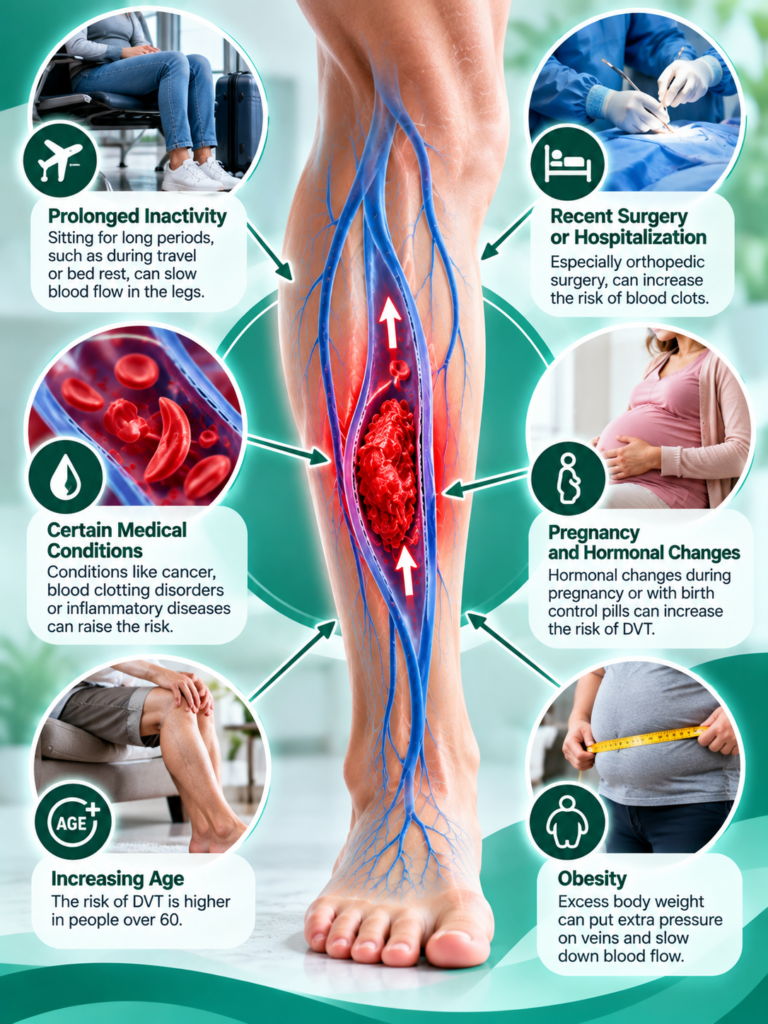
What Causes Deep Vein Thrombosis?
DVT can develop when blood flow through a deep vein slows or becomes restricted, the vein is injured, or the blood has an increased tendency to clot. Several risk factors can occur together.
 Slower Blood Flow
- prolonged sitting
- bed rest
- hospitalization
- limited mobility
 Vein Injury
- surgery
- trauma
- certain medical procedures
 Increased Clotting Tendency
- cancer
- certain inherited conditions
- pregnancy/postpartum period
- estrogen-containing medicines
How Is DVT Treated?
Treatment depends on the location and severity of the clot, the risk of complications, bleeding risk and your overall health.
Anticoagulants
These medicines reduce the blood's ability to form additional clots and help prevent an existing clot from getting larger.
Compression
Graduated compression stockings may be recommended in selected patients to help with symptoms or complications.
Clot-Dissolving Medicines
Thrombolytic treatment may be considered in selected severe cases because it carries a higher bleeding risk.
Procedures
Some severe or unusual cases may require clot removal or an IVC filter when anticoagulation cannot be used or is insufficient.
How Long Does DVT Treatment Last?
The duration of anticoagulant treatment varies depending on why the DVT occurred, whether it was a first or recurrent event, bleeding risk and other individual factors. Your doctor determines the appropriate treatment duration.
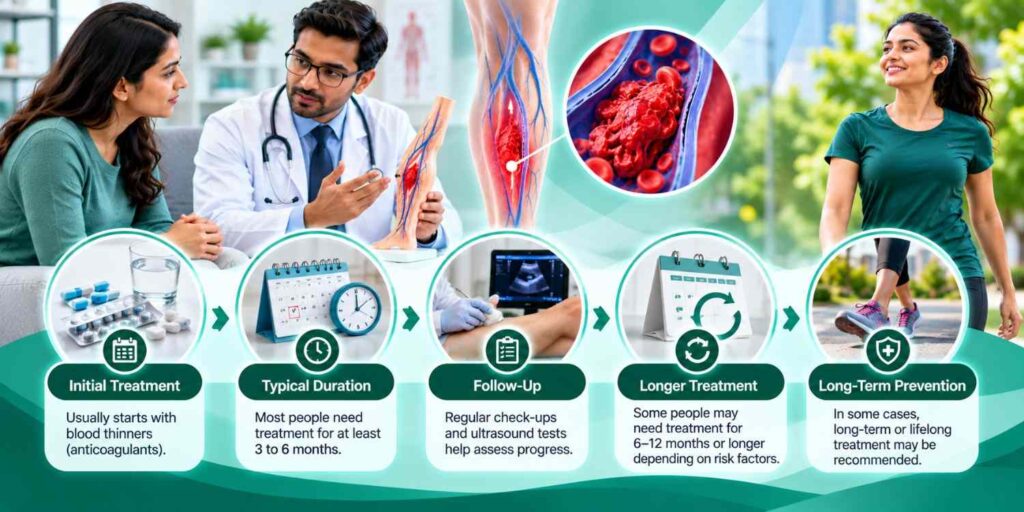
What Happens After DVT Treatment?
After DVT treatment begins, ongoing follow-up and adherence to your treatment plan can help manage the condition and reduce the risk of complications.
Follow Your Anticoagulant Plan
Take anticoagulant medicines exactly as prescribed and follow the treatment schedule recommended by your healthcare professional.
→Attend Follow-Up Appointments
Keep scheduled appointments so your healthcare professional can review your progress, treatment response and any ongoing concerns.
→Discuss Persistent Symptoms
Tell your doctor about ongoing or worsening swelling, pain, tenderness or other symptoms affecting the treated limb.
→Follow Activity Recommendations
Follow the activity and movement recommendations provided by your healthcare professional rather than changing your activity plan on your own.
→Know the Warning Signs of PE
Understand the warning signs of pulmonary embolism, including sudden difficulty breathing, chest discomfort, coughing up blood, lightheadedness or fainting.
→Ask Before Changing Medicines
Speak with your healthcare professional before stopping, changing or starting medicines, especially while taking anticoagulant treatment.
→Discuss Travel or Surgery
Tell your doctor about planned long-distance travel or surgery so your DVT history and current treatment can be considered when planning care.
→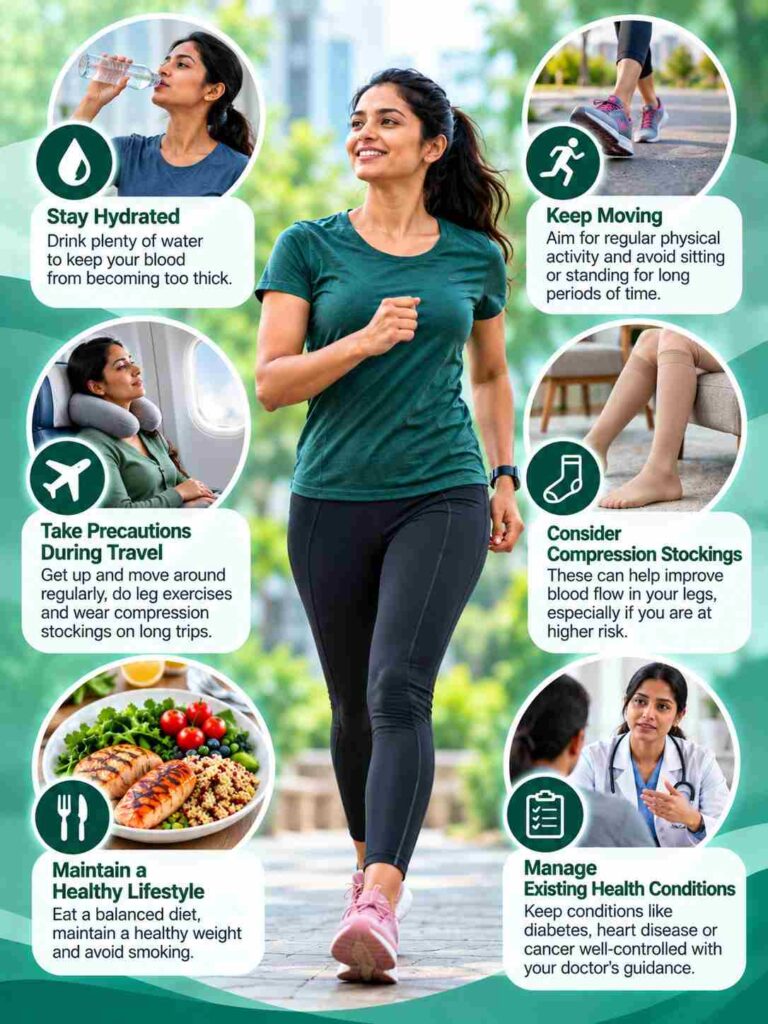
How Can You Reduce Your Risk of DVT?
Keep Moving
Avoid unnecessary prolonged periods of immobility.
Move During Travel
Get up periodically on long journeys.
Follow Post-Surgery Advice
Use prescribed prevention measures.
Know Your Risk
Tell your doctor if you’ve had DVT/PE before.
Discuss High-Risk Situations
Especially surgery, hospitalization, pregnancy, cancer treatment or estrogen-containing medicines.
Follow Prescribed Prevention
Some high-risk patients may need preventive anticoagulation or other measures.
DVT During Pregnancy and After Delivery
Pregnancy and the postpartum period can increase the risk of blood clots. Deep vein thrombosis (DVT) can occur during pregnancy or after delivery, so symptoms that could suggest a blood clot should be medically assessed.
- Swelling in one leg, especially if it develops suddenly
- Pain, tenderness or discomfort in the leg
- Warmth or redness/discoloration of the affected area
- Symptoms that are noticeably different between the two legs
- Pregnancy itself changes the body's blood-clotting system
- Reduced movement during pregnancy or recovery
- Cesarean delivery or other surgery
- Previous DVT or pulmonary embolism
- Other individual medical or pregnancy-related risk factors
Contact a healthcare professional promptly if you develop symptoms that could indicate DVT during pregnancy or after delivery.
Seek emergency medical care for sudden difficulty breathing, chest pain or discomfort, coughing up blood, rapid or irregular heartbeat, lightheadedness or fainting, as these can be warning signs of pulmonary embolism (PE).
Diagnosis starts with your symptoms, medical history and a physical examination. When DVT is suspected, your healthcare professional may recommend appropriate testing, commonly including a duplex ultrasound of the affected veins.
Treatment needs to be individualized during pregnancy and the postpartum period. Your healthcare professional considers the location and severity of the clot, bleeding risk, stage of pregnancy or time since delivery, and your overall health.
If you are pregnant or recently delivered and are concerned about symptoms of a possible blood clot, seek appropriate medical advice.
DVT and Cancer
Some cancers and cancer treatments can increase the risk of venous thromboembolism (VTE), which includes deep vein thrombosis (DVT) and pulmonary embolism (PE).
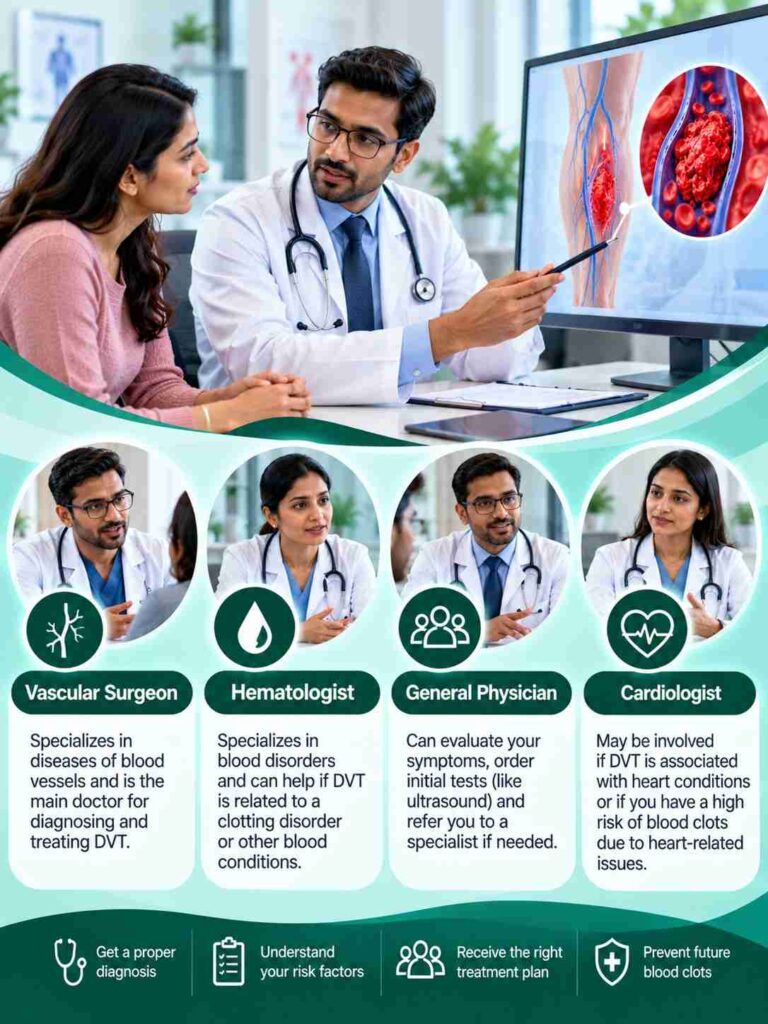
Which Doctor Should I See for DVT?
General Physician / Internal Medicine
Initial assessment and coordination.
Cardiologist
May be involved in cardiovascular assessment or certain clot-related situations.
Vascular Specialist
May be involved in venous disease and selected DVT cases.
Hematologist
May be involved when an abnormal clotting tendency is suspected or recurrent/unusual clots require specialist assessment.
Frequently Asked Questions About DVT
What is DVT?
DVT, or deep vein thrombosis, is a blood clot that forms in a deep vein. It most commonly affects the deep veins of the leg, thigh or pelvis.
What does deep vein thrombosis mean?
Deep vein thrombosis means that a blood clot has developed inside a deep vein. The clot can partially or completely interfere with normal blood flow through the affected vein.
What are the symptoms of DVT?
Common symptoms include swelling, pain or tenderness, warmth and redness or discoloration in the affected area. Symptoms often occur in one leg, although not everyone with DVT has noticeable symptoms.
Can DVT have no symptoms?
Yes. Some people with DVT may have few or no obvious symptoms. This is one reason why a blood clot can sometimes be discovered during evaluation for another medical problem.
What causes DVT?
DVT can develop when blood flow is reduced or becomes stagnant, the blood is more likely to clot, or a vein is damaged. These factors can occur alone or together and can increase the chance of a deep vein blood clot forming.
What increases the risk of DVT?
Risk can increase with prolonged immobility, recent surgery or hospitalization, previous DVT or pulmonary embolism, pregnancy and the postpartum period, certain cancers, some cancer treatments, increasing age and other individual medical conditions.
Can sitting for a long time cause DVT?
Long periods of sitting or immobility can increase the risk of DVT, particularly during long-distance travel or when movement is significantly restricted. The risk depends on the duration of immobility and other individual risk factors.
Can DVT happen during pregnancy?
Yes. Pregnancy and the period after delivery can increase the risk of blood clots. New leg swelling, pain, tenderness, warmth or discoloration should be medically assessed, particularly when symptoms affect one leg.
How is DVT diagnosed?
Diagnosis involves a medical assessment that considers symptoms, medical history and physical examination. When DVT is suspected, your healthcare professional may recommend tests such as duplex ultrasound and, in selected situations, other blood tests or imaging.
Is an ultrasound used to diagnose DVT?
Yes. Duplex or compression ultrasound is commonly used when DVT is suspected. It can help healthcare professionals assess blood flow and look for a clot in the affected veins.
What is the treatment for DVT?
Treatment depends on the location and severity of the clot, bleeding risk, the risk of complications and your overall health. Anticoagulant medicines are commonly used, while other treatments or procedures may be considered in selected situations.
Are blood thinners used for DVT?
Yes. Anticoagulants, often called blood thinners, are commonly used to reduce the blood's ability to form additional clots and help prevent an existing clot from getting larger. The medicine and duration of treatment depend on the individual situation.
Can DVT travel to the lungs?
Yes. A piece of a DVT can break away and travel through the bloodstream to the lungs. This can cause a pulmonary embolism (PE), which can be life-threatening and requires urgent medical attention.
What is the difference between DVT and pulmonary embolism?
DVT is a blood clot that forms in a deep vein, usually in the leg, thigh or pelvis. A pulmonary embolism occurs when a clot, or part of a clot, travels to the lungs and blocks blood flow there. DVT can therefore lead to pulmonary embolism.
Can DVT happen again?
Yes. DVT can recur, particularly when underlying risk factors remain or when someone has previously experienced a blood clot. Your healthcare professional can assess your individual risk and recommend appropriate prevention and follow-up.