

Sleep Disorders : Types Syptoms, Causes & Treatments
Sleep disorders can affect your sleep quality, energy, concentration, mood, and overall well-being. Learn about common sleep problems, their symptoms, causes, diagnosis, and treatment options with guidance from experienced doctors.
Overview
Types
Symptoms
Causes
Diagnosis
Treatment
Sleep Tips
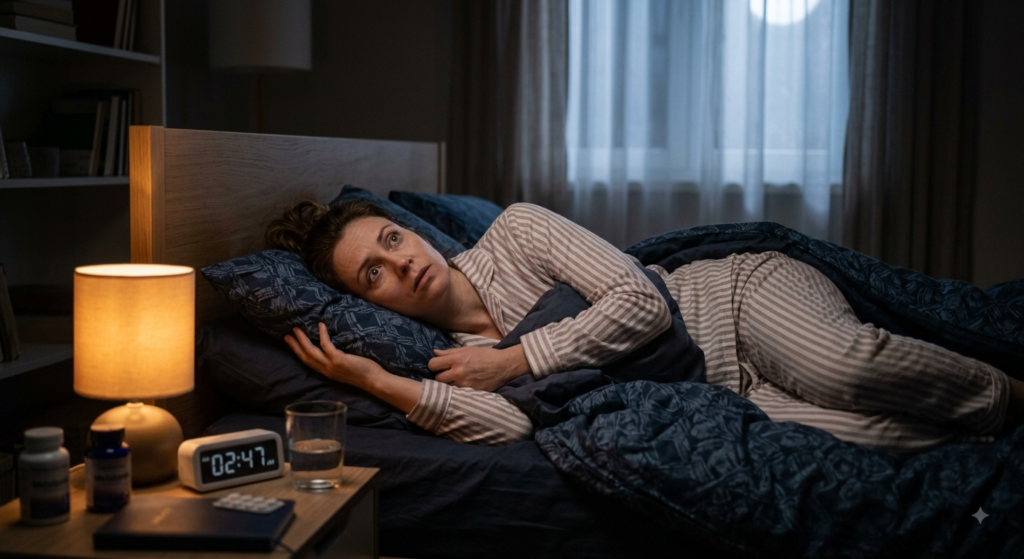
What Are Sleep Disorders?
Sleep disorders are conditions that affect your ability to fall asleep, stay asleep, breathe normally during sleep, or feel rested during the day. They can affect sleep quality, daytime energy, concentration, mood, and overall quality of life.
Some sleep problems may be temporary, while others can continue for months or require medical evaluation. Identifying the underlying cause is an important step toward better sleep.
COMMON TYPES OF SLEEP DISORDERS
Insomnia
Difficulty falling asleep, staying asleep, or waking too early can leave you tired and unrefreshed during the day.
Narcolepsy
Narcolepsy can cause excessive daytime sleepiness and sudden episodes of falling asleep.
Sleep Apnea
Sleep apnea can cause repeated interruptions in breathing during sleep and is often associated with loud snoring and daytime tiredness.
Restless Legs Syndrome
Restless legs syndrome can cause uncomfortable sensations in the legs and an uncontrollable urge to move them, particularly at night.
Circadian Rhythm Disorders
These disorders occur when your body’s internal sleep-wake schedule becomes misaligned with your daily routine or environment.
Parasomnias
Parasomnias involve unusual behaviors or experiences during sleep, such as sleepwalking, night terrors, or certain abnormal movements.
Signs You May Have a Sleep Disorder
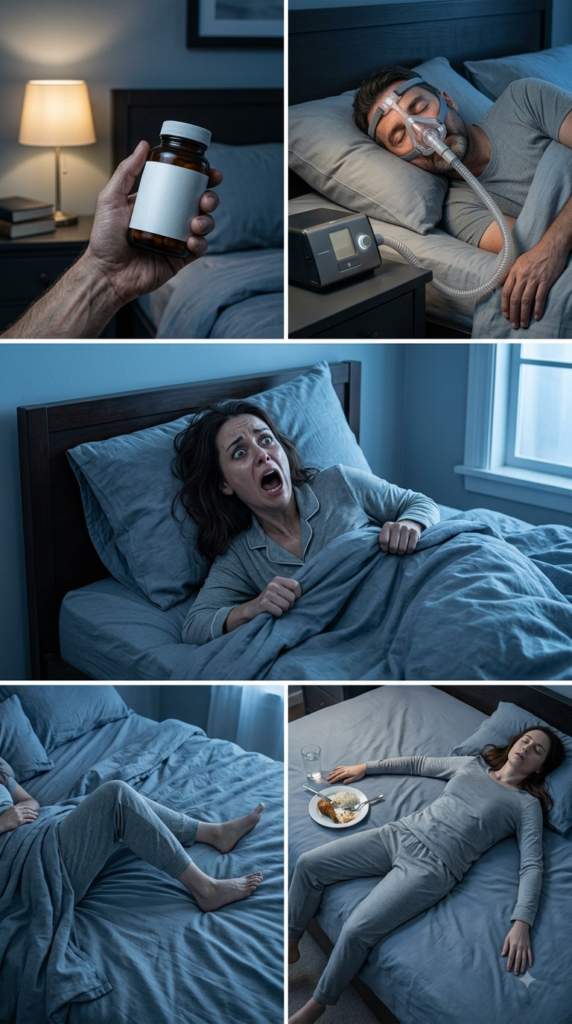
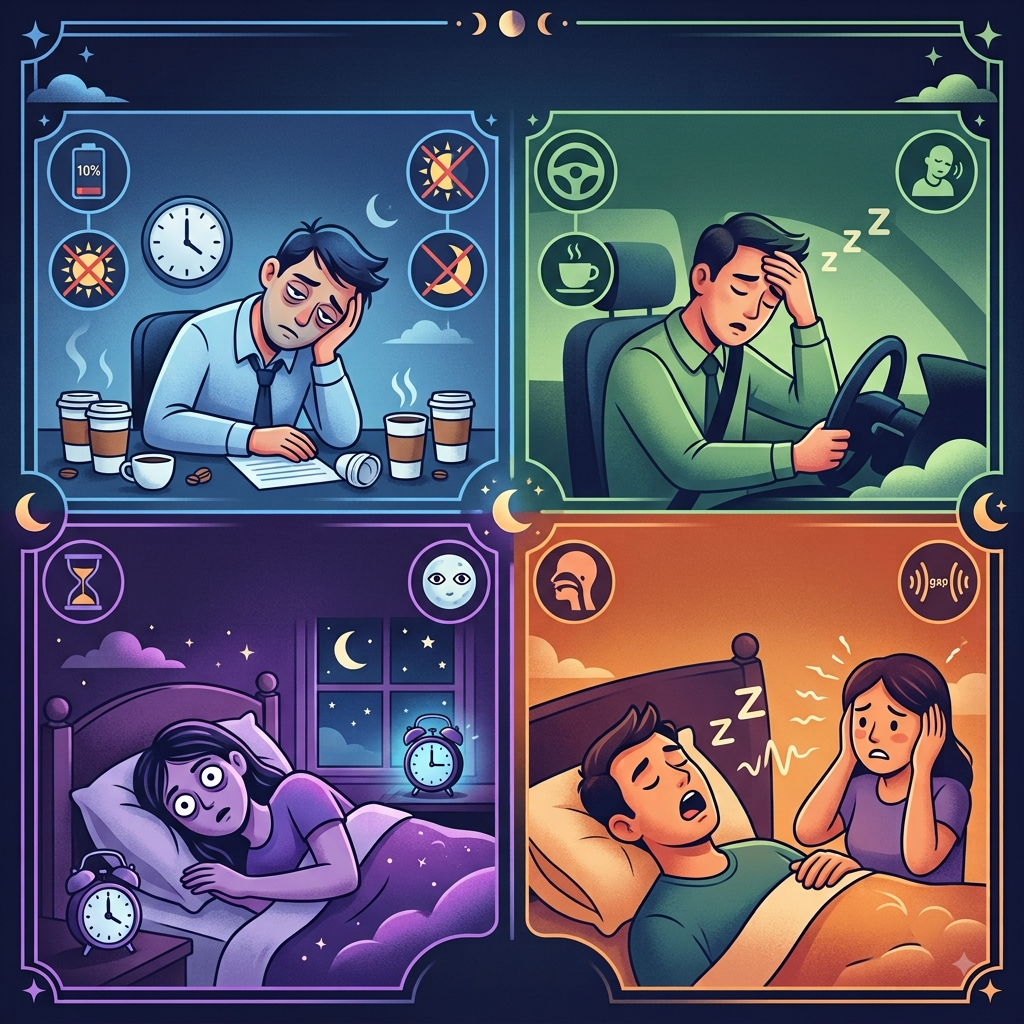
Common symptoms can include:
- Difficulty falling asleep
- Frequently waking during the night
- Waking too early
- Loud or persistent snoring
- Gasping or choking during sleep
- Excessive daytime sleepiness
- Feeling tired even after sleeping
- Difficulty concentrating
- Morning headaches
- Irritability or mood changes
- Unusual movements during sleep
What Causes Sleep Problems?
Sleep problems can have many causes. Sometimes they are related to lifestyle or the sleep environment, while medical conditions, medications, stress, or other sleep disorders may also play a role
| Cause | Short description |
|---|---|
| Stress & Anxiety | Ongoing stress and worry can make it harder to relax and sleep. |
| Medical Conditions | Pain, breathing problems, hormonal changes, and other conditions can disrupt sleep. |
| Medications | Some prescription and over-the-counter medicines may affect sleep. |
| Lifestyle Habits | Irregular schedules, caffeine, alcohol, and excessive screen use can interfere with sleep. |
| Sleep Environment | Noise, light, temperature, or an uncomfortable sleeping environment can affect sleep. |
| Work & Schedule | Night shifts, travel, and irregular schedules can disturb the body’s sleep-wake rhythm. |
How Are Sleep Disorders Diagnosed?
A doctor will usually begin by understanding your sleep pattern, symptoms, medical history, lifestyle, and medications. Depending on your symptoms, additional evaluation may be recommended.
Your evaluation may include:
- Discussion of your sleep habits and symptoms
- Medical and medication history
- Sleep diary or sleep tracking
- Physical examination when appropriate
- Evaluation for underlying medical conditions
- Sleep testing when clinically indicated
01 Discuss →
02 Evaluate →
03 Test if Needed →
04 Diagnose →
05 Treat

Sleep Disorder Treatment
Better Sleep Habits
Developing consistent sleep and wake times and improving your sleep environment can support healthier sleep.
Behavioral Therapy
Certain sleep problems, particularly chronic insomnia, may benefit from behavioral approaches such as cognitive behavioral therapy.
Treating Underlying Conditions
If another medical or psychological condition is affecting sleep, treating that underlying problem may improve sleep.
Medication When Appropriate
In some situations, doctors may recommend medication. The choice depends on the type and cause of the sleep problem and should be medically supervised.
Simple Habits for Better Sleep
- Keep a consistent sleep schedule
- Reduce screen exposure before bed
- Limit caffeine later in the day
- Stay physically active
- Keep your bedroom comfortable and quiet
- Avoid heavy meals close to bedtime
- Create a relaxing bedtime routine

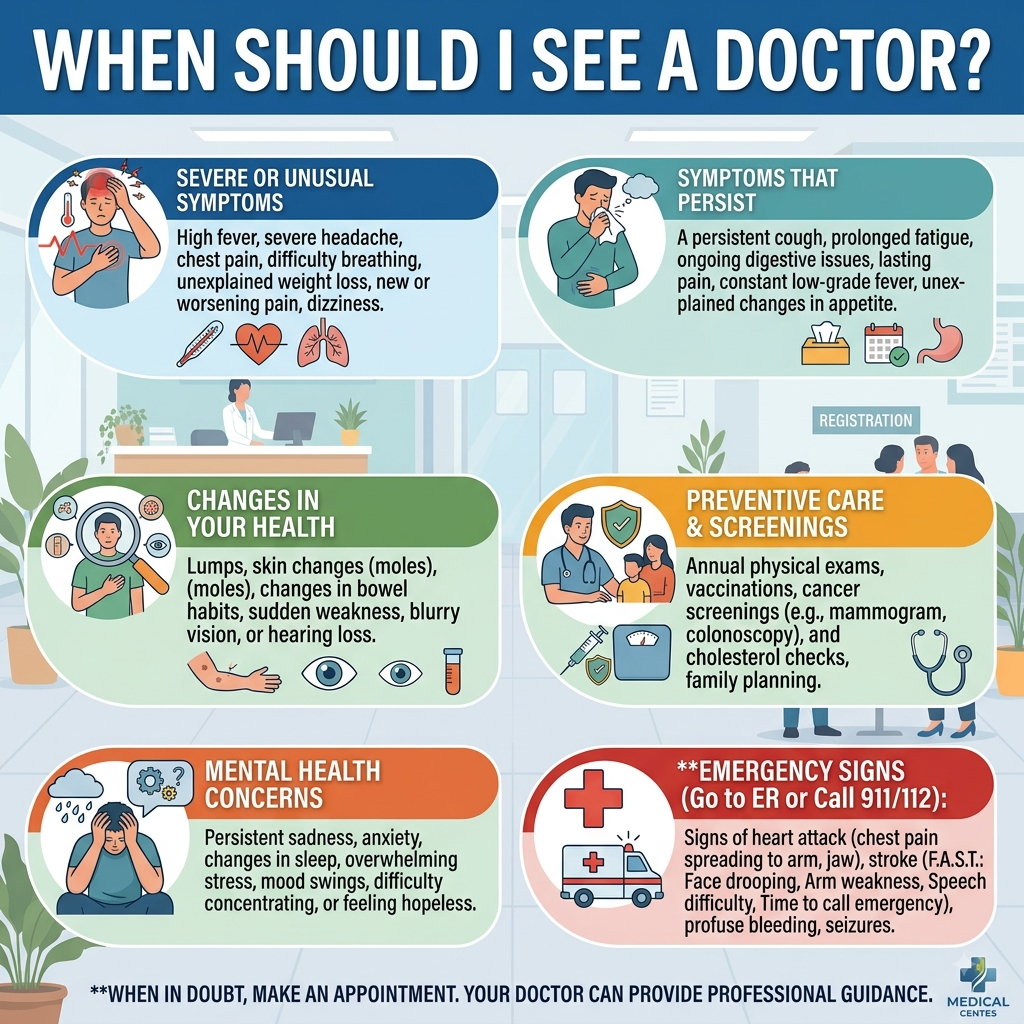
WHEN SHOULD I SEE A DOCTOR?
Consider speaking with a doctor if you:
- Regularly have difficulty sleeping
- Feel excessively sleepy during the day
- Snore loudly or frequently
- Wake up gasping or choking
- Frequently wake during the night
- Feel unrefreshed despite getting enough time in bed
- Have sleep problems that interfere with work or daily activities
- Experience persistent unusual behaviors or movements during sleep
Persistent sleep problems can affect concentration, mood, daily functioning, and long-term health, so ongoing symptoms deserve medical attention