
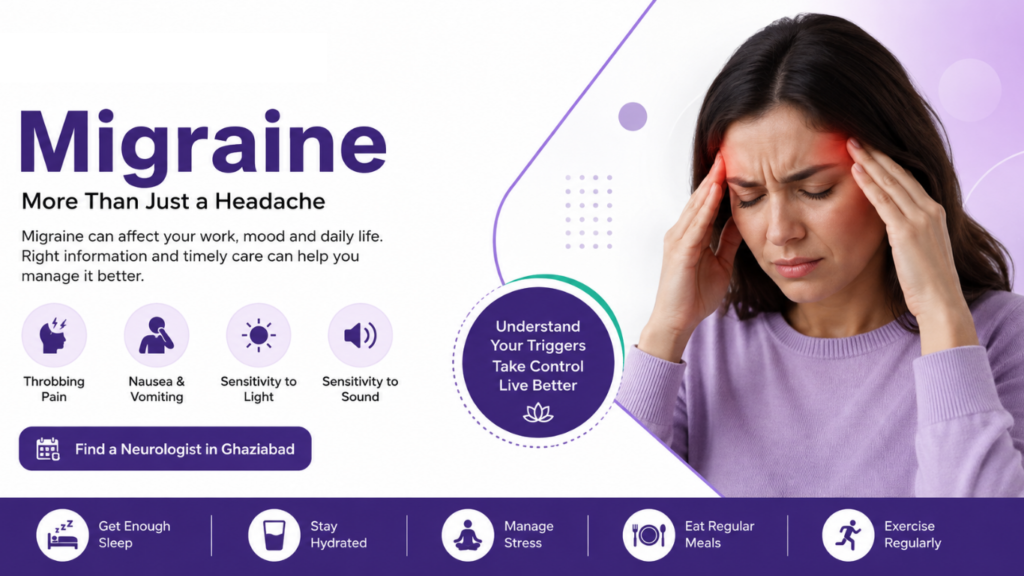

Migraine
Migraine is more than just a bad headache. It is a neurological condition that can cause intense, throbbing pain along with nausea, vomiting, and sensitivity to light or sound. For some people, a migraine attack can make it difficult to work, study, travel, or even carry out normal daily activities.
The good news is that migraine can often be managed with the right treatment, healthy habits, and by understanding your personal triggers.
What Is Migraine?
Migraine is a neurological condition that causes repeated attacks of headache and other symptoms. The pain is often felt on one side of the head and may feel like a strong throbbing or pulsing sensation.
A migraine attack can last from several hours to a few days. Not everyone experiences migraine in the same way. Some people may have severe headache, while others may mainly experience nausea, dizziness, sensitivity to light or visual changes.
Migraine can affect children, teenagers, and adults.
Migraine Symptoms
- Throbbing or pulsating headache
- Pain on one or both sides of the head
- Nausea or vomiting
- Sensitivity to bright light
- Sensitivity to loud sounds
- Sensitivity to strong smells
- Dizziness or feeling light-headed
- Blurred or disturbed vision
- Feeling extremely tired
What Is Migraine Aura?
- Flashing lights or bright spots
- Zigzag lines in your vision
- Temporary blind spots
- Tingling or numbness
- Difficulty speaking
- Dizziness
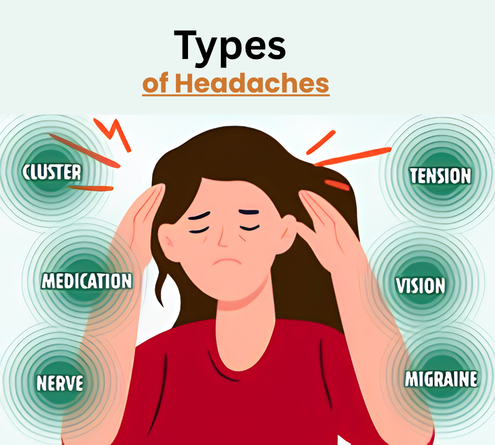
Types of Headaches: Migraine, Tension & Cluster
Not every headache is a migraine. Different types of headaches can feel very different, and knowing the difference can help you understand when you may need medical advice.
1. Migraine
Migraine is more than just a headache. It often causes moderate to severe throbbing or pulsating pain, sometimes on one side of the head.
You may also experience:
- Nausea or vomiting
- Sensitivity to light and sound
- Sensitivity to smells
- Dizziness
- Visual changes or aura
- Increased pain with normal physical activity
A migraine attack can last for several hours or even a few days. Many people prefer to rest in a quiet, dark room during an attack.
2. Tension Headache
Tension headache is one of the most common types of headache. Instead of a throbbing sensation, it usually feels like pressure, tightness, or a band around the head.
The pain may be felt on both sides of the head and can also involve the forehead, scalp, neck, or shoulders.
Common features include:
- Dull or aching pain
- Pressure or tightness around the head
- Tenderness in the neck or shoulder muscles
- Usually mild to moderate pain
- Usually no nausea or vomiting
Stress, poor sleep, dehydration, and long periods of sitting or working in the same position may contribute to headaches in some people.
3. Cluster Headache
Cluster headache is uncommon but can cause extremely severe pain, usually around or behind one eye and on one side of the head.
Unlike migraine, people with cluster headaches often feel restless during an attack rather than wanting to lie down quietly.
Other symptoms may include:
- Red or watery eye on the painful side
- Blocked or runny nose
- Swelling around the eye
- Drooping eyelid
- Facial sweating
- Severe restlessness
Cluster headaches often occur in groups, with attacks happening repeatedly over days or weeks. An individual attack usually lasts between 15 minutes and 3 hours and can occur more than once a day.
Migraine vs Tension vs Cluster Headache
|
|
|
|
| Pain | Throbbing / pulsating | Pressing / tight | Very severe, sharp or burning |
| Location | One or both sides | Usually both sides | One side, often around one eye |
| Severity | Moderate to severe | Mild to moderate | Very severe |
| Nausea | Common | Usually absent | Sometimes |
| Light/Sound sensitivity | Common | Less common | Usually not the main feature |
| Eye watering/redness | Usually not typical | No | Common on the painful side |
| Restlessness | Often prefers rest | Usually not prominent | Very common |
| Typical duration | Hours to days | 30 minutes to several hours, sometimes longer | 15 minutes to 3 hours |
| Pattern | Individual attacks | Occasional or frequent | Often several attacks a day during a cluster period |
What Does a Migraine Attack Feel Like?
A migraine can feel very different from an ordinary headache.
Many people describe it as a strong, throbbing pain that gets worse with movement. Bright lights, loud sounds, or strong smells may become difficult to tolerate.
You may want to lie down in a quiet, dark room and avoid normal activities until the attack becomes better.
If your headaches regularly interfere with your work, sleep, family life, or daily activities, it is worth discussing them with a healthcare professional.
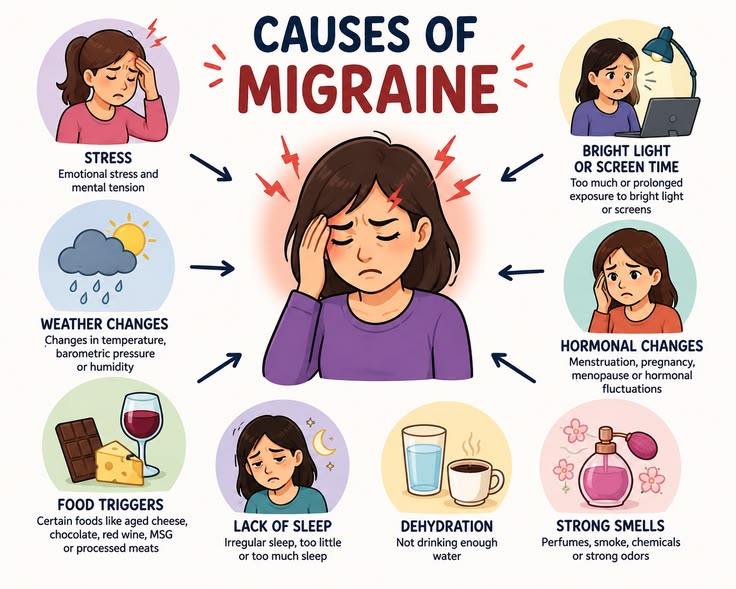
Common Migraine Trigger
Work pressure, emotional stress, anxiety, and lack of relaxation can trigger migraine in some people.
Sleeping too little, sleeping too much, or suddenly changing your sleep schedule may contribute to migraine attacks.
Going for long periods without eating can trigger headaches in some people. Try to maintain regular meals.
Not drinking enough water may contribute to headaches and can make some migraine attacks worse.
Flashing lights, prolonged exposure to bright screens, loud sounds, perfumes, smoke, or strong smells may trigger migraine in some people.
Too much caffeine or sudden changes in caffeine intake may trigger headaches. Alcohol can also trigger migraine in some people.
What Can You Do During a Migraine Attack?
When a migraine starts, simple steps may make you more comfortable:
- Move to a quiet, dark room
- Rest and close your eyes
- Drink water
- Try a cool compress on your forehead or neck
- Reduce bright light and loud sounds
- Avoid strong smells
- Take your prescribed migraine medicine as directed
Taking care of yourself early in an attack may help you manage the symptoms better.
How Can You Prevent Migraine?
You may not be able to prevent every migraine attack, but healthy routines can reduce the frequency or severity of attacks for some people.
- Maintain a regular sleep schedule
- Eat meals at regular times
- Exercise regularly
- Manage stress
- Limit excessive caffeine and alcohol
- Avoid strong smells
- Take your prescribed migraine medicine as directed
Sign up for our free Migraine Newsletter
Get information on triggers and treatments, plus tips for living with migraine.
By clicking Subscribe, I agree to the Ghaziabadclinic Terms & Conditions & Privacy Policy and understand that I may opt out of WebMD subscriptions at any time. This site is protected by reCAPTCHA and the Google Privacy Policy and Terms of Service apply.
Top Search Terms for Migraine & Headaches



Priya S.
8 million+ Physician Ratings & Reviews
Search for Neurologists in your area
Find Doctors and Dentists Near you
You can also search by physician, practice, or hospital name
Quick Facts
Quick Facts
- Migraine is more than just a headache.
- Pain may be throbbing or pulsating.
- It can affect one or both sides of the head.
- Nausea and vomiting may occur.
- Bright light and loud sounds can make symptoms worse.
- Some people experience migraine aura.
- Attacks can last for several hours or longer.
- Stress, poor sleep and dehydration may trigger attacks.
- Keeping a migraine diary can help identify personal triggers.
- Frequent headaches should be discussed with a doctor.
Quick Facts
- Migraine is more than just a headache.
- Pain may be throbbing or pulsating.
- It can affect one or both sides of the head.
- Nausea and vomiting may occur.
- Bright light and loud sounds can make symptoms worse.
- Some people experience migraine aura.
- Attacks can last for several hours or longer.
- Stress, poor sleep and dehydration may trigger attacks.
- Keeping a migraine diary can help identify personal triggers.
- Frequent headaches should be discussed with a doctor.
Quick Facts
Emergency Signs
What You Can Do During a Migraine
- Migraine is more than just a headache.
- Pain may be throbbing or pulsating.
- It can affect one or both sides of the head.
- Nausea and vomiting may occur.
- Bright light and loud sounds can make symptoms worse.
- Some people experience migraine aura.
- Attacks can last for several hours or longer.
- Stress, poor sleep and dehydration may trigger attacks.
- Keeping a migraine diary can help identify personal triggers.
- Frequent headaches should be discussed with a doctor.
- Sudden, extremely severe headache
- Headache that reaches its worst intensity within seconds
- New weakness or numbness
- Difficulty speaking or understanding
- Sudden vision loss or major vision changes
- High fever with a stiff neck
- Severe headache after a head injury
- A new headache during pregnancy or after childbirth
- A sudden change in your usual headache pattern
- Confusion, fainting, or seizures
- Rest in a quiet, dark room
- Drink enough water
- Reduce bright lights and screen exposure
- Avoid loud sounds and strong smells
- Try a cool compress on your forehead
- Eat regular meals and avoid skipping food
- Relax and try slow, deep breathing
- Keep track of possible migraine triggers
- Give your body enough time to recover