
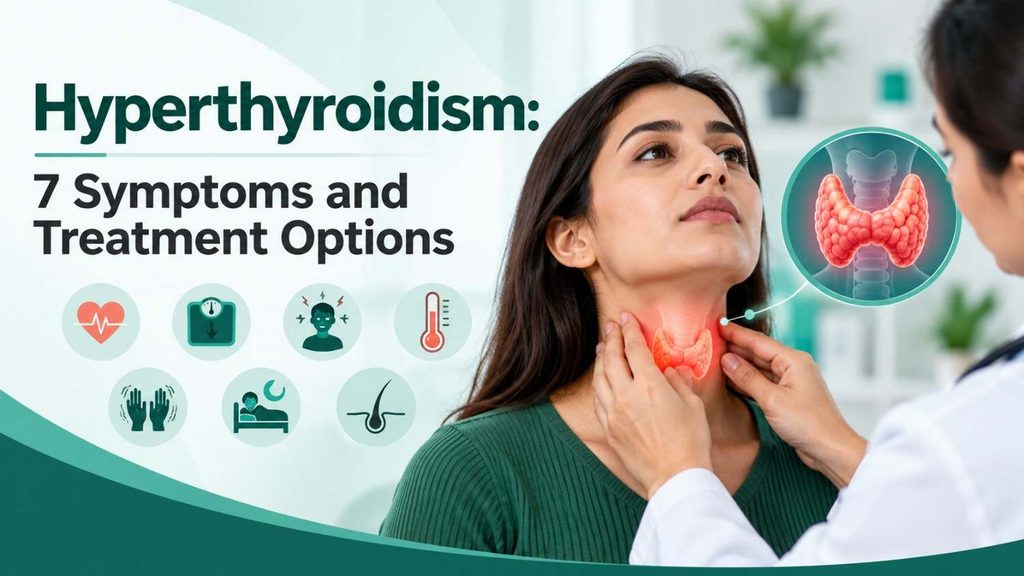
Hyperthyroidism is a thyroid condition in which the thyroid gland produces more thyroid hormones than the body needs. These hormones regulate metabolism, body temperature, heart rate, and energy use. When their levels become too high, several body functions can speed up, causing symptoms such as unexplained weight loss, a racing heartbeat, excessive sweating, and nervousness.
Recognising hyperthyroidism symptoms early is important because untreated thyroid hormone excess can affect the heart, bones, muscles, menstrual health, and overall well-being. The good news is that effective treatments are available, and the right option depends on the underlying cause, hormone levels, symptoms, and individual health needs.
This guide explains seven common symptoms of hyperthyroidism, its main causes, how doctors diagnose an overactive thyroid, and the available treatment options.
What Is Hyperthyroidism?
Hyperthyroidism, also known as an overactive thyroid, occurs when the thyroid gland produces excessive amounts of thyroid hormones, mainly thyroxine (T4) and triiodothyronine (T3).
The thyroid is a small, butterfly-shaped gland located at the front of the neck. It helps regulate how the body uses energy and influences the function of the heart, digestive system, muscles, and nervous system.
When thyroid hormone levels become too high, the body’s metabolic processes may accelerate. This can lead to changes in weight, heart rate, digestion, sleep, mood, and heat tolerance.
Hyperthyroidism is different from hypothyroidism, in which the thyroid does not produce enough thyroid hormone. Although both conditions affect thyroid function, their causes, symptoms, test results, and treatments can differ.
7 Common Symptoms of Hyperthyroidism
Hyperthyroidism does not cause the same symptoms in everyone. Some people experience several noticeable changes, while others develop mild or gradual symptoms. The following are seven important signs to recognise.
1. Unexplained Weight Loss
One of the recognised symptoms of hyperthyroidism is losing weight without deliberately changing your diet or exercise routine.
Excess thyroid hormones can increase the body’s energy expenditure. As a result, some people lose weight even when their appetite remains normal or increases.
However, unexplained weight loss can also occur because of other medical conditions. If you are losing weight unexpectedly, arrange a medical assessment rather than assuming that your thyroid is responsible.
2. Rapid or Irregular Heartbeat
Excess thyroid hormones can increase heart rate and make the heart feel as though it is racing, pounding, or fluttering. These sensations are often called palpitations.
Some people may also experience shortness of breath or reduced exercise tolerance. Persistent untreated hyperthyroidism can increase the risk of heart rhythm problems, including atrial fibrillation.
Seek medical attention if you experience recurring palpitations. Chest pain, fainting, severe breathlessness, or a persistently very fast heartbeat requires urgent medical assessment.
3. Excessive Sweating and Heat Intolerance
People with hyperthyroidism may feel unusually hot even when the surrounding temperature is comfortable. They may sweat more than usual or find warm weather harder to tolerate.
This happens because excess thyroid hormones influence the body’s metabolic activity and heat production.
If you regularly experience unexplained sweating or heat intolerance alongside other thyroid-related symptoms, discuss these changes with a healthcare professional.
4. Anxiety, Nervousness, and Irritability
An overactive thyroid can affect mood and the nervous system. Some people feel unusually anxious, restless, irritable, or unable to relax.
They may notice difficulty concentrating, changes in mood, or trouble sleeping. These symptoms can sometimes be mistaken for stress or an anxiety disorder.
Anxiety alone does not confirm hyperthyroidism. However, when it occurs with unexplained weight loss, tremors, excessive sweating, or a racing heartbeat, thyroid testing may be appropriate.
5. Shaky Hands and Muscle Weakness
Fine hand tremors are another common sign of excess thyroid hormone. You may notice your hands shaking while holding a cup, writing, or keeping them extended.
Hyperthyroidism can also cause muscle weakness, particularly in the upper arms and thighs. Everyday activities such as climbing stairs, carrying shopping bags, or standing up from a low chair may become more difficult.
Persistent tremors or unexplained muscle weakness should be assessed, especially when accompanied by other symptoms of an overactive thyroid.
6. Frequent Bowel Movements or Diarrhoea
Thyroid hormones influence digestive activity. When hormone levels are too high, bowel movements may become more frequent, and some people develop loose stools or diarrhoea.
These changes can occur alongside increased appetite and weight loss.
Digestive symptoms have many possible causes, including infections, food intolerances, and other gastrointestinal conditions. Persistent diarrhoea, blood in the stool, dehydration, or severe abdominal pain needs appropriate medical evaluation.
7. Changes in Menstrual Periods, Hair, or Eyes
Hyperthyroidism can affect several other parts of the body.
- Menstrual changes: Periods may become lighter, less frequent, or irregular. Thyroid dysfunction can also affect fertility.
- Hair thinning: Some people notice increased hair shedding or thinner hair.
- Eye symptoms: Graves’ disease, an autoimmune condition and a common cause of hyperthyroidism, can cause dry, irritated, red, swollen, or bulging eyes in some people.
- Neck swelling: An enlarged thyroid gland, known as a goitre, may cause visible swelling at the front of the neck.
Not everyone experiences these changes. New vision changes, significant eye pain, or rapidly worsening eye symptoms should be assessed promptly.
What Causes Hyperthyroidism?
Hyperthyroidism can develop for several reasons. Identifying the cause helps a doctor select the most appropriate treatment.
Graves’ Disease
Graves’ disease is an autoimmune disorder in which the immune system produces antibodies that stimulate the thyroid gland to make too much hormone. It is a common cause of hyperthyroidism and may also affect the eyes.
Thyroid Nodules
One or more thyroid nodules may become overactive and produce excess thyroid hormones independently of the body’s usual regulatory signals. These are sometimes called toxic adenomas or toxic multinodular goitres.
Thyroiditis
Thyroiditis means inflammation of the thyroid gland. In some forms, stored thyroid hormones leak into the bloodstream, temporarily increasing hormone levels. Depending on the cause, the condition may improve over time and can sometimes be followed by a period of low thyroid hormone levels.
Excess Thyroid Medication or Iodine Exposure
Taking more thyroid hormone replacement medicine than prescribed can cause excessive thyroid hormone levels. Certain iodine-containing medicines or supplements can also contribute to thyroid dysfunction in susceptible individuals.
Do not stop prescribed medication or start iodine supplements without medical advice.
How Is Hyperthyroidism Diagnosed?
Hyperthyroidism cannot be confirmed from symptoms alone. A healthcare professional reviews your medical history, examines you, and may recommend blood tests to assess thyroid function.
1. Thyroid-Stimulating Hormone (TSH) Test
TSH is produced by the pituitary gland and helps regulate thyroid hormone production. In typical primary hyperthyroidism, TSH is low because the body is responding to excessive thyroid hormone levels.
2. T3 and T4 Blood Tests
Blood tests measure thyroid hormones, including thyroxine (T4) and triiodothyronine (T3). High T3 and/or T4 alongside a low TSH level commonly supports a diagnosis of overt primary hyperthyroidism.
In some cases, TSH is low while T3 and T4 remain within their reference ranges. This pattern may indicate subclinical hyperthyroidism and requires interpretation in the context of symptoms, medical history, and repeat testing when appropriate.
3. Additional Tests When Needed
Depending on the findings, a doctor may recommend thyroid antibody tests to investigate Graves’ disease or imaging to assess thyroid nodules and identify the cause of hormone excess.
Your test results should always be interpreted by a qualified healthcare professional. Reference ranges and the need for further investigations can vary.
Hyperthyroidism Treatment: 4 Main Options
Hyperthyroidism treatment depends on its cause, severity, hormone levels, age, other medical conditions, pregnancy status, and personal circumstances. Not every treatment is suitable for every patient.
1. Antithyroid Medicines
Antithyroid medicines reduce the thyroid gland’s production of hormones. Depending on the country and clinical situation, options include methimazole, carbimazole, and propylthiouracil (PTU).
These medicines are commonly used for Graves’ disease and selected other causes of hyperthyroidism. Treatment duration varies, and some people experience remission while others need ongoing treatment or another approach.
Antithyroid medicines can rarely cause serious side effects, including a dangerously low white blood cell count or liver injury. If you take one of these medicines and develop a fever, severe sore throat, or yellowing of the skin or eyes, seek urgent medical advice.
Do not start, stop, or adjust antithyroid medication without your treating clinician’s guidance.
2. Beta-Blockers for Symptom Relief
A doctor may prescribe a beta-blocker to reduce symptoms such as a rapid heartbeat, tremors, and nervousness while the underlying thyroid problem is being treated.
Beta-blockers help control certain effects of excess thyroid hormone, but they do not stop the thyroid gland from producing too much hormone. They are not suitable for everyone, so the choice of medicine requires clinical assessment.
3. Radioactive Iodine Treatment
Radioactive iodine is taken orally and absorbed by thyroid cells. It reduces the amount of functioning thyroid tissue, lowering thyroid hormone production.
This treatment may be appropriate for certain people with Graves’ disease or overactive thyroid nodules. Its effects develop over time, and some patients subsequently develop hypothyroidism and need lifelong thyroid hormone replacement.
Radioactive iodine is not used during pregnancy or breastfeeding. Your specialist will explain precautions, follow-up testing, and whether this treatment is appropriate for you.
4. Thyroid Surgery
Surgery to remove part or all of the thyroid gland may be recommended in selected cases, such as a large goitre causing pressure symptoms, certain thyroid nodules, significant eye disease, or when other treatments are unsuitable.
The decision depends on the underlying condition and the person’s circumstances. If the entire thyroid gland is removed, the body can no longer produce sufficient thyroid hormone, so lifelong thyroid hormone replacement is usually required.
Can Hyperthyroidism Be Managed Without Treatment?
Hyperthyroidism should not be ignored or treated only with home remedies. Some causes, such as certain forms of thyroiditis, may resolve over time, while others can persist and require medical treatment.
A clinician may monitor selected people with mild or subclinical hyperthyroidism instead of starting immediate treatment. This decision depends on factors such as hormone levels, age, symptoms, heart health, and bone health.
Eating a balanced diet, getting adequate sleep, and avoiding excessive caffeine if it worsens palpitations may help with general well-being. However, these measures do not replace treatment for confirmed hyperthyroidism. Avoid unprescribed thyroid products and high-dose iodine supplements.
What Happens If Hyperthyroidism Is Left Untreated?
Untreated or inadequately controlled hyperthyroidism can lead to complications, including:
- Heart problems: Persistent rapid heart rate and abnormal heart rhythms, including atrial fibrillation.
- Bone loss: Increased bone turnover can weaken bones and raise the risk of osteoporosis.
- Muscle weakness: Excess thyroid hormone may contribute to ongoing muscle problems.
- Menstrual and fertility difficulties: Thyroid dysfunction can affect reproductive health.
- Eye complications: Graves’ disease can cause thyroid eye disease in some patients.
Rarely, severe uncontrolled hyperthyroidism can lead to thyroid storm, a life-threatening emergency that may involve a very high temperature, marked rapid heartbeat, agitation or confusion, and severe illness. Suspected thyroid storm requires emergency medical care.
When Should You See a Doctor?
Arrange a medical appointment if you have persistent unexplained weight loss, a racing or irregular heartbeat, tremors, excessive sweating, frequent bowel movements, new neck swelling, or several symptoms that may suggest an overactive thyroid.
Seek emergency care for chest pain, fainting, severe breathlessness, confusion, or a combination of high fever and a very rapid heartbeat.
A medical assessment and appropriate thyroid blood tests can help establish whether hyperthyroidism is responsible and whether further investigation is needed.
Frequently Asked Questions
1. What are the first signs of hyperthyroidism?
Early signs may include unexplained weight loss, a faster heartbeat, heat intolerance, increased sweating, nervousness, shaky hands, and difficulty sleeping. Symptoms vary, and some people have only mild changes.
2. What is the difference between hyperthyroidism and hypothyroidism?
Hyperthyroidism involves excess thyroid hormone production, which can speed up several body processes. Hypothyroidism involves insufficient thyroid hormone, which can slow body processes. Both conditions require appropriate assessment and may need different treatments.
3. Which blood test confirms hyperthyroidism?
TSH is commonly the initial test. A low TSH together with elevated T3 and/or T4 usually supports overt primary hyperthyroidism. Additional tests may be needed to identify the cause.
4. Is hyperthyroidism curable?
Some causes can resolve, and treatments can bring many cases under control. Whether hyperthyroidism goes into remission or requires long-term treatment depends on its cause and the treatment selected.
5. Can hyperthyroidism cause weight loss?
Yes. Excess thyroid hormones can increase energy expenditure, leading to weight loss even when appetite is normal or increased. Unexplained weight loss still needs medical evaluation because many conditions can cause it.
6. Can hyperthyroidism affect sleep and mental health?
Yes. It can contribute to restlessness, anxiety, irritability, and difficulty sleeping. These symptoms can have other causes too, so thyroid testing may be considered when they occur with other suggestive signs.
7. Which doctor treats hyperthyroidism?
A primary care doctor can arrange initial assessment and thyroid blood tests. An endocrinologist, a specialist in hormone-related conditions, can evaluate the cause and guide treatment when needed.
Explore More Diabetes and Endocrine Health Topics
Thyroid conditions are part of endocrine health, which covers hormone-producing glands and the way hormones regulate important body functions. Explore the Diabetes endocrine section on Ghaziabad Clinic for more educational information about diabetes, thyroid conditions, blood sugar, and other endocrine-related health topics.
Read more: https://ghaziabadclinic.com/diabetes-endocrine-health-2/