
Healthy Food Recipes for Everyday Eating
Discover easy food recipes made with everyday ingredients and practical cooking methods. From wholesome breakfasts to balanced lunches, nourishing dinners, and healthy snacks, explore meal ideas that make everyday cooking simpler and more enjoyable.

Tips for a Balanced Breakfast
A balanced breakfast can help you start the day with a variety of nutrients. Use these simple tips to make breakfast work for your needs.
Include Protein
Add a source of protein, such as yogurt, milk, eggs, or besan, to make your breakfast more balanced.
Choose Fibre-Rich Foods
Include oats, fresh fruit, and vegetables for dietary fibre and variety in your morning meal.
Adjust Your Portions
Choose portions that suit your appetite, activity level, nutritional needs, and daily routine.
Consider Your Dietary Needs
Account for food allergies and intolerances, and follow personalised dietary advice from your healthcare professional.
Remember: There is no single breakfast that suits everyone. Choose a variety of foods that fit your preferences, nutritional needs, and daily routine.
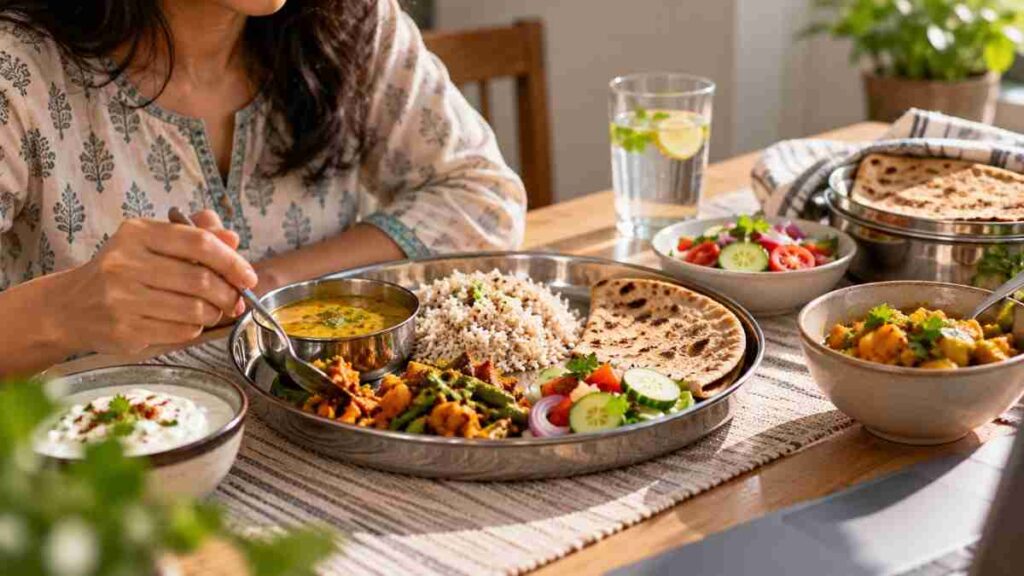
Healthy Lunch Recipes: 5 Easy Indian Meal Ideas
Healthy Indian lunch recipes combine vegetables, whole grains, and protein-rich foods to create balanced everyday meals. Explore these simple options for nutritious home cooking.
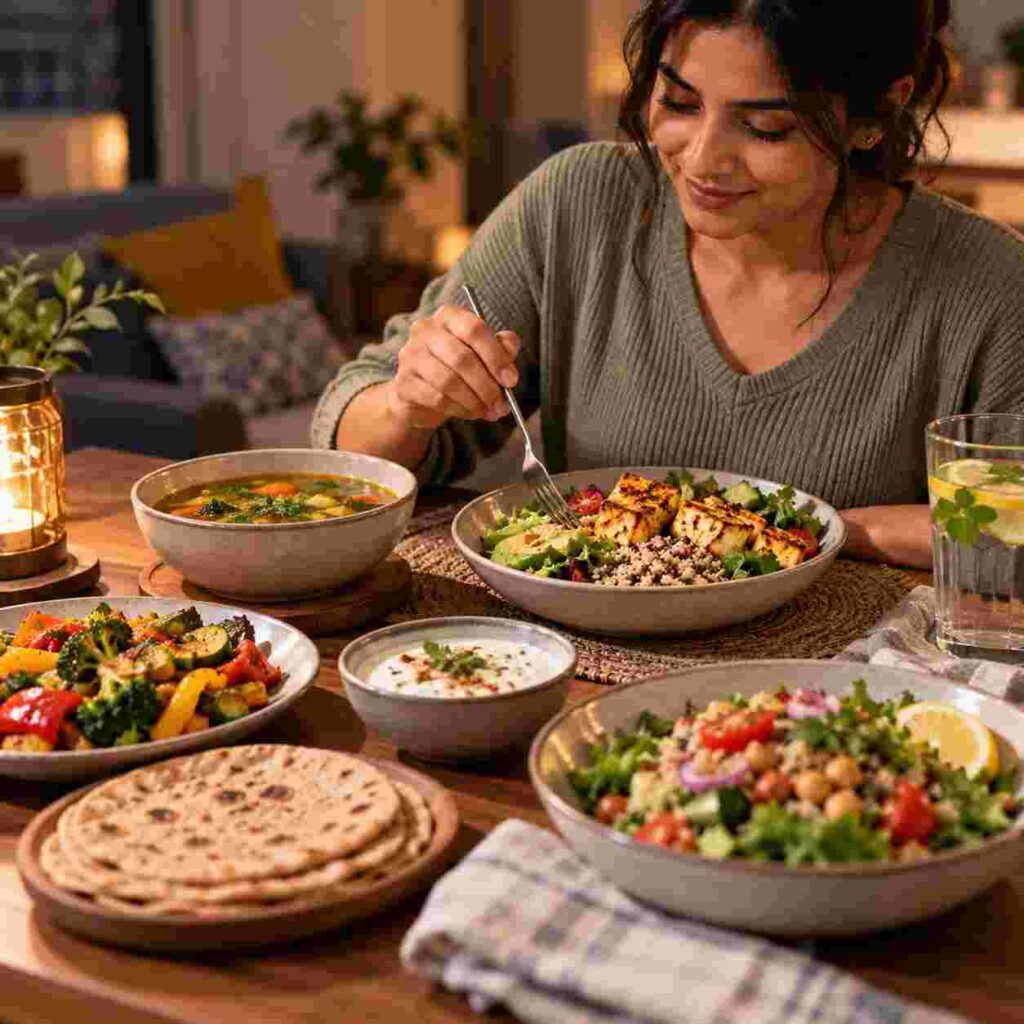
Healthy Dinner Recipes: 5 Easy Meals for a Balanced Diet
Healthy dinner recipes can combine vegetables, protein-rich foods, and whole grains to support a balanced diet. Try these simple meal ideas for everyday cooking.
Vegetable Soup: A warm soup made with carrots, tomatoes, and other vegetables.
Paneer Bhurji with Roti: Crumbled paneer cooked with onions, tomatoes, and spices.
Moong Dal with Chapati: Protein-rich lentils served with whole-wheat chapati.
Grilled Chicken with Vegetables: Chicken served with cooked vegetables for a protein-rich meal.
Vegetable Dalia: Cracked wheat cooked with vegetables for a fibre-containing meal.
Choose dinner portions and ingredients according to your nutritional needs, food preferences, and health goals.
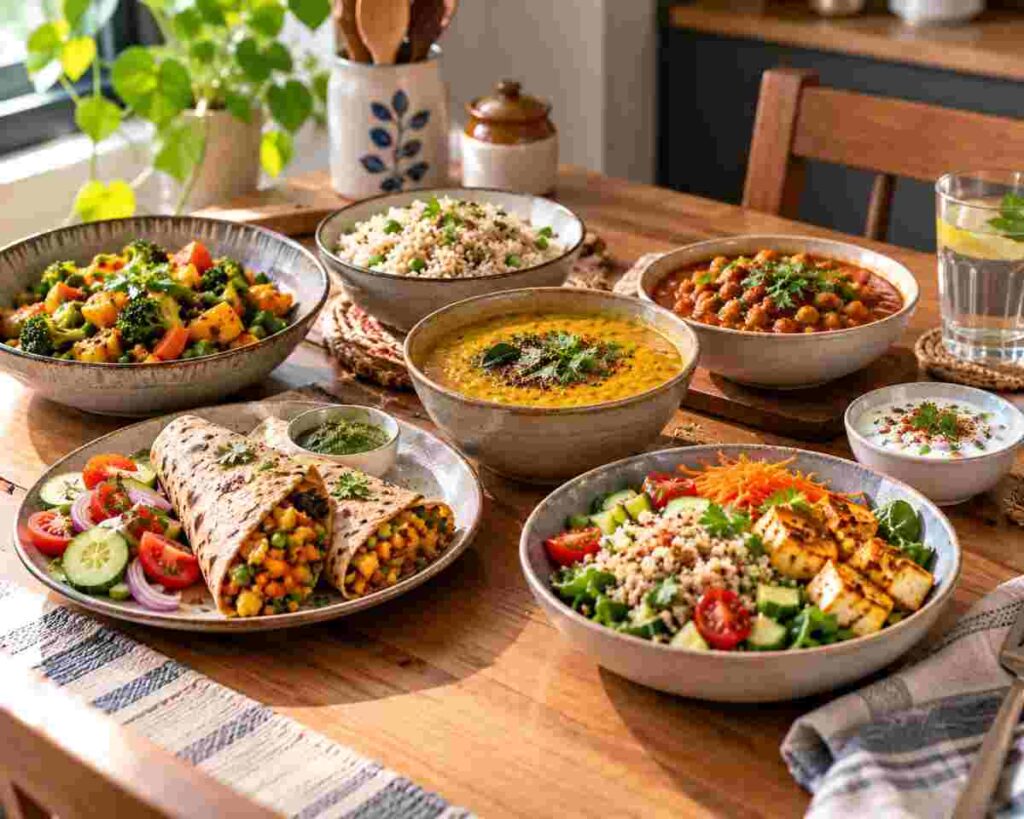
Healthy Vegetarian Recipes: 5 Easy Indian Meal Ideas
Healthy vegetarian recipes use ingredients such as lentils, beans, paneer, whole grains, and vegetables to provide a variety of nutrients. Try these simple vegetarian meal ideas for everyday cooking.
Palak Paneer: Indian cottage cheese cooked with spinach and spices.
Rajma with Brown Rice: Kidney bean curry served with brown rice.
Vegetable Besan Chilla: Gram flour pancakes with chopped vegetables.
Mixed Dal: A nutritious lentil dish prepared with mild spices.
Vegetable Millet Khichdi: Millet, lentils, and vegetables cooked together.
Combine different plant foods and protein sources to support a varied, balanced diet. Adapt ingredients to your preferences and nutritional needs.
EXPLORE YOUR OPTIONS
Find Food Ideas for Your Needs
Explore food and nutrition topics designed to help you make informed everyday food choices.
Healthy Eating
Discover balanced meal ideas and practical everyday food choices.
Vegetarian Nutrition
Explore plant-based foods, lentils, beans, vegetables, and whole grains.
High-Protein Foods
Learn about protein sources and how they fit into a balanced diet.
Heart-Healthy Eating
Explore food choices associated with a heart-conscious eating pattern.
Diabetes & Food
Understand carbohydrates, meal balance, and food choices for people managing diabetes.
Quick & Easy Meals
Find practical meal inspiration for busy schedules.
Find practical food guides to support more informed choices in your everyday routine.
Explore All Food GuidesMore Ways to Support Your Health
Explore trusted health information, nutrition guidance, and practical resources from Ghaziabad Clinic.
Food & Nutrition
Understand balanced eating, essential nutrients, and everyday food choices.
Digestive Health
Explore information about digestive conditions, symptoms, and healthcare options.
Diabetes & Endocrine Health
Learn about blood sugar, diabetes management, and endocrine health.
Healthy Living
Discover practical guidance on everyday habits that support overall well-being.


When Should You Seek Medical Advice About Your Diet?
Food choices can affect how you feel, but persistent symptoms or specific medical concerns may need professional evaluation. Consider speaking with a healthcare professional if you experience:
Persistent digestive problems: Ongoing diarrhoea, constipation, bloating, or abdominal discomfort.
Unexplained weight changes: Unexpected weight loss or gain without a clear reason.
Difficulty managing blood sugar: Repeated high or low blood glucose readings.
Food-related reactions: Recurrent symptoms after eating particular foods.
Specific dietary needs: Difficulty planning meals because of a diagnosed medical condition or nutritional deficiency.
Important: Seek urgent medical care for severe abdominal pain, blood in your stool, fainting, or signs of severe dehydration.