
Well-Being: Simple Ways to Live a Healthier, More Balanced Life
Well-being is about more than staying physically healthy. It also includes mental wellness, quality sleep, balanced nutrition, regular movement and healthy ways to manage everyday stress. Explore practical well-being tips to build sustainable habits, support your overall health and make more informed lifestyle choices.

What Is Well-Being?
Well-being refers to the overall quality of a person’s physical, mental and emotional health. It is not just about avoiding illness; it also involves feeling mentally balanced, maintaining healthy relationships, managing everyday stress and having the energy to participate in daily life.
The Key Pillars of Well-Being
A balanced approach to well-being involves more than one aspect of health. Physical activity, mental wellness, good nutrition, quality sleep and meaningful relationships all contribute to how we feel and function in everyday life. Paying attention to these areas can help you build healthier routines that fit your needs and lifestyle.
Physical Well-Being
Support your body through regular physical activity, balanced nutrition, preventive healthcare and habits that help maintain energy and mobility.
Mental and Emotional Well-Being
Make time for relaxation, recognise your emotions and develop healthy ways to manage everyday stress. Seek professional support when emotional difficulties persist or affect daily life.
Nutrition and Hydration
Choose a varied, balanced diet and drink enough fluids to support your body's everyday needs. Your nutritional requirements may vary depending on your age, activity level and health conditions.
Sleep and Rest
Consistent, restorative sleep supports concentration, mood and physical health. Maintain a regular sleep schedule and create a comfortable, calming bedtime routine.
Social Well-Being
Healthy relationships and supportive social connections can help people feel understood and connected. Make time for meaningful conversations and relationships that support your well-being.
Healthy Lifestyle Habits
Build realistic routines, take breaks when needed, limit harmful habits and make time for activities that bring purpose and enjoyment to your life.

Daily Habits That Support Your Well-Being
Improving your well-being does not require changing your entire lifestyle overnight. Small, consistent actions can help you take better care of your physical and mental health.
1. Stay Physically Active
Include movement in your daily routine through walking, stretching, cycling or another activity you enjoy.
2. Eat a Balanced Diet
Include a variety of vegetables, fruits, whole grains, protein sources and other nutritious foods.
3. Prioritise Quality Sleep
Maintain a consistent bedtime and waking time whenever possible. A relaxing evening routine and a comfortable sleep environment may help improve sleep quality.
4. Manage Everyday Stress
Make time for activities that help you unwind, such as deep breathing, meditation, journaling or spending time outdoors.
5. Stay Connected With Others
Make time for family, friends and supportive relationships. Meaningful social interactions can contribute to emotional well-being and help reduce feelings of isolation.
6. Keep Up With Preventive Healthcare
Attend recommended health check-ups, follow medical advice and discuss persistent symptoms with a qualified healthcare professional.
7. Make Time for Rest and Enjoyment
Balance responsibilities with hobbies, relaxation and activities you find meaningful.
How Mental and Physical Health Work Together
Mental and physical health are closely connected. Emotional stress can affect sleep, energy and daily habits, while physical health problems may influence mood and concentration. Caring for both is an important part of overall well-being.
How to Support Both
Stay active: Choose physical activities suited to your health and abilities.
Prioritise sleep: Maintain a consistent sleep routine.
Eat well: Follow a balanced diet that meets your nutritional needs.
Manage stress: Make time for relaxation and activities you enjoy.
Seek support: Consult a healthcare professional if physical symptoms or emotional difficulties persist.

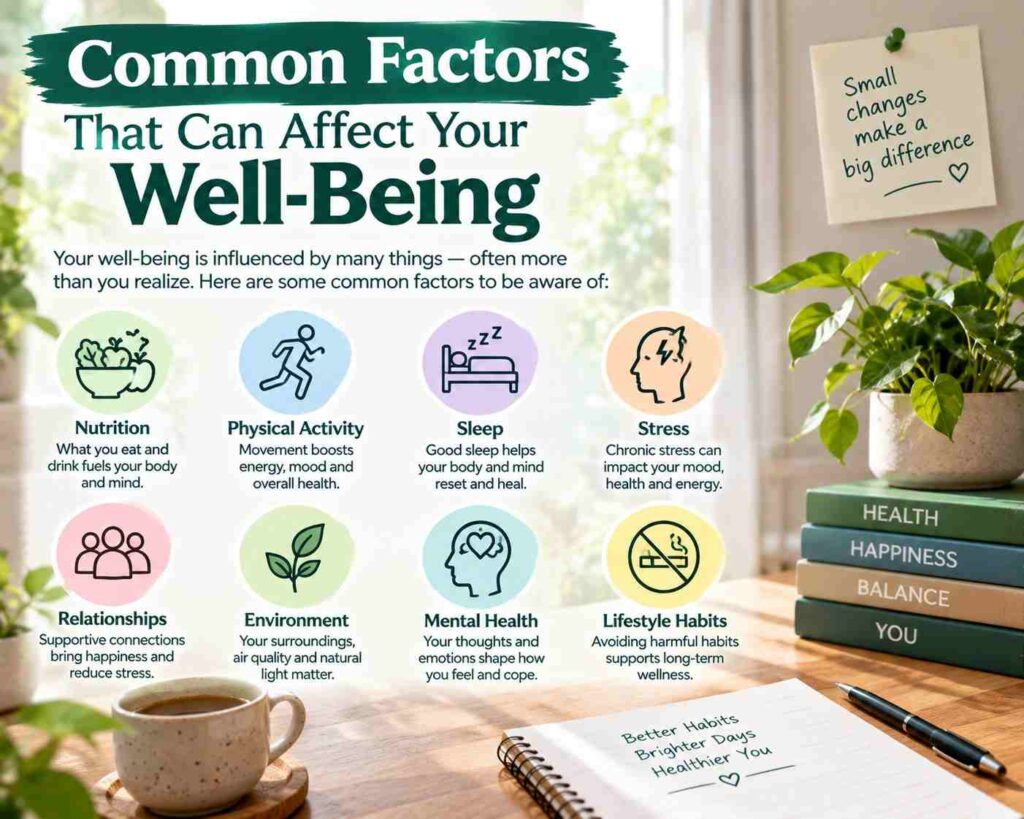
Common Factors That Can Affect Your Well-Being
Your overall well-being is influenced by your daily habits, environment, relationships and physical and emotional health.
Stress and emotional challenges: Ongoing stress may affect mood, sleep and concentration.
Sleep quality: Insufficient or disrupted sleep can affect energy and daily functioning.
Nutrition and physical activity: Eating habits and movement influence physical health and energy levels.
Relationships and social support: Supportive connections can contribute to emotional well-being.
Work-life balance: Excessive demands and limited time for rest may contribute to stress and fatigue.
Existing health conditions: Physical or mental health concerns may affect everyday life and require appropriate care.
Everyone’s circumstances are different. Focus on manageable changes and seek professional guidance when health concerns persist.
When Should You Seek Professional Support for Your Well-Being?
Changes in your physical or emotional health can sometimes signal that you need additional support. Consider speaking with a qualified healthcare professional if you experience persistent fatigue, ongoing sleep difficulties, prolonged stress, frequent low mood or physical symptoms that interfere with daily activities.
Professional guidance can help you understand your concerns and identify appropriate next steps. You do not need to wait until a problem becomes severe to ask for help. Take your well-being seriously. If symptoms persist or affect your daily life, consider seeking professional advice rather than ignoring them.
Need guidance about your health? Take the next step towards professional support.
Book a Consultation Contact Ghaziabad ClinicSimple Ways to Build a Sustainable Well-Being Routine
A healthy well-being routine does not need to be complicated. Start with small, realistic changes that fit your lifestyle and gradually build habits you can maintain.
Start your day mindfully: Take a few moments to plan your day and set realistic priorities.
Make time for movement: Include walking, stretching or other activities suited to your abilities.
Eat balanced meals: Choose a variety of nutritious foods and stay hydrated.
Protect your sleep: Maintain a regular sleep schedule and allow enough time for rest.
Take breaks: Make space for relaxation and activities you enjoy.
Stay consistent: Focus on gradual progress instead of trying to change everything at once.
Remember, well-being is a continuous journey, not a pursuit of perfection. Choose habits that work for you and adjust your routine as your needs change.
Take the Next Step Towards Better Well-Being
Better well-being starts with small, consistent choices. From maintaining healthy habits to caring for your mental and physical health, every positive step can contribute to a more balanced lifestyle.
Explore reliable health information, pay attention to your body’s needs and consult a qualified healthcare professional when you have concerns. Your well-being deserves attention at every stage of life.

Drink enough water
Stay hydrated throughout the day.
Manage stress
Take time to relax, practice breathing exercises, or enjoy hobbies.
Avoid tobacco
Avoid smoking and other tobacco products.
Limit alcohol
If you drink alcohol, keep consumption within recommended limits.
Maintain good hygiene
Wash your hands regularly and maintain personal hygiene.
Take breaks
Avoid sitting for long periods and move around regularly.
Have regular health checkups
Routine checkups can help monitor your health and identify potential problems early.
Maintain social connections
Spend time with family, friends, or people who provide positive support.
Make gradual changes
Focus on small, realistic changes that you can maintain over time.
Common Mistakes to Avoid
Maintaining a healthy lifestyle is not about making perfect choices every day. However, some common habits can make it difficult to maintain good health and well-being.

Skipping Meals Regularly
Skipping meals frequently may make it difficult to maintain balanced nutrition and can affect your energy levels. Try to follow regular meals with a variety of nutritious foods.
Following Extreme Diets
Very restrictive or extreme diets may not provide all the nutrients your body needs. Avoid making major dietary changes without proper guidance from a qualified healthcare professional.
Exercising Too Much
Regular physical activity is important, but excessive exercise without enough rest can cause fatigue, muscle soreness, or injuries. Choose activities that match your fitness level and allow your body enough time to recover.
Not Getting Enough Sleep
Regularly sleeping too little can affect energy, mood, concentration, and overall well-being. Try to maintain a consistent sleep schedule and create a relaxing bedtime routine.
Sitting for Long Periods
Spending many hours sitting, especially without regular movement, can affect physical health. Take short movement breaks during the day and include regular physical activity in your routine.
Ignoring Stress
Constant stress should not be ignored. Finding healthy ways to manage stress, such as exercise, relaxation, hobbies, or talking with someone you trust, can support mental well-being.
Drinking Too Little Water
Not drinking enough fluids can contribute to dehydration. Keep water available and drink regularly, especially during hot weather or physical activity.
Depending Too Much on Supplements
Supplements are not a replacement for a balanced diet. Taking vitamins, minerals, or other supplements without a specific need or professional advice may not be appropriate for everyone.
Ignoring Persistent Health Symptoms
Spending many hours sitting, especially without regular movement, can affect physical health. Take short movement breaks during the day and include regular physical activity in your routine.
Trying to Change Everything at Once
Making too many changes at the same time can make healthy habits difficult to maintain. Start with small, realistic changes and gradually build a healthier routine.

When Should You Talk to a Doctor?
Healthy lifestyle habits can support your overall well-being, but they cannot replace medical care when you have ongoing or unusual health concerns. You should talk to a doctor if you notice symptoms that do not improve, become worse, or start affecting your daily life.
Consider speaking with a healthcare professional if you have:
- Unexplained or persistent tiredness
- Sudden or unexplained weight loss or weight gain
- Ongoing sleep problems
- Frequent headaches, dizziness, or weakness
- Persistent digestive problems
- Changes in appetite that continue for a long time
- Ongoing stress, anxiety, or low mood that affects daily activities
- Persistent pain or other symptoms that concern you
- A new or worsening health problem
- A long-term health condition that requires regular monitoring
Regular health checkups can also help you understand your health needs and identify certain health problems at an early stage.
If you develop severe or sudden symptoms, seek medical attention promptly rather than relying only on lifestyle changes or home remedies.
