

Medicines & Drugs: Types, Prescription Guides and Safe Use
Medicines play an important role in preventing, managing and treating many health conditions. Understanding different medicine forms, prescription instructions, packaging information and safety precautions can help you make more informed decisions about your healthcare.
Explore practical, easy-to-understand information about medicines, from reading a medicine label to knowing when to ask a doctor or pharmacist for advice.
From symptom to solution
See how the right medicine gets matched to your condition — and how it actually works once you take it.
Medicines
- Treats the cause of a condition, manages symptoms, or prevents a future problem
- Comes in different forms (tablet, syrup, injection) depending on how fast the body needs it
- Based on your diagnosis, medical history, and other medications you're taking
- Dosage is calculated for your specific case — not one-size-fits-all
- Same dose, same time, every day — consistency affects how well it works
- Stopping early (even if you feel better) can let the problem come back stronger
- New or worsening side effects
- No improvement after the expected timeframe
- Any confusion about how or when to take it
| Myth | Fact |
|---|---|
| "If a little works, more works faster" | Taking more than prescribed doesn't speed up recovery — it increases risk of side effects |
| "I feel better, so I can stop early" | Many medicines (especially antibiotics) need the full course to fully clear the problem |
| "Natural means no side effects" | Natural or herbal doesn't mean risk-free — some interact seriously with medicines |
Drugs & Supplements
- Prescription medicines go through strict testing; many supplements don't
- Quality and actual dosage can vary noticeably between brands
- Can still interact with prescription medicines you're taking
- Some are unsafe during pregnancy, surgery recovery, or with certain conditions
- Vitamins & minerals (iron, vitamin D, B12)
- Herbal & plant-based supplements
- Protein, fitness, and general wellness supplements
- Mention it to your doctor or pharmacist, especially if you're on regular medication
- Check for interactions using the Interaction Checker below
| Myth | Fact |
|---|---|
| "Supplements can't hurt, even if they don't help" | Some supplements can interact dangerously with medications or existing conditions |
| "More vitamins = better health" | Excess of certain vitamins (like A, D, or iron) can actually be harmful |
| "If it's sold in a store, it's been tested for safety" | Regulation varies — not all supplements undergo the same safety testing as medicines |
Interaction Checker
- Two substances can amplify, cancel out, or change how each other works in the body
- Risk increases the more medicines or supplements you combine
- Anyone managing a chronic condition on daily medication
- People seeing more than one doctor who may not see each other's prescriptions
- Anyone adding a new supplement to an existing routine
- Known interactions between two or more medicines or supplements
- Flags combinations worth discussing with a pharmacist
- A real conversation with your doctor or pharmacist before combining anything new
- Emergency medical advice if you're already experiencing a reaction
| Myth | Fact |
|---|---|
| "My doctor already knows everything I take" | Doctors only know what you tell them — always mention supplements too, not just prescriptions |
| "Interactions only happen with rare or serious drugs" | Even common combinations (like certain painkillers and blood thinners) can interact |
| "If it's fine for a friend, it's fine for me" | Interactions depend on your specific medications and health history, not general safety |
Pill Identifier
- Lost packaging, shared medicine cabinets, or old prescriptions
- Pills given by family without original labeling
- Shape (round, oval, capsule)
- Color and any coating
- Imprint code stamped or printed on the pill
- Households with young children who might find loose pills
- Families caring for elderly relatives on multiple medications
- Don't take it or give it to someone else
- Bring it to a pharmacist in person — most can identify pills on sight
| Myth | Fact |
|---|---|
| "All white round pills are basically the same" | Shape and color alone aren't reliable — the imprint code is what actually identifies a pill |
| "It's probably fine, it looks like a common medicine" | Many different medicines look nearly identical — guessing can be genuinely dangerous |
| "Expired pills are still safe if they look normal" | Appearance doesn't indicate potency or safety — some medicines degrade in ways you can't see |
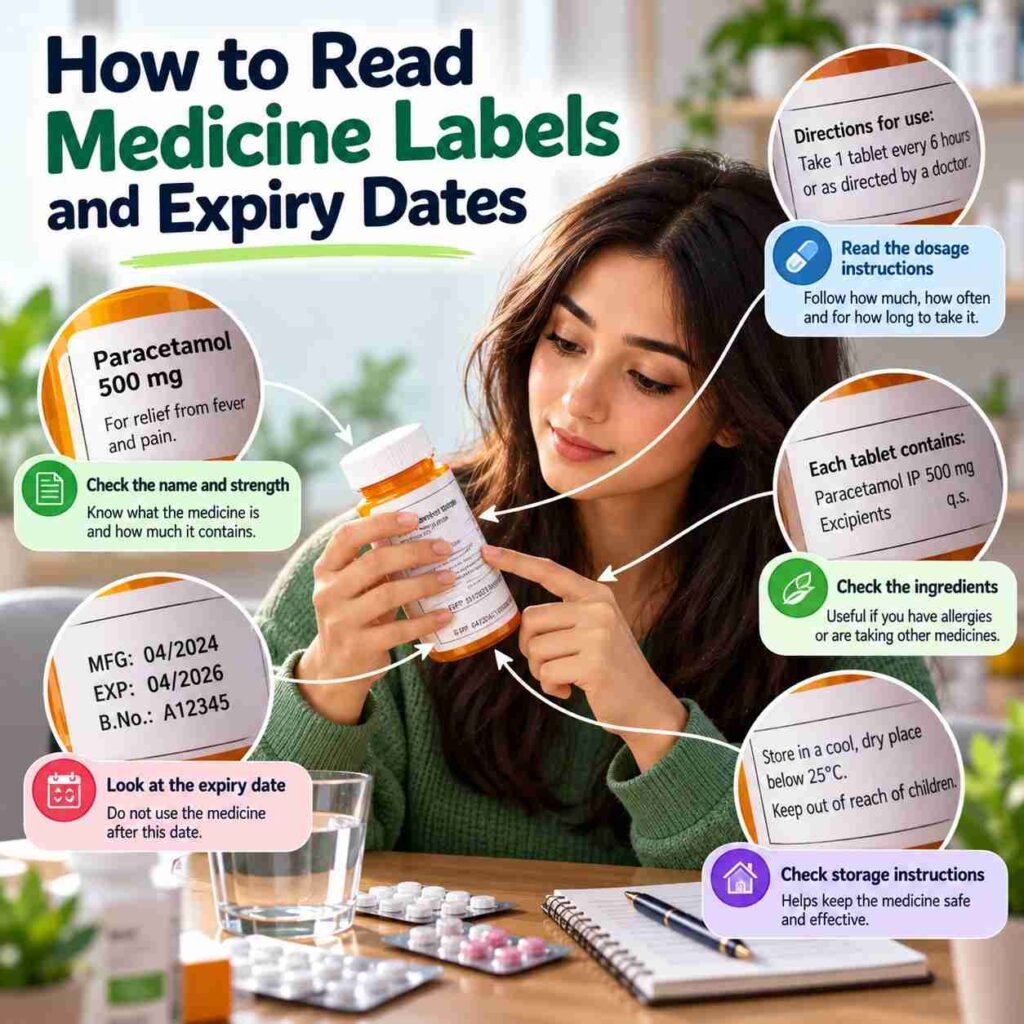
How to Read Medicine Labels and Expiry Dates
Medicine packaging provides important information about the product, its strength, safe use and storage. Checking the label before taking a medicine can help prevent avoidable mistakes.
Active ingredient and strength
Check the active ingredient and strength to help distinguish medicines that may have similar names or packaging. Ask a pharmacist before substituting products.
Expiry date and batch number
Check the expiry date before use. Do not use expired medicine unless a qualified authority has specifically advised otherwise for that product. Batch numbers help identify a product if a recall occurs.
Storage and handling instructions
Follow the packaging instructions about temperature, moisture, refrigeration and protection from light. Keep medicines in their original packaging when practical.
Frequently Asked Questions About Medicines and Drugs
01. What are medicines and drugs?
In healthcare, a medicine is a substance or product used to prevent, diagnose, manage or treat a health condition. The term drug can have a broader meaning, depending on the context.
02. What are the main forms of medicines?
Medicines can come as tablets, capsules, liquids, inhalers, injections, creams, gels and other formulations. The appropriate form depends on the medicine and the treatment requirements.
03. What is the difference between prescription and over-the-counter medicines?
Prescription medicines require authorization from an appropriately qualified prescriber. Over-the-counter medicines can be obtained without a prescription where local rules permit, but they still require careful use according to their instructions.
04. Why is it important to check a medicine's expiry date?
The expiry date indicates the period during which the manufacturer supports the medicine's quality under specified storage conditions. Expired products may not retain their expected quality or effectiveness.
05. What should I do if I take the wrong dose of a medicine?
Seek prompt advice from a doctor, pharmacist or appropriate poison-information service. Do not wait for symptoms if an overdose may have occurred. Seek emergency care immediately if serious symptoms develop.
06. Can I stop taking a medicine when I feel better?
Not without checking the treatment instructions or consulting your healthcare professional. Some medicines require a complete course or a supervised change in dose.
07. Where should I keep medicines at home?
Follow the storage instructions on the packaging. Keep medicines secure, away from children, and protected from unsuitable temperatures, moisture and light as directed.
08. When should I speak to a doctor or pharmacist about a medicine?
Ask for professional advice if the instructions are unclear, you experience unexpected effects, you are unsure about a dose, or you have concerns about whether a medicine is appropriate for you.
