
Psoriasis: Symptoms, Types, Causes, Triggers & Treatment
Psoriasis is a chronic inflammatory skin condition that can cause itchy, dry, thickened or scaly patches of skin. Learn about psoriasis symptoms, types, causes, triggers, diagnosis and treatment options, and when to see a dermatologist for persistent or recurring skin changes.
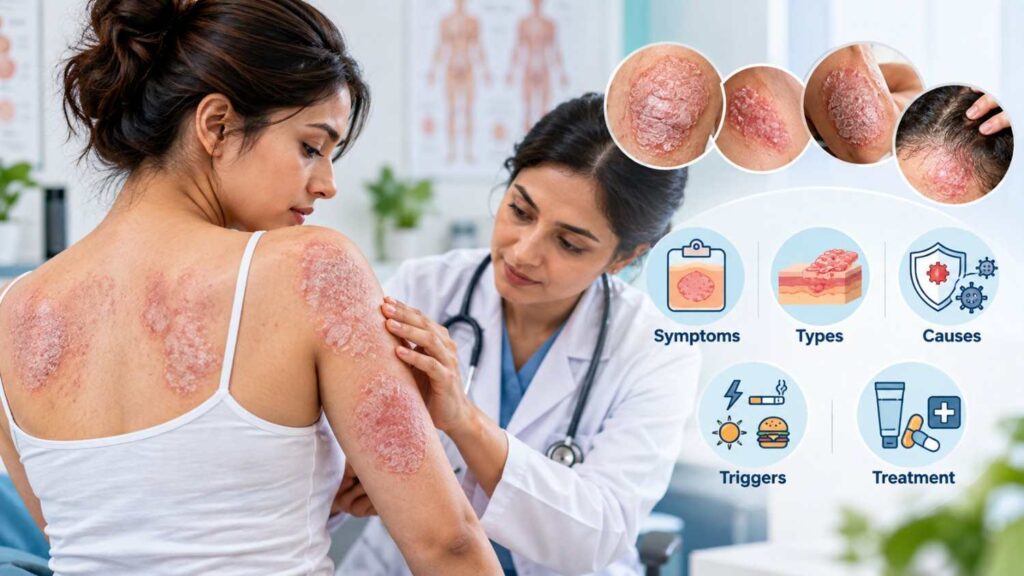
Medically Reviewed • Evidence-Informed • Regularly Updated
What Is Psoriasis?
Psoriasis is a chronic inflammatory skin condition in which skin cells build up more quickly than usual, causing areas of thickened, inflamed or scaly skin. It can affect different parts of the body and may go through periods of flare-ups and improvement.
Psoriasis can affect the skin, scalp and nails, and some people also develop joint symptoms associated with psoriatic arthritis.
| At a Glance | |
|---|---|
| Condition | Chronic inflammatory skin condition |
| Common areas | Scalp, elbows, knees, lower back and other areas |
| Common symptoms | Patches, scaling, itching, dryness |
| Contagious? | No |
| Pattern | Flare-ups and periods of improvement |
| Specialist | Dermatologist |
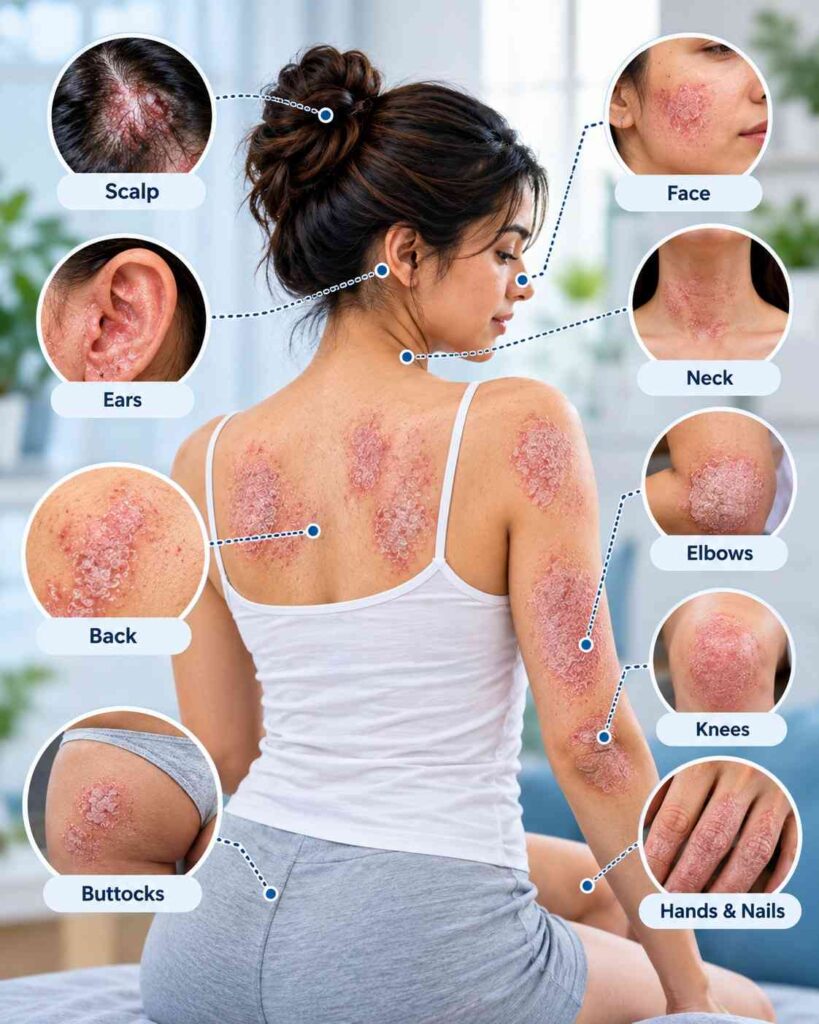
Where Can Psoriasis Appear?
Psoriasis can affect different areas of the body. Its appearance can also vary depending on the location and skin tone.
SCALP
Scalp psoriasis can cause itchy, scaly patches that may extend beyond the hairline.
ELBOWS & KNEES
Plaque psoriasis commonly affects areas such as the elbows and knees and may cause thickened, scaly patches.
NAILS
Nail psoriasis may cause changes such as pitting, discoloration or separation of the nail from the nail bed.
SKIN FOLDS
Inverse psoriasis affects areas where skin rubs together, such as the armpits or groin, and may look smoother and less scaly than typical plaques
Common Symptoms of Psoriasis
Thickened Skin
Raised or thickened areas of affected skin.
⚪ Scales
Some forms, particularly plaque psoriasis, can produce loose white, gray or silvery scales.
🔴 Inflamed Patches
Affected skin may appear red, pink, purple, brown or darker depending on skin tone.
😣 Itching
Itching can occur and may range from mild to significant.
🧴 Dry or Cracked Skin
Affected areas may become dry and crack.
💅 Nail Changes
Psoriasis can affect fingernails or toenails.
🦴 Joint Pain
Some people with psoriasis develop psoriatic arthritis, which can cause joint pain and stiffness.
🔥 Flare-Ups
Symptoms may become more active for periods of time and later improve


What Can Psoriasis Look Like in the Beginning?
01
Small affected areas appear
02
Patches become thicker or more noticeable
03
Scaling or dryness develops
04
Itching or discomfort may occur
05
Symptoms may improve and later flare again
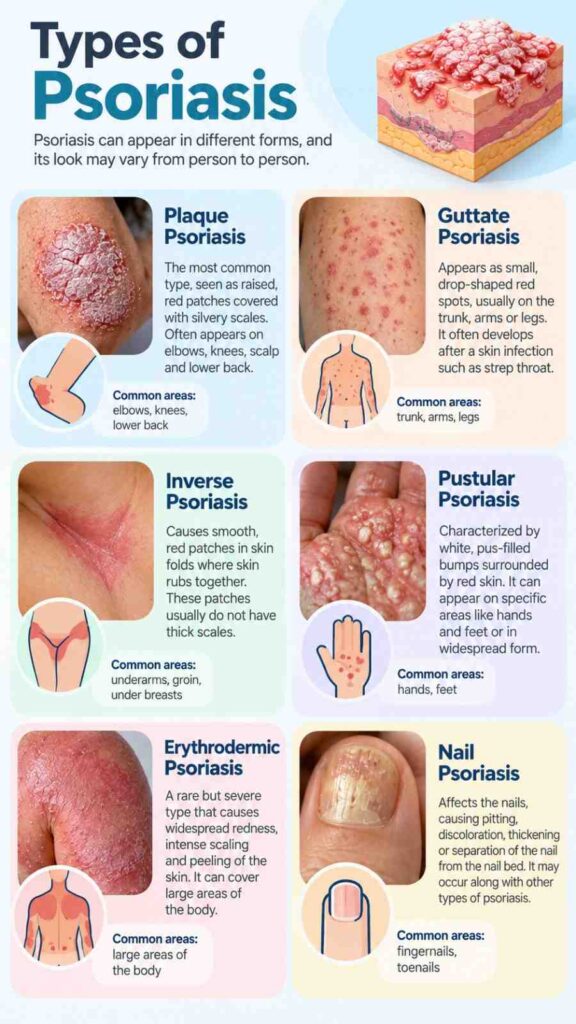
Types of Psoriasis
1. Plaque Psoriasis
The most common form, typically producing raised, scaly patches.
2. Guttate Psoriasis
Often appears as numerous small, drop-shaped spots.
3. Inverse Psoriasis
Usually affects skin folds such as the armpits, groin and areas beneath the breasts.
4. Pustular Psoriasis
Produces pus-filled bumps along with inflammation and redness.
5. Erythrodermic Psoriasis
A rare and potentially serious form that can involve widespread redness and peeling and requires prompt medical attention.
6. Nail Psoriasis
Affects fingernails or toenails and can cause changes in their appearance and structure.
7. Psoriatic Arthritis
A related inflammatory condition that can cause joint pain, stiffness and swelling in people with psoriasis or related family history.
Psoriasis vs Eczema: What's the Difference?
| Feature | Psoriasis | Eczema |
|---|---|---|
| Type | Inflammatory skin disease | Inflammatory skin condition |
| Appearance | Often thicker/scaly patches | Often dry, itchy or inflamed skin |
| Common locations | Elbows, knees, scalp | Commonly affects skin folds and other areas |
| Scaling | Often prominent | Can occur with dryness |
| Contagious | No | No |
| Diagnosis | Clinical assessment | Clinical assessment |
How Psoriasis Develops
A simplified view of what happens in the skin.
Immune System
An altered immune response contributes to inflammation and faster skin-cell turnover.
Skin Cell Turnover
New skin cells accumulate more quickly than normal.
Visible Skin Changes
This buildup contributes to thickened, inflamed or scaly patches.
What Can Trigger a Psoriasis Flare?
Some factors may trigger or worsen psoriasis symptoms.
Stress
Emotional or physical stress may trigger or worsen a flare.
Skin Injury
Injured or irritated skin can sometimes develop new patches.
Certain Infections
Some infections may trigger psoriasis symptoms.
Smoking
Smoking may contribute to psoriasis severity in some people.
Alcohol
Alcohol may trigger or worsen symptoms for some individuals.
Some Medications
Certain medicines may trigger or aggravate psoriasis.
Weather & Environment
Changes in weather, temperature or humidity may affect symptoms.
Individual Triggers
Triggers can vary from person to person.

Who Can Develop Psoriasis?
Family History
Genetics can contribute to psoriasis risk.
Immune System Factors
Psoriasis involves an abnormal immune response.
Environmental Factors
Certain infections, injuries and environmental exposures may contribute to flares.
Lifestyle & Associated Conditions
Some lifestyle factors and health conditions may be associated with psoriasis.
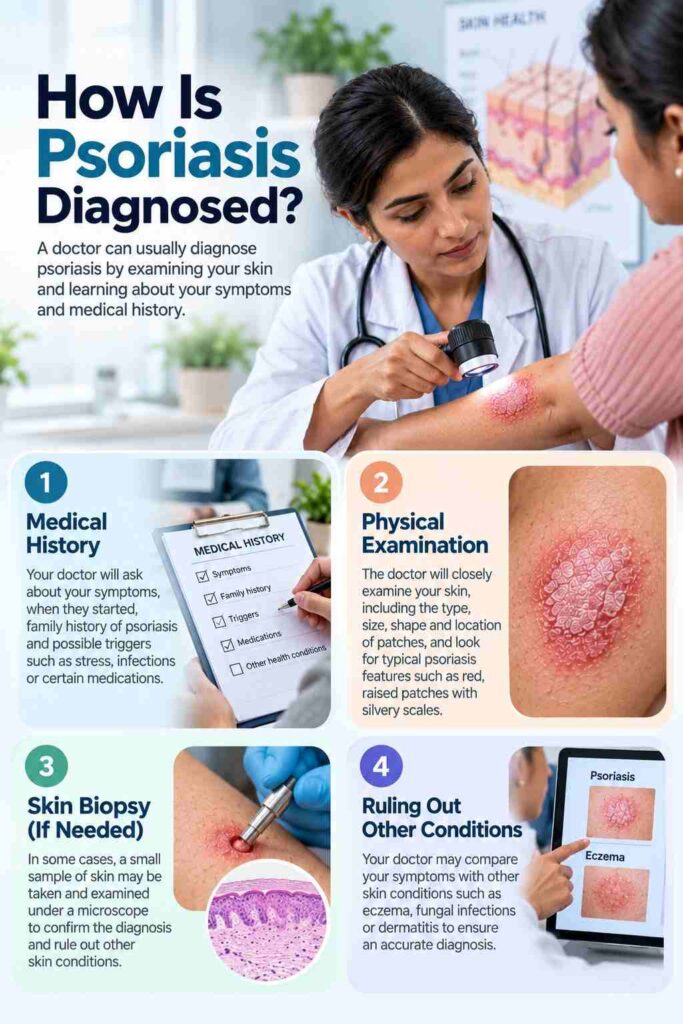
How Is Psoriasis Diagnosed?
01 — Medical History
Your doctor asks about symptoms, duration, flare-ups and family history.
↓
02 — Skin Examination
The dermatologist examines affected areas.
↓
03 — Nail & Joint Assessment
The doctor may look for nail changes or symptoms suggesting psoriatic arthritis.
↓
04 — Additional Testing
In some cases, a small skin sample may be examined to help rule out other conditions.
↓
05 — Diagnosis & Care Plan
Treatment is selected based on the type, extent, location and severity of psoriasis and other individual factors.
How Is Psoriasis Treated?
Treatment depends on how psoriasis affects the skin, how extensive it is, and how a person responds to treatment. Doctors may use one approach or combine several.
Topical Treatments
Creams, ointments, lotions or other medicines applied directly to affected skin.
Phototherapy
Controlled exposure to specific types of ultraviolet light under medical supervision.
Systemic Medicines
Medicines that work throughout the body may be used for some people with more extensive or difficult-to-control disease.
Targeted / Biologic Therapies
Certain prescription therapies target specific parts of the immune system.
Combination Treatment
Doctors may combine approaches depending on the person's condition and treatment response.
Treatment is individualized. The approach used for psoriasis depends on the type and severity of disease, areas affected, other health factors and response to treatment. A dermatologist can help determine an appropriate plan.
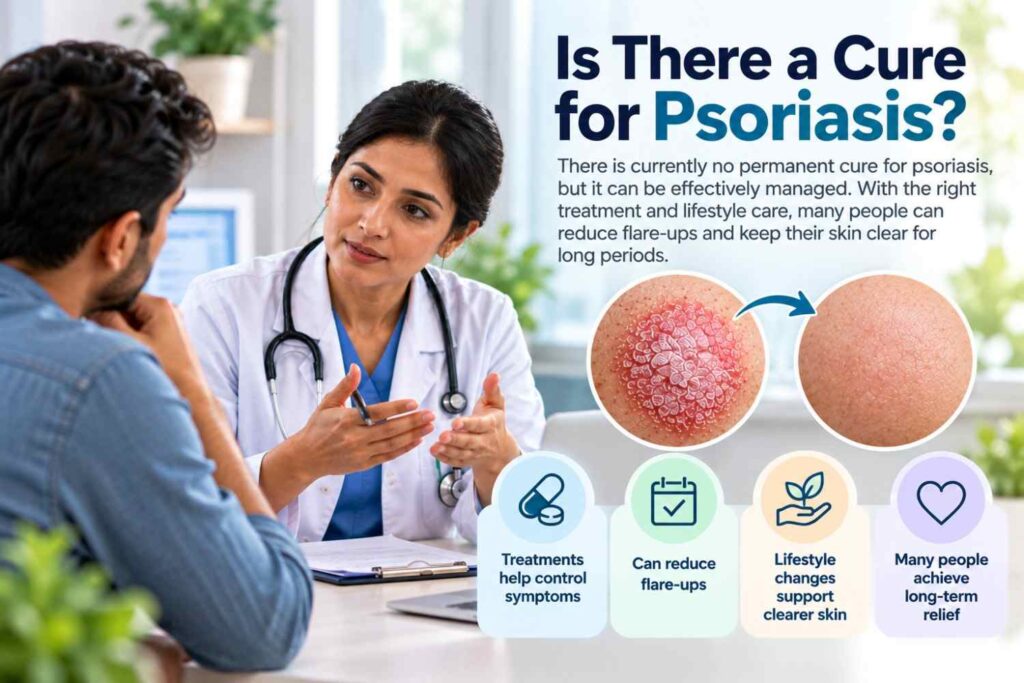
Is There a Cure for Psoriasis?
There is currently no treatment that permanently eliminates psoriasis for everyone. However, many treatments can reduce inflammation and skin symptoms and help control flare-ups. Treatment goals vary depending on the individual and the severity of the condition.
What Is a Psoriasis Flare-Up?
Psoriasis can follow a recurring pattern in which symptoms become more active for a period of time and later improve.
Flare Cycle Symptoms can change over time
Trigger / Individual Factors
Certain triggers or individual factors may contribute to increased psoriasis activity.
Inflammation Increases
Immune-system activity can contribute to increased inflammation in the skin.
Skin Symptoms Become More Noticeable
Redness, scaling, itching or other psoriasis symptoms may become more apparent.
Treatment & Management
Treatment and everyday management can help control symptoms and inflammation.
Symptoms Improve
Symptoms may become less noticeable or enter a period of improvement.
Psoriasis can follow a pattern of periods when symptoms are more active and periods when they improve. Future flare-ups can occur, and patterns can vary from person to person.
Living With Psoriasis
Everyday skin care, treatment routines and emotional support can all play a role in managing life with psoriasis.
Moisturize Regularly
Keeping affected skin moisturized may help with dryness and discomfort.
Be Gentle With Your Skin
Avoid unnecessary scratching or irritation that may aggravate affected skin.
Understand Your Triggers
Keep track of patterns that appear to worsen your symptoms and discuss them with your healthcare professional.
Follow Your Treatment Plan
Use prescribed treatments according to your healthcare professional's instructions.
Protect Your Mental Well-Being
Psoriasis can affect confidence, social interactions and emotional well-being. Seek support when needed.
Keep Follow-Up Appointments
Regular reviews can help your doctor assess symptoms and treatment response.
Psoriasis Can Affect More Than Your Skin
Some people with psoriasis develop psoriatic arthritis, an inflammatory condition that can affect the joints, tendons and other areas.
Symptoms may include joint pain, stiffness, swelling and fatigue.
Inflammation Know the signs
Watch for These Signs

When to See a Doctor for Psoriasis
Consider medical evaluation if you have a persistent or recurring rash, unexplained scaling, significant itching, widespread skin changes, nail changes, or symptoms that are affecting your daily life.
Is That Rash Psoriasis?
Select the symptoms or skin changes you are experiencing to learn about conditions that can sometimes cause similar symptoms.
I have...
Possible conditions can include
Psoriasis, eczema, fungal infections, contact dermatitis and other skin conditions can sometimes cause similar symptoms.
These symptoms cannot be used to diagnose psoriasis on their own. A dermatologist can examine your skin and recommend appropriate evaluation when needed.
Frequently Asked Questions About Psoriasis
Clear answers to common questions about psoriasis, symptoms, causes, treatment and when to seek medical care.
Psoriasis is a chronic inflammatory skin condition that can cause thickened, inflamed or scaly patches of skin. It can affect different areas of the body and may have periods of flare-ups and improvement.
No. Psoriasis cannot be passed from one person to another through physical contact.
Common symptoms include thickened or raised patches, scaling, itching, dryness and skin irritation. Nail changes and joint symptoms can also occur in some people.
The exact cause is not fully understood. Psoriasis involves the immune system, and genetic and environmental factors can contribute to its development.
Triggers vary between people but may include stress, infections, skin injury, smoking, alcohol, certain medicines and environmental factors.
Types include plaque, guttate, inverse, pustular, erythrodermic and nail psoriasis. Psoriatic arthritis is a related condition that can affect people with psoriasis.
There is currently no permanent cure for psoriasis, but treatments can help control symptoms and reduce flare-ups.
Yes. Nail psoriasis can cause changes such as pitting, discoloration and changes in nail structure.
Psoriasis can be associated with psoriatic arthritis, which may cause joint pain, stiffness and swelling.
No. They are different inflammatory skin conditions, although some symptoms can look similar. A dermatologist can help distinguish between them.
A dermatologist can often diagnose psoriasis by examining the skin and asking about symptoms and medical history. In some cases, a skin biopsy may be used to help rule out other conditions.
Treatment may include topical medicines, phototherapy, systemic medicines and targeted or biologic therapies, depending on the person's condition.
A dermatologist is the primary specialist for evaluating and treating psoriasis.
See a healthcare professional for persistent or recurring rashes, significant itching or scaling, nail changes, widespread symptoms or possible joint involvement. Severe or rapidly widespread skin symptoms require prompt medical attention.
Psoriasis can look different from person to person, and several skin conditions may cause similar symptoms. Information on this page is educational and does not replace an examination or diagnosis by a healthcare professional.
Don't Ignore Changes in Your Skin
Persistent rashes, scaling, itching, nail changes or joint symptoms deserve proper evaluation. Understanding what’s causing your symptoms is the first step toward appropriate care.