

Breast Cancer: Symptoms, Causes, Types, Diagnosis & Treatment
Breast cancer develops when abnormal cells in the breast grow uncontrollably and may spread into nearby tissues or other parts of the body. It can affect women and men, although it is much more common in women.
Recognising possible breast cancer symptoms, understanding risk factors, and learning about diagnosis and treatment options can help you make informed decisions about your health. This guide covers the common types of breast cancer, warning signs, diagnostic tests, stages, and available treatment approaches.
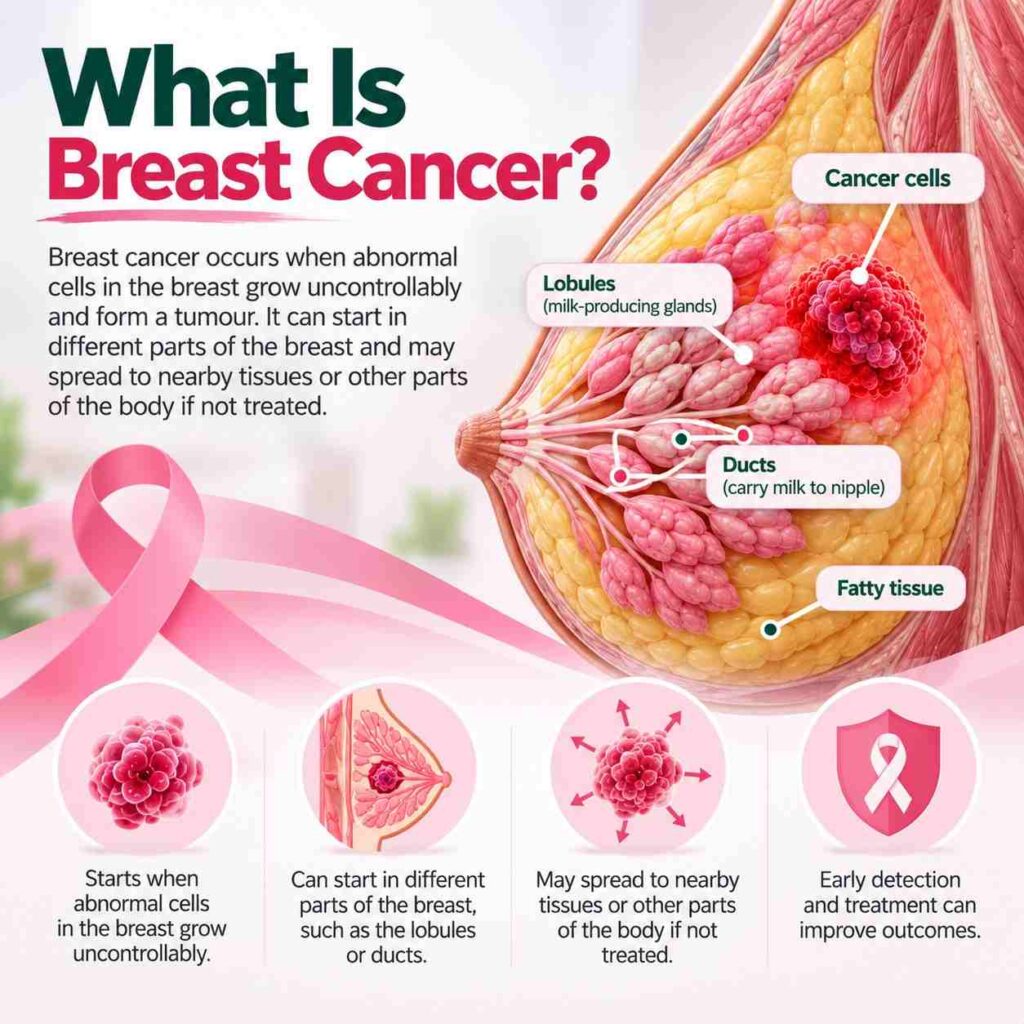
What Is Breast Cancer?
Breast cancer is a disease in which abnormal cells in breast tissue grow and divide uncontrollably. It often begins in the milk ducts or lobules, which are responsible for carrying and producing breast milk.
Some breast cancers remain confined to their original location, while invasive breast cancer can grow into surrounding tissue and may spread to nearby lymph nodes or distant organs. The type, stage, grade, and biological characteristics of breast cancer help doctors determine the most appropriate treatment.
Breast cancer is not one single disease. Different types can behave differently, which is why an accurate diagnosis is important for planning individualised care.
Breast Cancer Symptoms: 8 Warning Signs to Recognise
Breast cancer symptoms vary from person to person. Some people notice a physical change, while early breast cancer may cause no obvious symptoms. Knowing what is unusual for you can help you seek timely care.
A New Breast Lump
A new lump or thickened area in the breast or armpit is a possible warning sign. Many lumps are benign, but any new or changing lump should be assessed by a healthcare professional.
Changes in Breast Size or Shape
An unexplained change in the size, contour or shape of one breast may need medical evaluation, particularly when the change is new.
Breast Skin Changes
Skin dimpling, puckering, persistent redness, swelling or a texture resembling orange peel can be associated with breast conditions, including some breast cancers.
Nipple Changes
A newly inverted nipple, persistent crusting or an unusual rash around the nipple may require professional assessment.
Unusual Nipple Discharge
Discharge that occurs without squeezing, especially if it contains blood or is not breast milk, should be discussed with a healthcare professional.
Swelling in the Armpit
A lump or swelling in the armpit may involve lymph nodes. There are many possible causes, but persistent or unexplained swelling should be checked.
Persistent Breast or Armpit Pain
Breast pain alone is not usually a sign of breast cancer. Persistent pain accompanied by a lump, skin change or nipple change deserves medical assessment.
Persistent or Unexplained Breast Changes
Any new or unusual breast change that persists should be evaluated, even if it does not cause pain or seem severe.
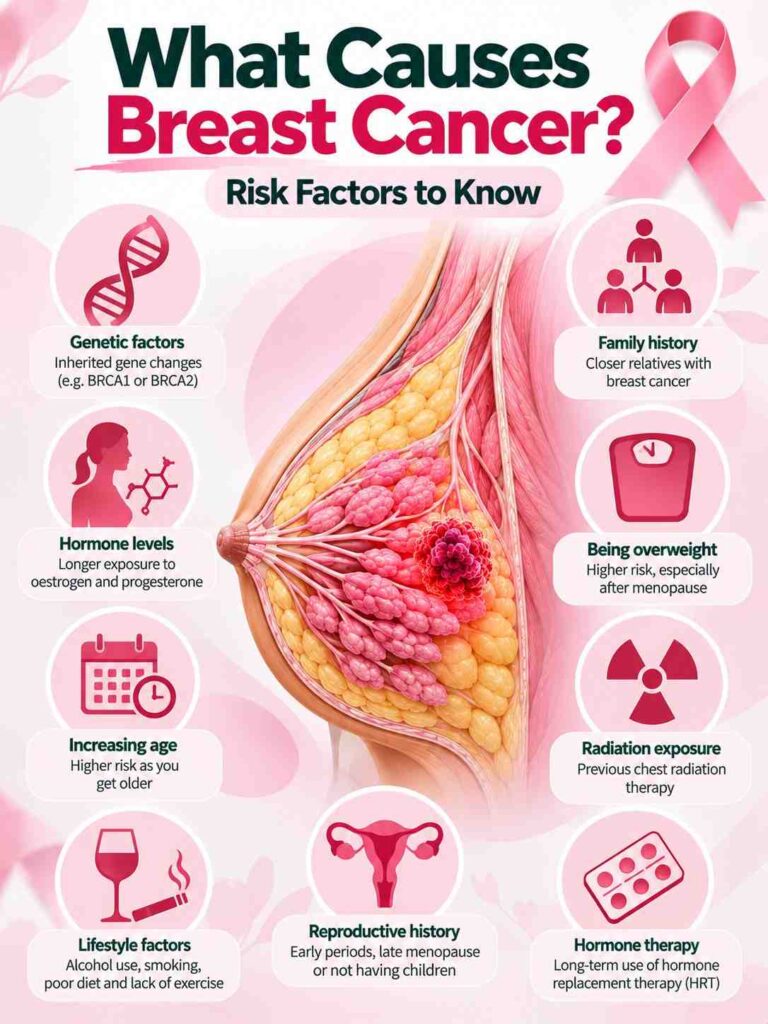
What Causes Breast Cancer? Risk Factors to Know
Breast cancer develops when changes in the DNA of breast cells affect how they grow and divide. There is not always one identifiable cause, and some people develop breast cancer without known risk factors.
Factors associated with an increased risk of breast cancer include:
Increasing age: The risk generally rises with age.
Family history: Having close relatives with breast or ovarian cancer may increase risk.
Inherited genetic variants: Changes in genes such as BRCA1 and BRCA2 can increase breast cancer risk.
Hormonal and reproductive factors: Certain lifetime hormone exposures and reproductive factors may influence risk.
Previous breast conditions: Some breast conditions are associated with a higher future risk.
Previous chest radiation: Radiation exposure involving the chest, particularly at a young age, can increase risk.
Lifestyle factors: Alcohol consumption and excess body weight after menopause are associated with increased risk.
Having a risk factor does not mean someone will definitely develop breast cancer. A healthcare professional can help assess personal and family history and discuss appropriate risk-reduction strategies.
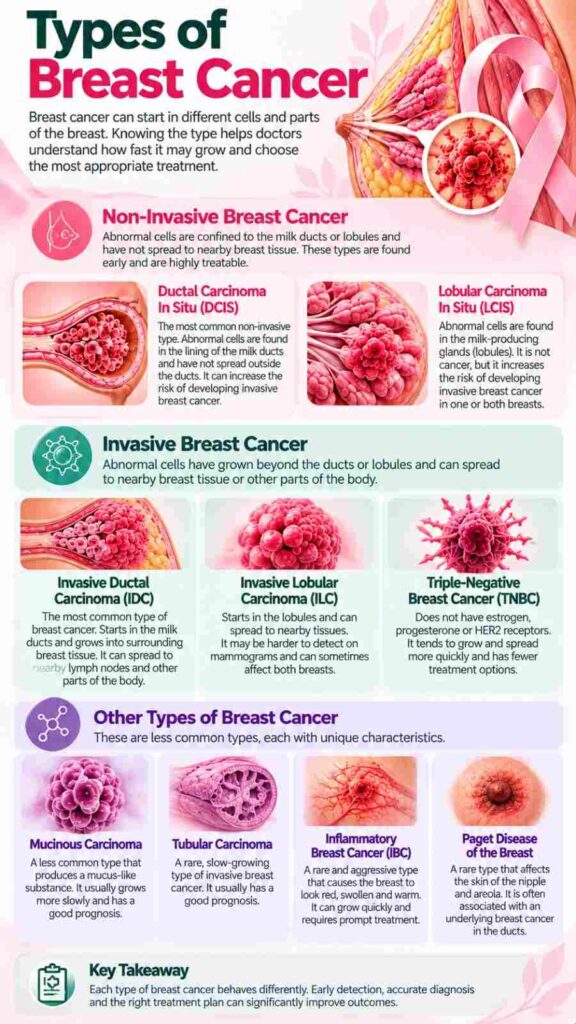
Types of Breast Cancer
Breast cancer includes several types that differ in where they begin, how they behave, and which treatments may be appropriate.
Invasive Ductal Carcinoma
Invasive ductal carcinoma begins in the milk ducts and grows into surrounding breast tissue. It is one of the most common types of invasive breast cancer.
Invasive Lobular Carcinoma
Invasive lobular carcinoma begins in the milk-producing lobules and grows into nearby tissue. It may not always form a distinct lump.
Ductal Carcinoma in Situ (DCIS)
DCIS involves abnormal cells confined to the milk ducts. It is considered non-invasive breast cancer, but medical evaluation and appropriate treatment planning are important.
Inflammatory Breast Cancer
Inflammatory breast cancer is an uncommon, often aggressive type that can cause rapid swelling, redness, warmth, or skin thickening. A distinct lump may not be present, so prompt medical assessment is important.
Triple-Negative Breast Cancer
Triple-negative breast cancer does not have oestrogen receptors, progesterone receptors, or excess HER2 protein. These characteristics influence which treatment options may be appropriate.
HER2-Positive Breast Cancer
HER2-positive breast cancer has higher-than-normal HER2 protein levels or related gene activity. Targeted treatments may be recommended for eligible patients.
Hormone Receptor-Positive Breast Cancer
Hormone receptor-positive breast cancer has receptors for oestrogen, progesterone, or both. Hormone therapy may be an important part of treatment.
How Is Breast Cancer Diagnosed?
Breast cancer diagnosis involves assessing symptoms, medical history and appropriate test results. The recommended investigations depend on age, symptoms, risk factors and initial examination findings.
1. Clinical Breast Examination
A healthcare professional may ask about breast changes, personal and family history, and previous breast conditions before examining the breasts and nearby lymph node areas.
2. Mammogram for Breast Cancer
A mammogram uses X-rays to create images of breast tissue. Screening mammograms look for possible signs of cancer in people without symptoms, while diagnostic mammograms investigate symptoms or abnormal screening results.
3. Breast Ultrasound
Ultrasound uses sound waves to create images of breast tissue. It may help evaluate a lump or clarify findings from a clinical examination or mammogram.
4. Breast MRI
Magnetic resonance imaging (MRI) may be recommended for selected higher-risk assessments or to investigate particular findings in suspected breast cancer.
5. Breast Biopsy
A biopsy collects a sample of tissue or cells for laboratory examination. It can help determine whether an abnormal area contains cancer cells and, if so, identify important features.
6. Hormone Receptor & HER2 Testing
If cancer is confirmed, laboratory testing may assess oestrogen receptors (ER), progesterone receptors (PR) and HER2. These results help guide treatment decisions.
7. Treatment Planning
The care team considers the diagnosis, cancer stage, tumour characteristics, overall health and personal preferences to discuss appropriate treatment options.
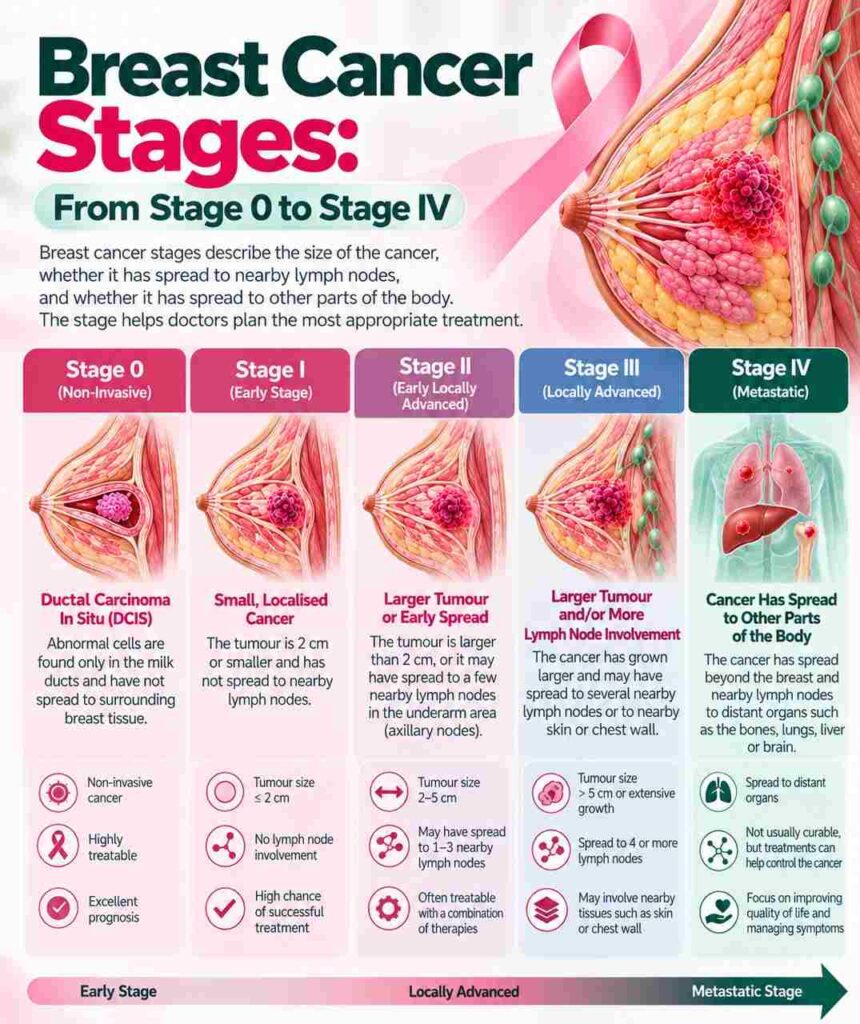
Breast Cancer Stages: From Stage 0 to Stage IV
Breast cancer staging describes the extent of the disease and helps doctors plan treatment. Staging considers factors such as tumour size, nearby lymph node involvement, distant spread, and relevant tumour characteristics.
Stage 0: Includes non-invasive disease such as ductal carcinoma in situ (DCIS).
Stage I: Generally refers to early invasive breast cancer with limited spread.
Stage II: The cancer may be larger or involve a limited number of nearby lymph nodes.
Stage III: The cancer may involve more extensive nearby tissue or lymph nodes without distant spread.
Stage IV: The cancer has spread to distant parts of the body and is known as metastatic breast cancer.
This is a simplified overview. Exact staging depends on clinical findings, pathology, and the staging system used. Your healthcare team can explain what the stage means for your individual diagnosis and treatment options.
Breast Cancer Treatment Options
Breast cancer treatment is personalised according to the cancer type, stage, grade, biomarker results, overall health and individual preferences. Treatment may involve one approach or a combination of therapies.
Breast Cancer Surgery
Surgery may remove the cancer while preserving breast tissue when appropriate, or remove the breast through a mastectomy.
Explore this option
The recommended procedure depends on tumour characteristics, the extent of disease, other treatment needs and personal clinical factors. Your surgical team can explain the benefits, risks and available choices.
Radiation Therapy
Radiation uses high-energy treatment to damage cancer cells in a targeted area. It may be recommended after surgery or in other circumstances.
Explore this option
The care team determines whether radiation is appropriate, which area needs treatment and how the course should be planned. Possible side effects depend on the treatment area and schedule.
Chemotherapy
Chemotherapy uses medicines to destroy cancer cells or stop them from multiplying. It may be given before or after surgery, or for cancer that has spread.
Explore this option
The medicines, number of treatment cycles and timing vary by diagnosis. The oncology team can discuss expected benefits, side effects and ways to manage them.
Hormone Therapy
Hormone therapy may treat hormone receptor-positive breast cancer by blocking hormone effects or reducing hormone production.
Explore this option
Treatment choice depends on hormone receptor results and individual circumstances. The team can explain the expected duration, possible side effects and how treatment is monitored.
Targeted Therapy
Targeted medicines act on specific features involved in cancer-cell growth. HER2-targeted medicines may suit certain HER2-positive breast cancers.
Explore this option
Biomarker testing can help determine whether a targeted medicine may be appropriate. Not every breast cancer has a target for an available targeted treatment.
Immunotherapy
Immunotherapy helps the immune system recognise or respond to cancer. It may be suitable for selected cases, including some triple-negative breast cancers.
Explore this option
Eligibility depends on the cancer subtype, stage, test results and treatment plan. Immunotherapy can cause immune-related side effects, which need medical monitoring.
Follow-Up & Supportive Care
Follow-up helps monitor recovery and treatment effects. Supportive care can address pain, fatigue, emotional distress and other concerns throughout treatment.
Explore this option
Follow-up plans vary. Tell your care team about new symptoms, persistent side effects or emotional concerns so they can assess your needs and discuss suitable support.
Breast Cancer Screening and Early Detection
Breast cancer screening aims to find cancer before symptoms appear. Mammography is a commonly used screening test, but the most appropriate approach depends on age, personal risk, family history and local medical guidance.
What Is a Mammogram?
A mammogram is an X-ray examination of the breast. Screening mammography is used to look for possible signs of breast cancer in people who do not have breast symptoms.
Screening can help detect some cancers earlier, but it does not find every cancer. Your healthcare professional can help determine when screening is appropriate for you.
Screening vs Diagnostic Breast Tests
The right test depends partly on whether you have symptoms. Screening and diagnostic assessments serve different purposes.
Screening Tests
Screening looks for possible signs of breast cancer before noticeable symptoms develop. Mammography is a commonly used screening method.
- May identify changes that need further evaluation.
- Timing and frequency depend on age, risk and medical guidance.
- A normal result cannot rule out every cancer.
Diagnostic Tests
Diagnostic assessment investigates a breast symptom or a finding that needs closer examination after screening.
- Clinical breast examination and review of symptoms.
- Diagnostic mammography or ultrasound when appropriate.
- A biopsy may be recommended if a suspicious area needs testing.
Do You Have a Higher Risk of Breast Cancer?
A strong family history or certain inherited genetic variants may mean you need a different screening plan. Ask a healthcare professional whether risk assessment or genetic counselling may be appropriate for you.
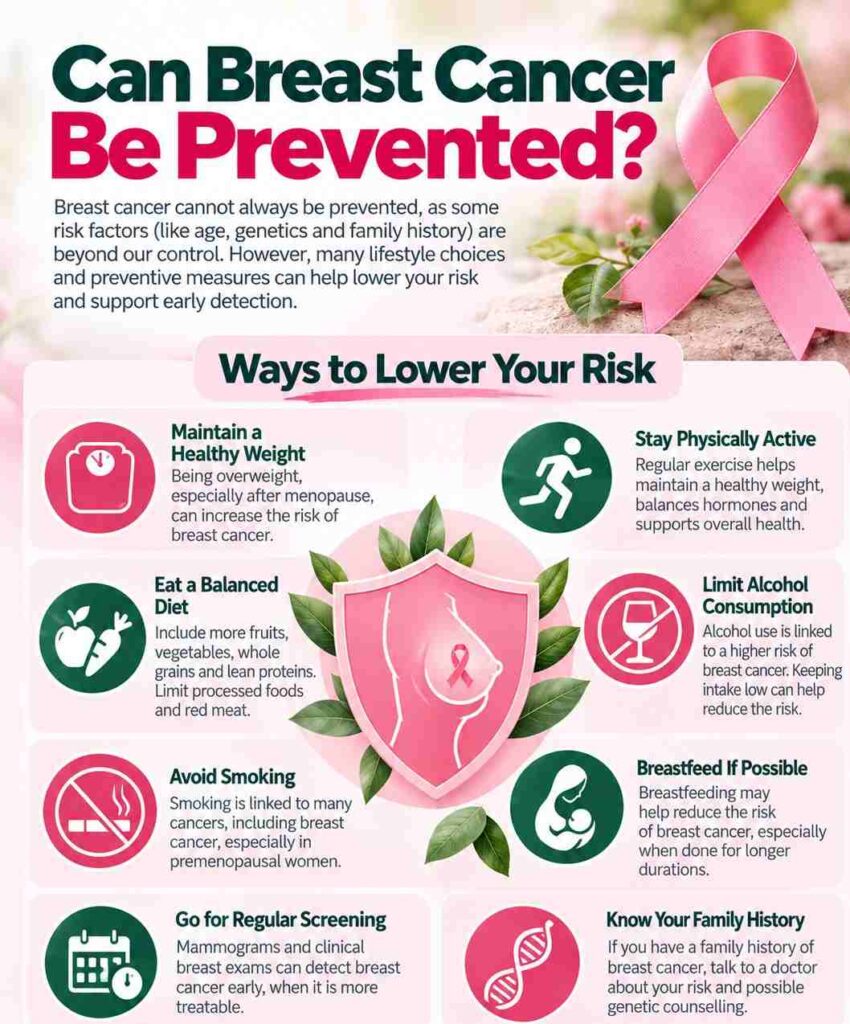
Can Breast Cancer Be Prevented?
There is no guaranteed way to prevent breast cancer. However, some measures may help reduce certain risks, while factors such as age and inherited genetic variants cannot be changed.
Steps that may support risk reduction include:
Being physically active and maintaining a healthy lifestyle.
Limiting or avoiding alcohol.
Discussing personal and family history with a healthcare professional.
Seeking advice about genetic counselling when family history suggests an increased inherited risk.
Following screening recommendations appropriate to your age and risk profile.
Screening can help detect some breast cancers earlier, but it does not prevent the disease itself. A healthcare professional can help you understand your individual risk and the options available.
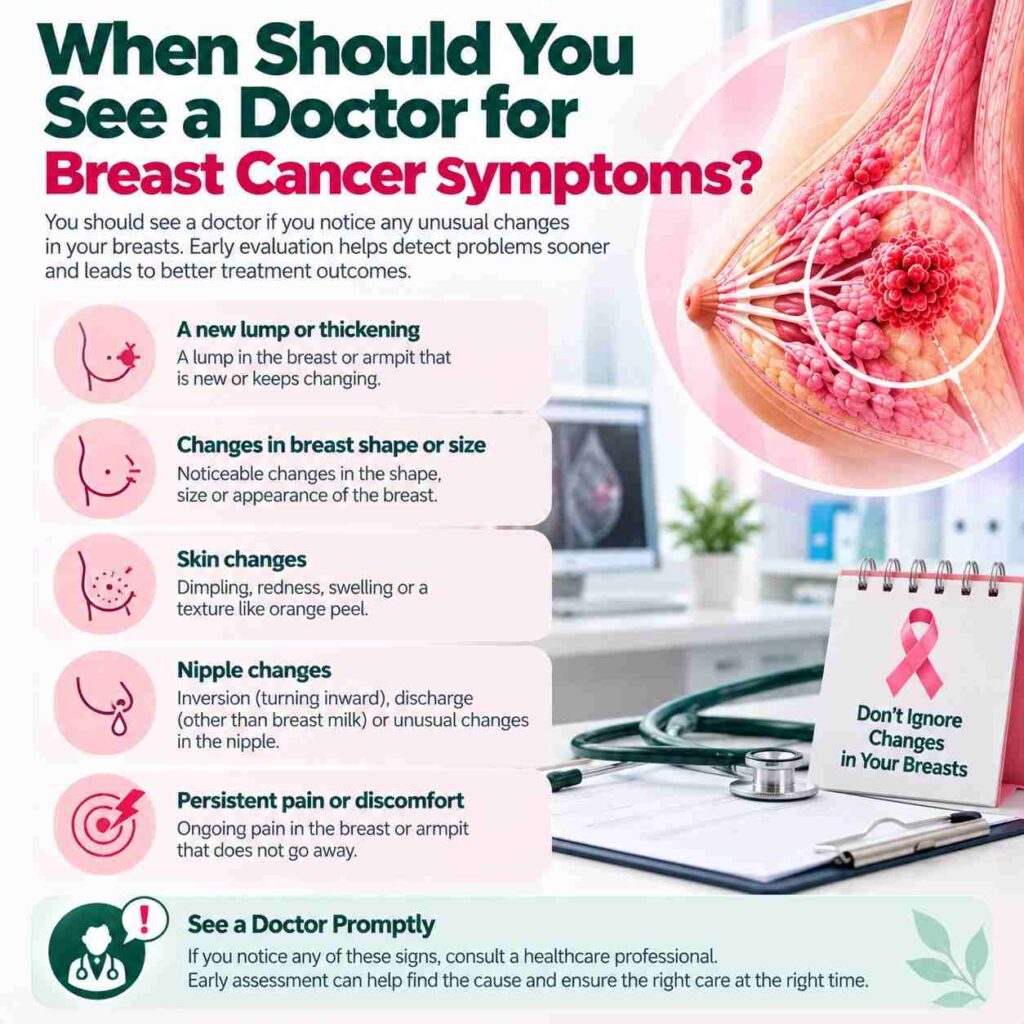
When Should You See a Doctor for Breast Cancer Symptoms?
Arrange a medical appointment if you notice a new breast or armpit lump, unexplained swelling, unusual nipple discharge, a newly inverted nipple, skin dimpling, or another persistent breast change.
Most breast changes are not cancer, but professional assessment can help identify the cause. Seek prompt medical evaluation for rapidly developing breast swelling, redness, warmth, or skin thickening, particularly when the changes are progressing.
Do not wait for pain to develop before seeking advice, because breast cancer may not cause pain in its early stages.
If you are concerned about a breast change, a healthcare professional can advise whether examination, imaging, or further testing is needed.
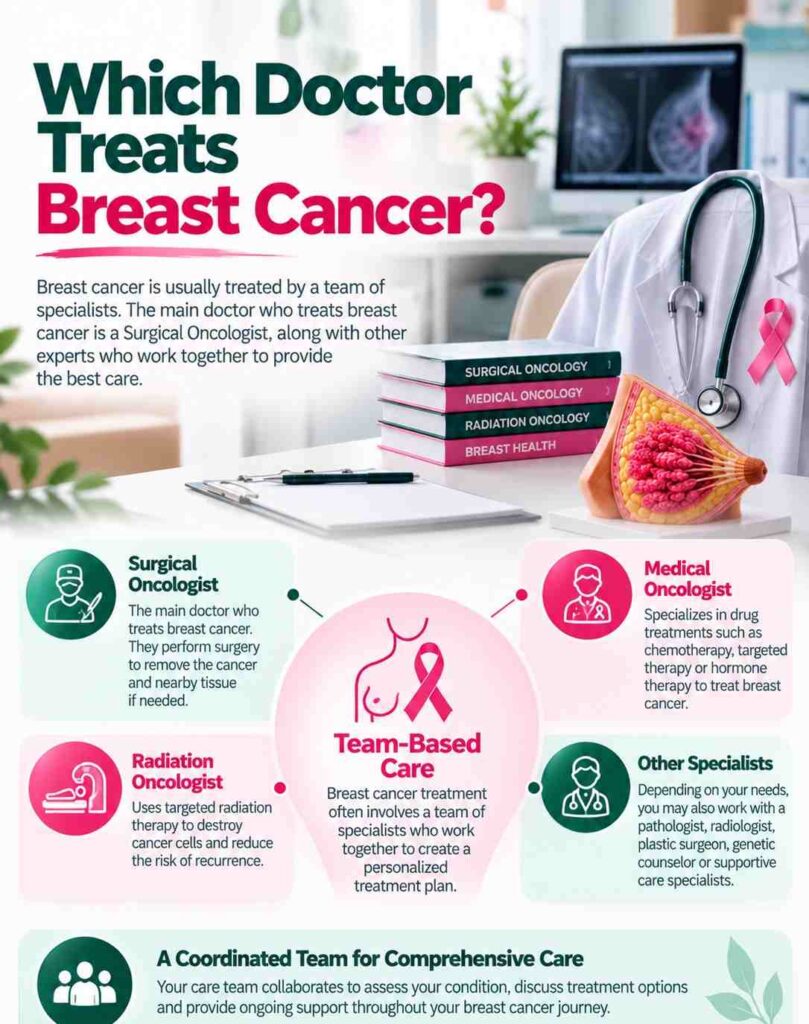
Which Doctor Treats Breast Cancer?
Breast cancer care may involve several specialists working together to diagnose the condition, recommend treatment, and monitor recovery.
Breast surgeon or surgical oncologist: Evaluates surgical options and may perform breast cancer surgery.
Medical oncologist: Plans treatments such as chemotherapy, hormone therapy, targeted therapy, or immunotherapy.
Radiation oncologist: Plans and supervises radiation therapy.
Radiologist: Interprets breast imaging and may perform image-guided procedures.
Pathologist: Examines tissue samples and reports the cancer type and relevant tumour characteristics.
Breast care nurse and supportive care professionals: Help with treatment education, symptom management, and emotional support.
The specialists involved depend on the diagnosis and the treatment required. Your treating team can explain how your care will be coordinated.
Frequently Asked Questions About Breast Cancer
Find answers to common questions about breast cancer symptoms, breast lumps, diagnosis, treatment and early detection.
Q1 What are the first signs of breast cancer?
Possible signs include a new lump, swelling in the breast or armpit, changes in breast shape, skin dimpling, nipple changes or unusual discharge. Some early breast cancers cause no noticeable symptoms.
Q2 Does a breast lump always mean breast cancer?
No. Breast lumps can be caused by cysts, fibroadenomas, hormonal changes and other benign conditions. However, a new or changing lump should be evaluated by a healthcare professional to determine its cause.
Q3 Can breast cancer occur without a lump?
Yes. Some breast cancers cause skin or nipple changes, swelling or other abnormalities without a clearly felt lump. Screening and appropriate medical assessment can help investigate concerning changes.
Q4 Is breast pain a sign of breast cancer?
Breast pain alone is not usually a sign of breast cancer. Hormonal changes and benign conditions commonly cause discomfort. Persistent pain or pain accompanied by other unusual changes should be assessed by a healthcare professional.
Q5 Can men develop breast cancer?
Yes. Men have breast tissue and can develop breast cancer, although it is much less common than in women. A new lump, nipple discharge or another unexplained breast or chest change should be checked by a healthcare professional.
Q6 How is breast cancer diagnosed?
Tests may include a clinical examination, mammogram, ultrasound, MRI in selected cases and a biopsy. If cancer is confirmed, hormone receptor and other biomarker tests may help guide treatment decisions.
Q7 Is breast cancer treatable?
Treatment options are available for many types and stages of breast cancer. The most appropriate treatment and expected outcome depend on the individual diagnosis, extent of the disease and other clinical factors.
Q8 What is the difference between breast cancer screening and diagnosis?
Screening looks for possible signs of cancer in people without symptoms who meet the relevant criteria. Diagnostic tests investigate symptoms or abnormal screening results to help determine the cause.
