
Brain & Nervous System: Conditions, Symptoms, Tests & Care
Your brain, spinal cord and nerves work together to control movement, sensation, thinking, memory, balance and many essential body functions. Learn about common neurological symptoms, conditions, diagnostic tests and treatment options.
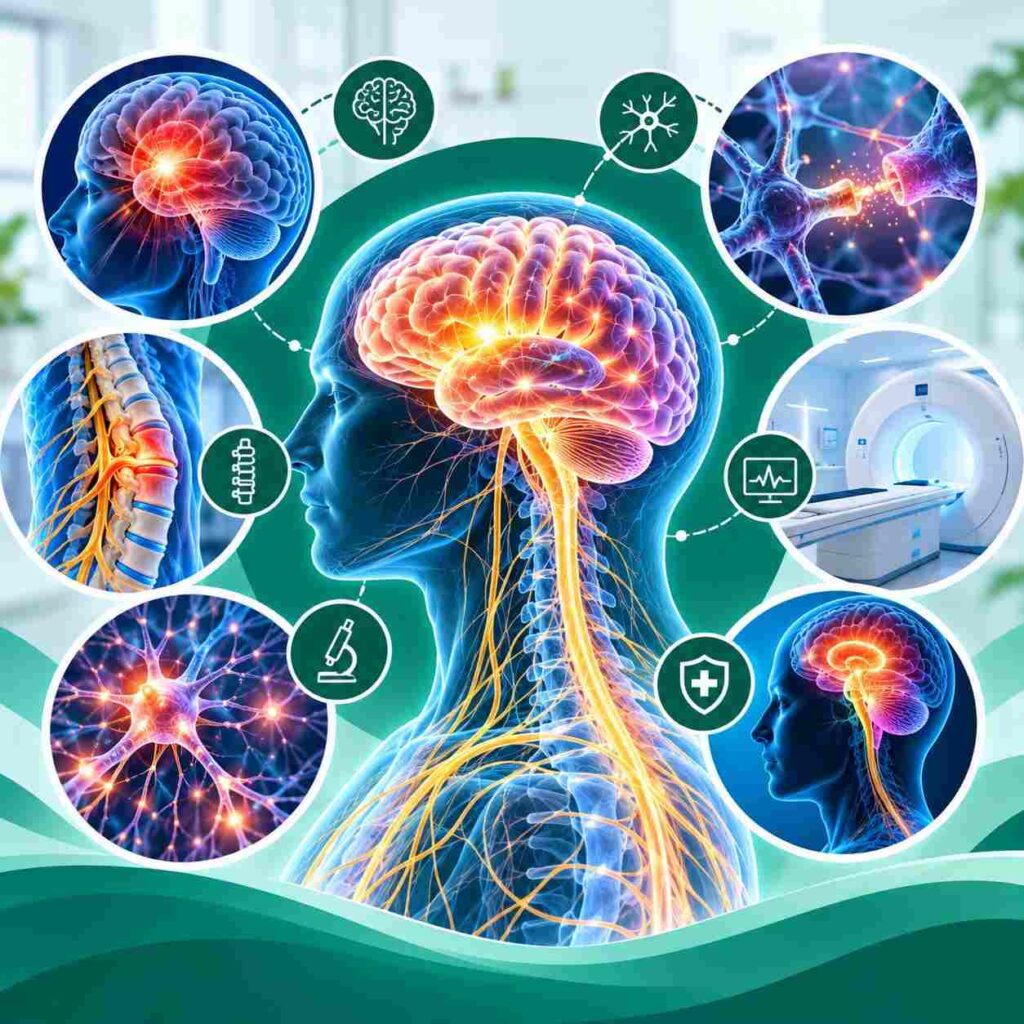
Your brain and nervous system coordinate everything from movement to memory. Some conditions here are manageable day-to-day habits, others need ongoing medical care — here's what to know about the most common ones.
Brain & Nervous System Health
- Good sleep, regular movement, and managing stress all support brain health
- Staying mentally and socially active is linked to better long-term cognitive health
- Persistent headaches, numbness, tingling, or unexplained weakness are worth checking
- Sudden confusion, vision changes, or difficulty speaking need urgent attention
- Many neurological conditions respond better to treatment when caught early
- Symptoms can overlap across conditions, so proper diagnosis matters
- Many conditions are manageable long-term with the right combination of care
- Support from neurologists, therapists, and family all play a role
| Myth | Fact |
|---|---|
| "Memory loss is always just part of getting older" | Some memory changes are normal with age, but significant decline is worth evaluating |
| "Headaches are never a sign of something serious" | Most headaches are harmless, but sudden severe ones or ones with other symptoms need attention |
| "Nothing can be done for nerve-related conditions" | Many neurological conditions have effective treatments that improve quality of life |
Migraine
- Often involves throbbing pain, nausea, and sensitivity to light or sound
- Some people experience an "aura" — visual or sensory changes before the pain starts
- Stress, poor sleep, certain foods, and hormonal changes are frequent triggers
- Triggers vary a lot person to person — tracking patterns can help identify yours
- Consistent sleep and meal timing can reduce how often migraines occur
- Both preventive and as-needed medications exist, depending on frequency
- Migraines that disrupt daily life or happen frequently deserve a proper treatment plan
- A sudden, unusually severe headache unlike your normal pattern needs urgent evaluation
| Myth | Fact |
|---|---|
| "A migraine is just a bad headache" | Migraine is a distinct neurological condition, often with nausea, light sensitivity, and other symptoms |
| "Painkillers are the only treatment option" | Preventive treatments and trigger management can reduce how often migraines happen |
| "Migraines only affect adults" | Migraines can affect children and teenagers too, sometimes presenting differently |
Multiple Sclerosis
MS symptoms overlap with many other conditions, and diagnosis typically requires specialist evaluation and imaging — this page is a general overview, not a self-diagnosis tool.
- A condition where the immune system affects the protective covering of nerve fibers
- Disrupts communication between the brain and the rest of the body
- Numbness or tingling, vision problems, fatigue, and balance issues
- Symptoms often come and go, especially in early stages
- Involves neurological exams, MRI imaging, and sometimes other specialized tests
- No single test confirms MS — diagnosis is based on the overall picture
- Treatments can slow progression and manage symptoms, especially when started early
- Many people with MS continue to live full, active lives with the right care plan
| Myth | Fact |
|---|---|
| "MS always leads to being wheelchair-bound" | Many people with MS remain mobile and independent for years with proper treatment |
| "MS is always hereditary" | Family history raises risk slightly, but most people with MS have no family history of it |
| "There's nothing you can do once diagnosed" | Several treatments exist that can slow progression and manage symptoms effectively |
How Does Your Nervous System Work?
The nervous system coordinates communication between the brain, spinal cord, nerves and the rest of the body. It helps control movement, sensation and many automatic body functions.
What Neurological Symptoms Are You Experiencing?
Headache
Persistent, severe or changing headaches may need medical evaluation.
Dizziness or Vertigo
Feeling unsteady, lightheaded or as though the surroundings are moving.
Numbness or Tingling
Abnormal sensations can occur when nerves are irritated or affected.
Weakness
New or persistent weakness can have many possible causes.
Tremor
Uncontrolled shaking can occur with several neurological conditions.
Memory Problems
Forgetfulness or changes in thinking can have different causes.
Seizures
Episodes of abnormal electrical activity in the brain require medical assessment.
Balance Problems
Difficulty walking or coordinating movement may indicate a neurological issue.
Speech or Language Changes
Difficulty speaking, understanding speech or finding words can require prompt assessment.
Vision Changes
Double vision or other sudden changes can sometimes be associated with neurological problems.
One Neurological Symptom Can Have Many Causes
Headache does not always mean a brain disorder. Dizziness, numbness, weakness, tremors and memory changes can also have many possible causes. A healthcare professional considers your symptoms, medical history and examination before deciding whether neurological testing is needed.
When Is a Neurological Symptom an Emergency?
Possible emergency warning signs include:
- sudden weakness or numbness, especially on one side
- sudden difficulty speaking or understanding speech
- sudden vision changes
- sudden severe headache
- sudden loss of balance or coordination
- seizure
- loss of consciousness
- sudden confusion
- severe symptoms following a head injury
Common Neurological Conditions
Neurological conditions can affect the brain, spinal cord, peripheral nerves and muscles. They can be grouped into several broad categories based on the part of the nervous system involved and the type of problem.
Brain & Cognitive Disorders
- Alzheimer's disease
- Dementia
- Memory disorders
- Cognitive disorders
Seizure & Electrical Disorders
- Epilepsy
- Seizures
Movement Disorders
- Parkinson's disease
- Tremor
- Dystonia
- Ataxia
Neurodegenerative Conditions
- Parkinson's disease
- ALS
- Huntington's disease
- Other neurodegenerative disorders
Brain & Vascular Conditions
- Stroke
- Brain aneurysm
- Cerebral vascular disorders
Neuromuscular Disorders
- Myasthenia gravis
- Motor neuron disorders
- Muscular disorders
Peripheral Nerve Disorders
- Peripheral neuropathy
- Nerve compression
- Nerve pain
- Carpal tunnel syndrome
Inflammatory & Autoimmune Disorders
- Multiple sclerosis
- Autoimmune neurological disorders
- Inflammatory nerve disorders
Brain Injuries
- Concussion
- Traumatic brain injury
- Brain swelling
Brain vs Nervous System: What's the Difference?
| Brain | Nervous System |
|---|---|
| Main control center | Entire communication network |
| Part of the central nervous system | Includes central + peripheral nervous systems |
| Controls thinking, memory, movement and sensory processing | Carries signals throughout the body |
| Works with spinal cord | Includes brain, spinal cord and nerves |
How Is the Nervous System Divided?
Central Nervous System
Brain + spinal cord
Peripheral Nervous System
Nerves outside the brain and spinal cord
Central Nervous System
Brain + Spinal Cord
Peripheral Nervous System
Nerves throughout the body
How Are Neurological Conditions Diagnosed?
01 — Symptoms & Medical History
↓
02 — Neurological Examination
↓
03 — Initial Tests
↓
04 — Imaging or Specialized Testing
↓
05 — Diagnosis & Treatment Plan
↓
06 — Follow-Up
Common Neurological Tests
MRI
Detailed images of the brain or spine.
CT Scan
Uses X-rays to create images of the brain and other structures.
EEG
Records electrical activity in the brain and is commonly used when seizures are being evaluated.
EMG
Evaluates electrical activity in muscles.
Nerve Conduction Study
Assesses how electrical signals travel through peripheral nerves.
Lumbar Puncture
Examines cerebrospinal fluid when clinically appropriate.
Neuropsychological Testing
Evaluates aspects of memory, thinking and cognition.
Which Test Do I Need?
Different neurological symptoms may require different types of evaluation or testing. Select a symptom or concern below to learn which tests may be considered.
Choose an option to see examples of tests that may be considered during neurological evaluation.
Seizures → EEG may be considered
An electroencephalogram (EEG) records electrical activity in the brain and may be considered when seizures or other electrical brain activity problems are suspected.
Numbness / weakness → Neurological examination ± EMG/NCS
A neurological examination may help assess strength, sensation and reflexes. EMG or nerve conduction studies may be considered when appropriate.
Memory / cognitive changes → Cognitive / neuropsychological assessment ± imaging
Cognitive assessment can help evaluate memory and thinking abilities. Imaging may also be considered depending on the clinical situation.
Suspected structural brain problem → MRI / CT depending on clinical situation
MRI or CT can provide images of the brain and may be used when a structural problem is suspected. The appropriate scan depends on the clinical situation.
Suspected infection / inflammation → Blood tests ± CSF evaluation when appropriate
Blood tests may help evaluate possible infection or inflammation. Cerebrospinal fluid (CSF) evaluation may be considered when clinically appropriate.
The appropriate test depends on your symptoms, examination and medical history. A doctor decides which tests are necessary.
Conditions That Can Affect Neurological Health
Heart & Blood Vessel Health
Blood & Vascular Health
Diabetes & Endocrine Health
Sleep Health
Respiratory Health
When Should You See a Neurologist?
A neurologist specializes in diagnosing and treating disorders affecting the brain, spinal cord and nerves. Depending on your symptoms, another specialist or emergency service may also be appropriate.
Consult a neurologist for concerns such as:
- recurrent or unusual headaches
- seizures
- tremors
- persistent numbness or tingling
- unexplained weakness
- balance or coordination problems
- memory or cognitive changes
- nerve pain
- movement problems
- certain sleep or neurological disorders
Concerned About a Brain or Nerve Symptom?
Don’t ignore persistent, worsening or unexplained neurological symptoms. A clinical evaluation can help determine whether further testing or specialist care is needed.
Frequently Asked Questions About the Nervous System
Find clear answers to common questions about the nervous system, neurological symptoms, disorders, diagnosis and treatment.
What is the nervous system?
The nervous system is the body's communication and control network. It includes the brain, spinal cord and nerves and helps control movement, sensation, thinking, memory and many automatic body functions.
What are the main parts of the nervous system?
The nervous system has two main divisions: the central nervous system, made up of the brain and spinal cord, and the peripheral nervous system, which includes nerves outside the brain and spinal cord.
What are common neurological symptoms?
Common neurological symptoms can include headaches, dizziness, numbness, tingling, weakness, tremors, seizures, problems with balance or coordination, memory changes, speech difficulties and changes in vision or sensation.
What are common neurological disorders?
Neurological disorders include conditions such as epilepsy, migraine, stroke, Parkinson's disease, multiple sclerosis, Alzheimer's disease, peripheral neuropathy and other disorders affecting the brain, spinal cord or nerves.
What causes neurological problems?
Neurological problems can have many possible causes, including genetic factors, infections, inflammation, autoimmune conditions, injuries, blood-vessel problems, metabolic conditions, tumours and age-related changes. The cause depends on the specific symptoms and condition.
When should I see a neurologist?
You may need to see a neurologist when you have persistent or unexplained neurological symptoms such as recurrent seizures, weakness, numbness, tremors, balance problems, memory changes, unusual headaches or other symptoms affecting the brain, spinal cord or nerves.
What does a neurologist do?
A neurologist evaluates and manages conditions affecting the brain, spinal cord and nerves. They may review your medical history, perform a neurological examination, order appropriate tests and recommend treatment or follow-up care.
What tests are used to diagnose neurological disorders?
Testing depends on the symptoms and clinical situation. Tests may include a neurological examination, blood tests, EEG, MRI or CT scans, nerve conduction studies, EMG, cognitive assessments and, when appropriate, cerebrospinal fluid evaluation.
What is the difference between a neurologist and a neurosurgeon?
A neurologist diagnoses and medically manages disorders of the nervous system. A neurosurgeon is a specialist who performs surgical procedures involving the brain, spinal cord, nerves and related structures when surgery is appropriate.
Can neurological problems be treated?
Many neurological conditions can be treated or managed. Treatment depends on the specific disorder and may include medicines, rehabilitation, lifestyle measures, physical or occupational therapy, procedures or surgery in selected cases.
When is a neurological symptom an emergency?
Sudden weakness or numbness, sudden difficulty speaking, sudden vision changes, severe sudden headache, loss of consciousness, a new seizure or sudden confusion can require emergency medical assessment. Symptoms that may indicate a stroke or other serious condition should be treated as urgent.
Can lifestyle affect brain health?
Lifestyle factors can support overall brain and nervous system health. Regular physical activity, adequate sleep, a balanced diet, avoiding smoking, limiting excessive alcohol and managing conditions such as high blood pressure and diabetes can be beneficial.