Eczema (Atopic Dermatitis)
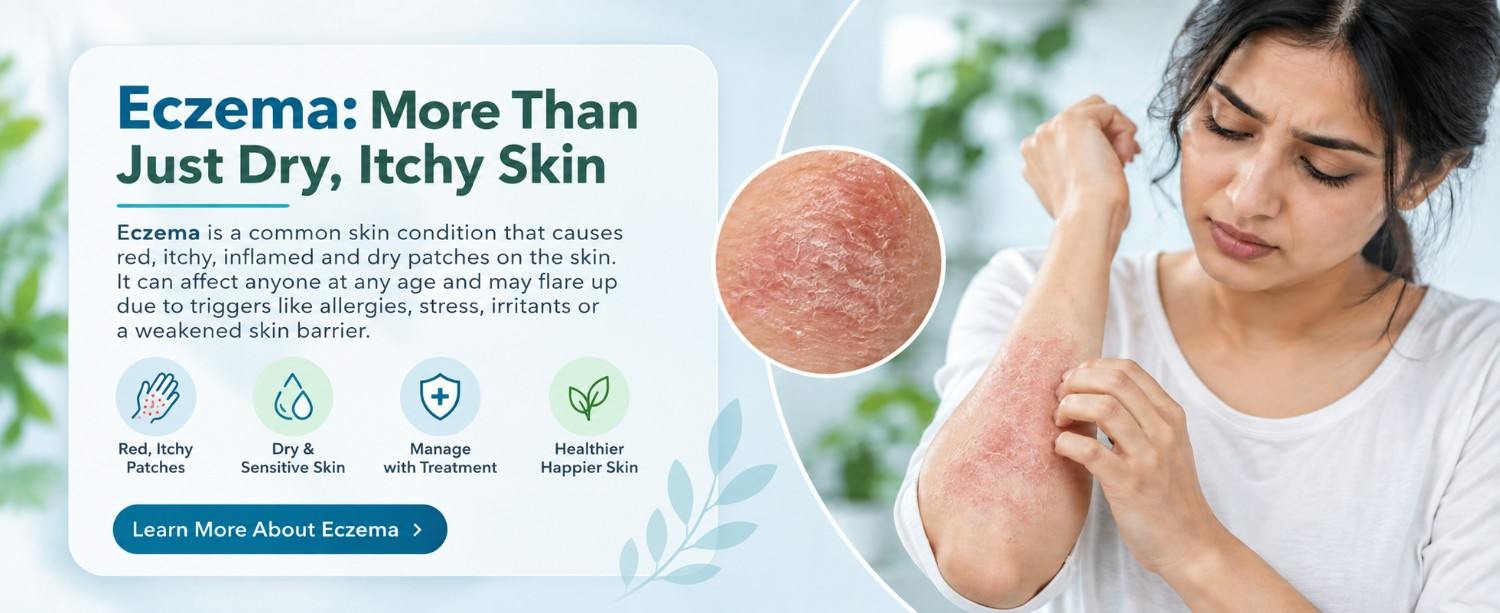
Eczema, also called atopic dermatitis, is a common skin condition that causes itchy, dry, irritated and inflamed skin. It can affect people of any age, although it often begins during childhood. Eczema is not contagious, which means it does not spread from one person to another.
Eczema can come and go. Some people experience periods when their skin is relatively clear, followed by flare-ups when itching, dryness and irritation become worse. With the right skin care and treatment, symptoms can usually be controlled.
What Is Eczema?
Eczema is a group of conditions that can cause dry, itchy and inflamed skin. Atopic dermatitis is the most common type of eczema. In atopic dermatitis, the skin’s protective barrier does not work normally. This can allow moisture to escape more easily, making the skin dry and sensitive. Irritants, allergens and other environmental factors can then trigger inflammation.
Eczema may affect the:
- Face
- Hands
- Neck
- Arms
- Elbows
- Knees
- Ankles
- Feet
- Skin folds
The location and appearance of eczema can vary depending on a person’s age and skin tone.

Eczema Symptoms
The symptoms of eczema can be different from person to person. The most common symptom is itching, which can sometimes become severe.
Common symptoms include:
Persistent itching is one of the most noticeable symptoms of eczema. Scratching can further irritate the skin and make the rash worse.
The affected skin may become unusually dry, rough or flaky.
Eczema can cause patches of irritated or discolored skin. Depending on the person's skin tone, the affected area may look red, brown, purple, gray or darker or lighter than the surrounding skin.
Severely dry skin can develop cracks, which may sometimes become painful.
The skin may feel warm, swollen or irritated during a flare-up.
In some cases, eczema patches may ooze fluid and later develop a crust.
Repeated scratching over a long period can make the skin thicker, rougher and more leathery.
What Causes Eczema?
There is no single cause of eczema. Researchers believe that genes, the immune system and the skin barrier all play a role. Environmental factors can also trigger or worsen symptoms.
Some people are more likely to develop eczema if they have a family history of eczema, asthma or hay fever.

Common Eczema Triggers
Different people have different triggers. Common triggers may include:
- Harsh soaps and detergents
- Perfumes and fragrances
- Certain skin-care products
- Dry weather
- Excessive heat
- Sudden temperature changes
- Wool or irritating fabrics
- Pollen
- Dust mites
- Certain pets
- Tobacco smoke
- Stress
- Skin infections
Types of Eczema
“Eczema” is a broad term that includes several different skin conditions.
Some common types include:
The most common type of eczema, often associated with dry, itchy and inflamed skin.
This can occur when the skin reacts to an irritating or allergenic substance.
This type can cause small, itchy blisters, particularly on the hands and feet.
This commonly affects areas with more oil-producing glands, such as the scalp and face.
This can cause round or coin-shaped itchy patches on the skin.
Because different skin conditions can look similar, a healthcare professional may need to examine the skin to determine the cause.

Who Can Get Eczema?
Eczema can affect children, teenagers and adults. It often begins in infancy or childhood, but adults can also develop it for the first time.
The risk may be higher in people with a family history of:
- Eczema
- Asthma
- Hay fever
- Other allergic conditions
However, having a family history does not mean that a person will definitely develop eczema.
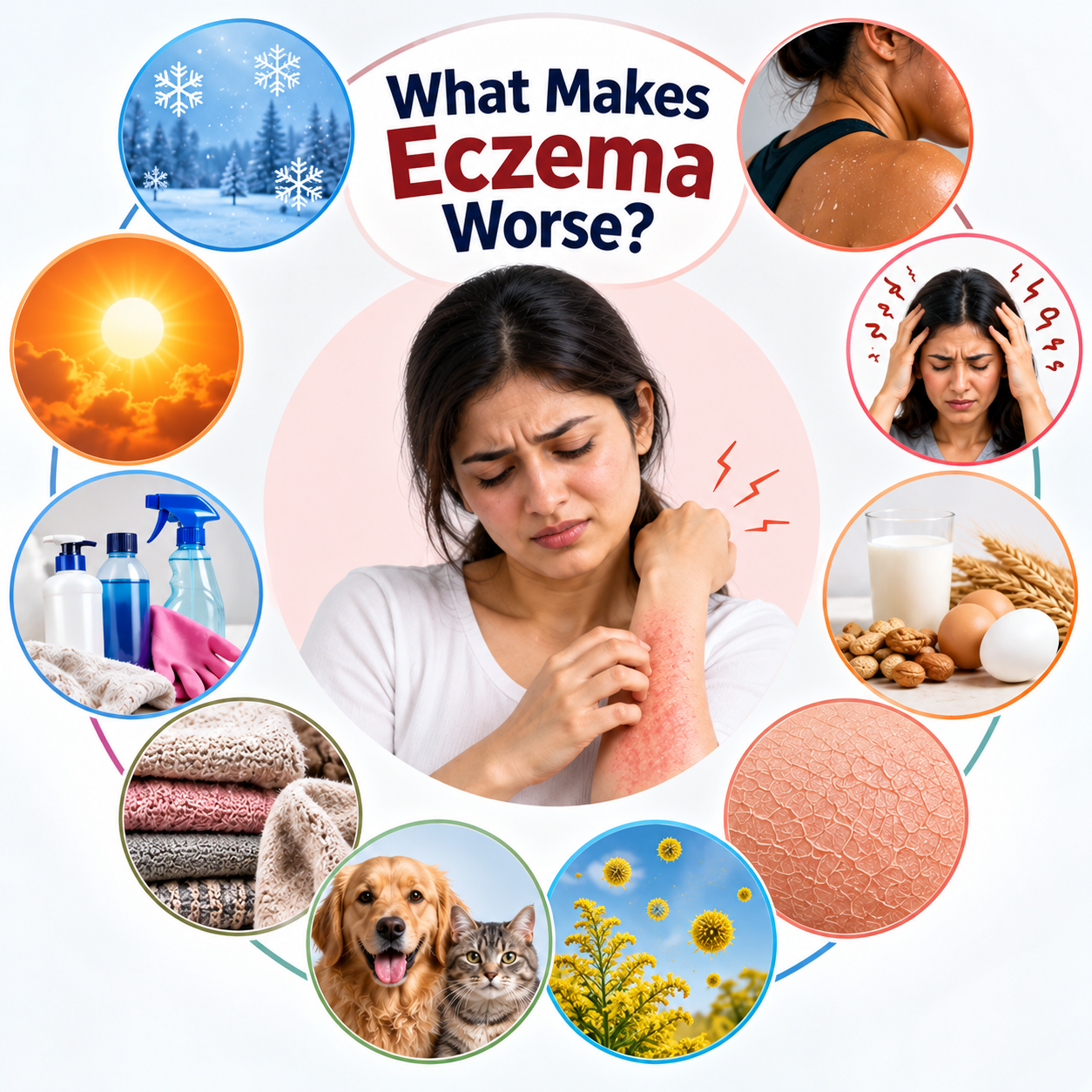
What Makes Eczema Worse?
Eczema can have flare-ups, during which symptoms become more noticeable.
Things that may worsen eczema include:
- Dry skin
- Hot weather
- Sweating
- Stress
- Harsh soaps
- Strong detergents
- Fragrances
- Certain fabrics
- Scratching
- Some environmental irritants
Keeping the skin moisturized and identifying personal triggers can help reduce flare-ups.
Eczema Treatment
There is currently no permanent cure for atopic dermatitis, but treatment can help control symptoms, reduce flare-ups and protect the skin. Treatment depends on the person’s age, symptoms, severity and affected body areas.
Moisturizers
Regular use of moisturizers is an important part of eczema care. Moisturizers help keep the skin hydrated and support the skin barrier. Dermatologists commonly recommend fragrance-free creams or ointments for people with atopic dermatitis.
Topical Steroids
Doctors may prescribe corticosteroid creams or ointments to reduce inflammation during eczema flare-ups. They should be used according to medical advice.
Other Prescription Treatments
Depending on the severity of eczema, a dermatologist may consider other topical medicines, phototherapy or medicines that work throughout the body. These treatments are generally considered when standard skin care and topical treatments are not enough.
Treatment of Skin Infections
Scratching can damage the skin and increase the risk of infection. If an infection develops, a doctor may recommend appropriate antimicrobial treatment.
How to Take Care of Eczema-Prone Skin
Simple daily skin-care habits can help manage eczema.
Do:
- Use a gentle, fragrance-free moisturizer regularly.
- Keep showers or baths comfortable rather than very hot.
- Use gentle skin-care products.
- Keep your fingernails short.
- Identify and avoid your personal triggers.
- Follow your dermatologist’s treatment instructions.
Avoid:
- Scratching the affected skin.
- Harsh soaps and detergents.
- Strong fragrances.
- Very hot baths or showers.
Using prescription creams without proper medical advice. Moisturizing regularly is one of the key parts of eczema skin care.

When Should You See a Doctor?
You should consider seeing a dermatologist if:
- Your itching is persistent or severe.
- The rash keeps coming back.
- Home skin care is not helping.
- Eczema is affecting your sleep.
- The rash is spreading.
- The skin becomes painful, swollen or warm.
- The affected area develops pus, crusting or fluid.
- You develop fever along with worsening skin symptoms.
Painful, swollen, warm, leaking or rapidly worsening eczema can indicate a skin infection and should be medically assessed.