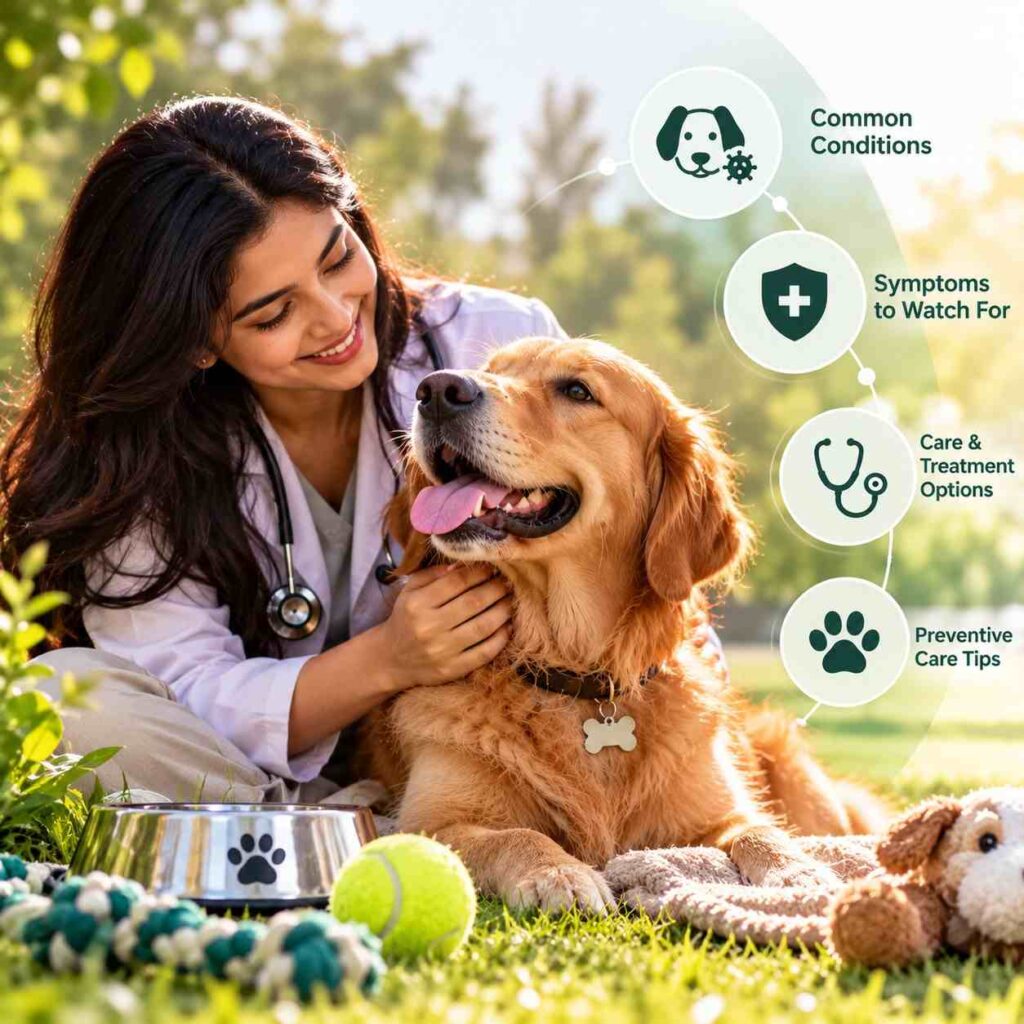
Pet Health: A Complete Guide to Healthy, Happy Pets
Keeping pets healthy involves more than feeding them and providing a comfortable home. Regular veterinary check-ups, appropriate nutrition, preventive care and attention to changes in behaviour can all contribute to a pet’s wellbeing.
Explore our pet health resources to understand common conditions in dogs and cats, recognise symptoms that may need attention and learn practical ways to support your pet at every life stage.
Pet Care & Wellness
Explore Pet Health Topics for Dogs and Cats
Every pet has different health needs depending on its species, age, lifestyle and medical history. Explore our pet care topics to find useful information for your companion.

Dog Health and Wellness
Learn about common dog illnesses, changes in appetite, digestive concerns, skin problems and preventive care.
Cat Health and Care
Explore feline health concerns, changes in behaviour, nutrition, litter-box habits and preventive veterinary care.
Preventive Pet Care
Understand routine check-ups, vaccination guidance, parasite prevention, dental care and early recognition of health changes.
Pet Nutrition and Healthy Weight
Learn how age-appropriate food, suitable portions, fresh water and healthy weight management support pet wellness.
Pet Behaviour and Emotional Wellbeing
Explore separation anxiety, changes in behaviour, enrichment and ways to support your pet's comfort and routine.
Pet Symptoms and Common Conditions
Understand possible warning signs such as reduced appetite, vomiting, diarrhoea, coughing, itching or unusual tiredness.
Pet Care Essentials: Preventive Health for Dogs and Cats
Preventive pet care helps owners stay informed about their animals’ health and identify potential concerns early. A pet’s needs change with age, breed, lifestyle and medical history, so care decisions should be appropriate for the individual animal.
Routine veterinary check-ups: Arrange examinations based on your pet’s age, health and veterinarian’s recommendations.
Vaccination guidance: Follow an appropriate vaccination schedule based on species, age, exposure risks and local veterinary advice.
Parasite prevention: Ask a veterinarian about suitable protection against fleas, ticks, worms and other relevant parasites.
Dental health: Monitor oral health and discuss appropriate tooth-cleaning methods and dental examinations.
Grooming and hygiene: Maintain suitable coat, nail, ear and skin care without using products that may irritate or harm your pet.
Identification and records: Keep identification details, vaccination records and important medical information up to date.
Dog Health: Common Conditions, Symptoms and Care
Dogs may experience digestive problems, skin irritation, respiratory illnesses, metabolic conditions and behavioural difficulties. Understanding changes from your dog’s normal behaviour can help you recognise when veterinary advice may be needed.
Our dog health resources cover topics such as:
Digestive problems: Vomiting, diarrhoea, appetite changes and possible signs of pancreatitis.
Respiratory concerns: Coughing, breathing changes and conditions such as kennel cough.
Metabolic health: Information about diabetes in dogs and Cushing’s syndrome.
Neurological symptoms: Understanding seizures and why they require appropriate veterinary assessment.
Behavioural concerns: Separation anxiety, changes in routine and signs of distress.
Cat Health: Understanding Feline Illnesses and Warning Signs
Cats can be subtle when they are unwell. Changes in appetite, drinking, grooming, movement, litter-box habits or social behaviour may be important, particularly when they persist or appear suddenly.
Key areas of feline health include:
Feline infections: Learn about feline leukaemia virus (FeLV), feline immunodeficiency virus (FIV) and relevant testing and prevention guidance.
Eating and drinking changes: Monitor reduced appetite, unusual thirst or changes in normal eating patterns.
Urinary and litter-box concerns: Recognise changes in urination, straining or discomfort that may need prompt assessment.
Skin and coat health: Watch for persistent itching, hair loss, wounds or unusual grooming patterns.
Preventive care: Discuss vaccinations, parasite protection, dental health and routine examinations with a veterinarian.
Pet Nutrition: Feeding Dogs and Cats for Better Wellness
Appropriate nutrition supports growth, energy, body condition and general health. The right diet depends on the pet’s species, age, activity, health conditions and individual nutritional needs.
When planning your pet’s diet:
Choose a nutritionally complete food appropriate for the pet’s life stage and species.
Provide access to clean drinking water.
Follow suitable portion guidance and monitor changes in body condition.
Offer treats in moderation and account for them within the overall diet.
Avoid assuming that foods safe for humans are safe for pets.
Ask a veterinarian before making major dietary changes or using supplements to manage a health condition.
Pet Wellness: Behaviour, Enrichment and Emotional Health
Pet wellness includes more than physical health. A safe environment, suitable activity, mental stimulation and positive interactions can contribute to an animal’s quality of life.
Helpful practices include:
Providing appropriate exercise and play for your pet’s age and abilities.
Creating a comfortable place to rest and retreat.
Maintaining predictable feeding, activity and rest routines.
Introducing new people, animals and environments gradually where appropriate.
Noticing persistent changes in behaviour, appetite or social interaction.
Seeking veterinary advice when a behavioural change may be related to pain or illness.
Pet Care Guide
Pet Health Symptoms: When Should You Be Concerned?
Knowing what is normal for your pet makes it easier to notice changes. A symptom may have several possible causes, and online information should not replace a veterinary examination.
| Symptom or change | What owners should do |
|---|---|
|
Reduced appetite
|
Monitor the change and seek veterinary advice if it is persistent, significant or accompanied by other symptoms. |
|
Repeated vomiting or diarrhoea
|
Contact a veterinarian, especially if your pet is weak, dehydrated or getting worse. |
|
Persistent itching or skin changes
|
Arrange an assessment to identify possible causes and suitable treatment. |
|
Coughing or unusual breathing
|
Seek veterinary advice. Breathing difficulty requires emergency veterinary care. |
|
Sudden behaviour changes
|
Consider pain, illness, stress or environmental changes and consult a veterinarian when needed. |
|
Seizures, collapse or suspected poisoning
Emergency
|
Seek emergency veterinary care immediately. Do not wait for symptoms to resolve or attempt home treatment for suspected poisoning without veterinary guidance. |
This information is for general educational purposes and does not diagnose a pet's condition. When in doubt, contact a qualified veterinarian for advice.
Pet Care Knowledge
Pet Health FAQs: Common Questions from Pet Owners
Find answers to common questions about pet care, everyday health concerns, nutrition and when to seek veterinary attention.
01 What are the basics of good pet care?
Good pet care includes suitable nutrition, clean water, appropriate exercise, a safe environment, preventive veterinary care and attention to changes in behaviour or physical health.
02 How often should pets visit a veterinarian?
The recommended frequency depends on the pet's age, health, vaccination needs and medical history. Puppies, kittens, senior animals and pets with ongoing conditions may need more frequent visits than healthy adult pets.
03 What are common signs that a dog may be unwell?
Changes in appetite, energy, digestion, breathing, movement or behaviour can indicate a health concern. Severe, persistent or worsening symptoms should be assessed by a veterinarian.
04 How can I tell if my cat is sick?
Watch for changes in eating, drinking, grooming, hiding, litter-box habits or activity. Cats may show subtle signs of illness, so significant changes should not be ignored.
05 What foods should pets avoid?
Some foods are toxic to animals. Examples include chocolate, grapes and raisins for dogs, and products containing xylitol for dogs. Onions and garlic can also harm dogs and cats. Ask a veterinarian about any suspected ingestion of a potentially toxic food.
06 When should I seek emergency veterinary care?
Seek immediate veterinary assistance for difficulty breathing, collapse, severe bleeding, repeated seizures, suspected poisoning or other severe symptoms. A cat that cannot urinate normally also needs urgent assessment.
07 Can online pet health articles replace a veterinarian?
No. Educational resources can help owners understand health topics and prepare questions, but a veterinarian is needed to evaluate symptoms, diagnose conditions and recommend individual treatment.