
Skin Care: Simple Ways to Keep Your Skin Healthy
Learn how to care for your skin, understand different skin types, recognize common skin problems, protect your skin from the sun, and know when it’s time to see a dermatologist.

Medically Reviewed • Evidence-Informed • Regularly Updated
What Is Skin Care?
Skin care includes the everyday habits and treatments used to keep the skin clean, moisturized and protected from environmental damage. A basic routine can include gentle cleansing, moisturizing and protection from ultraviolet (UV) radiation. Individual skin-care needs can vary depending on skin type, age, environment and existing skin conditions.
| Skin Care Basics | |
|---|---|
| Cleanse | Remove dirt, sweat and excess oil gently |
| Moisturize | Help maintain skin hydration |
| Protect | Reduce UV exposure |
| Understand | Know your skin type and concerns |
| Treat | Address persistent skin problems appropriately |
| Review | See a dermatologist when needed |

What Is Your Skin Type?
Normal Skin
Skin that is generally balanced, without excessive oiliness or dryness.
Dry Skin
Skin that lacks moisture and may feel tight, rough or flaky.
Oily Skin
Skin that produces more oil and may appear shiny or be more prone to clogged pores.
Combination Skin
Different areas of the face may have different characteristics, such as an oilier T-zone with drier cheeks.
Sensitive Skin
Skin that may react easily to products or environmental factors with burning, stinging, redness or irritation.
Small note
Skin type can change with age, seasons, hormones, environment and other factors.
A Simple Daily Skin-Care Routine
MORNING
01 — Gentle Cleanse
↓
02 — Moisturize
↓
03 — Sun Protection
EVENING
01 — Cleanse
↓
02 — Treatment, If Recommended
↓
03 — Moisturize
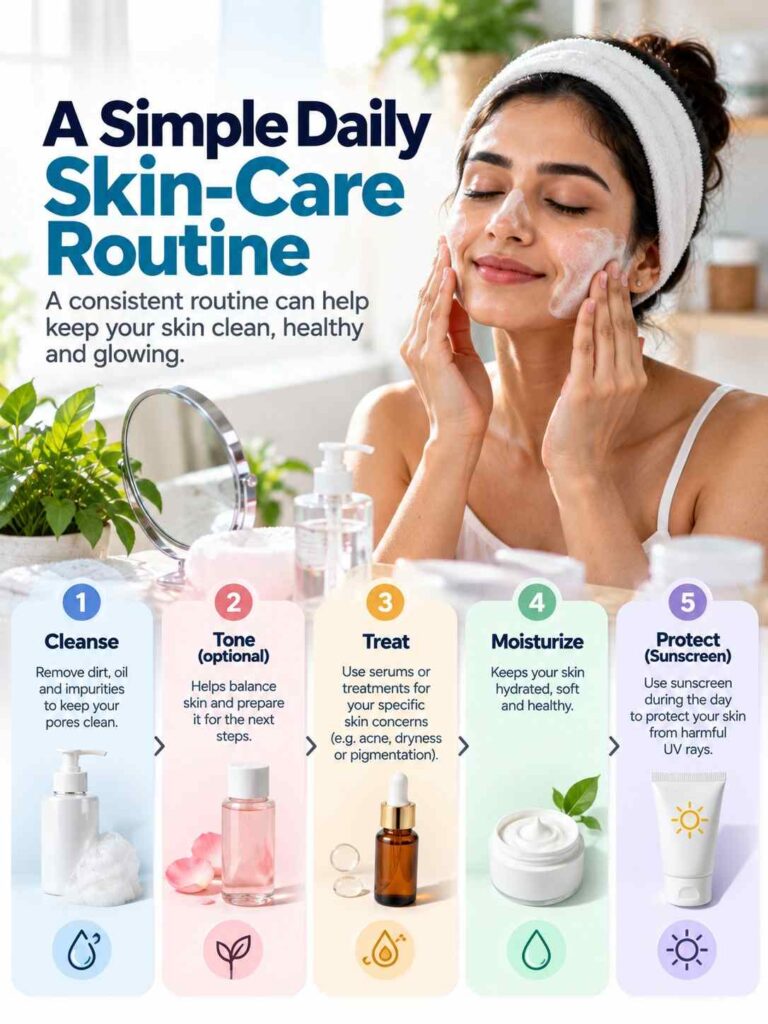
Your routine may need to be adjusted if you have acne, eczema, psoriasis, very sensitive skin or another diagnosed skin condition.
Your Skin Barrier: Why It Matters
The skin barrier helps protect the body while keeping moisture in.
Healthy barrier
A well-functioning barrier helps the skin stay balanced.
- Helps retain moisture
- Provides protection against external irritants
- Supports normal skin function
When the barrier is irritated
Barrier disruption may make the skin more sensitive.
- Dryness
- Tightness
- Irritation
- Redness
- Increased sensitivity

Protect Your Skin From the Sun
Ultraviolet radiation can contribute to premature skin aging and can increase the risk of skin cancers. Regular sun protection is an important part of skin care.
Sunscreen
Use a broad-spectrum sunscreen appropriate for your skin and situation.
Clothing
Use protective clothing, hats and other physical protection when appropriate.
Shade
Reduce direct sun exposure, particularly when UV levels are high.
What Is Your Skin Concern?
Choose your main concern to explore general sunscreen selection considerations.
Dry Skin
A moisturizing sunscreen formulation may feel more comfortable on skin that tends to feel dry or tight.
Sunscreen needs can vary between individuals. Consider your skin type, activities, sun exposure and ingredients your skin already tolerates.
Why Does Your Skin Need Moisturizer?
Dry skin
Moisturizers can help reduce dryness and improve comfort.
Oily skin
Oily skin can still need moisturizing; choose a formulation appropriate for your skin type.
Acne-prone skin
A lightweight, non-comedogenic moisturizer may be appropriate, particularly when acne treatments cause dryness or irritation.


Understanding Skin-Care Ingredients
Salicylic Acid
Commonly used in products for acne-prone skin.
Retinoids / Retinol
Used in various skin-care and dermatologic treatments; suitability depends on the person and product.
Vitamin C
An antioxidant commonly found in skin-care products.
Hyaluronic Acid
Used in moisturizing formulations.
AHAs
A group of exfoliating ingredients that includes glycolic and lactic acids.
Hydroquinone
A skin-lightening ingredient used for certain pigmentation concerns under appropriate guidance.
Not Sure Which Ingredient Is Right for You?
Common Skin Problems
Acne & Breakouts
- Acne
- Blackheads
- Whiteheads
- Acne scars
Dryness & Irritation
- Dry skin
- Eczema
- Contact dermatitis
- Itchy skin
Inflammatory Conditions
- Psoriasis
- Rosacea
- Seborrheic dermatitis
Infections
- Fungal infections
- Bacterial skin infections
- Viral skin infections
- Warts
Pigmentation
- Hyperpigmentation
- Melasma
- Dark spots
Other
- Hives
- Hair loss
- Nail disorders
- Skin growths
What Is Your Skin Concern?
Explore information about common skin, hair and nail concerns.
Acne
Pimples, blackheads and breakouts
Itching
Persistent or uncomfortable skin itching
Dry Skin
Dry, rough or tight-feeling skin
Rash
Changes in skin appearance or texture
Redness
Red or flushed areas of the skin
Dark Spots
Changes in skin pigmentation
Hair Loss
Thinning or increased hair shedding
Scalp Problems
Itching, flaking or other scalp changes
Nail Changes
Changes in nail color, shape or texture
Skin Growth
New or changing growths on the skin
Sun Damage
Changes associated with sun exposure
Unusual Skin Changes
New, persistent or unexplained changes
These topics provide general health information and are not intended to diagnose a condition.

Common Skin-Care Mistakes
Over-cleansing
More washing isn’t automatically better.
Harsh Scrubbing
Aggressive scrubbing can irritate already sensitive or inflamed skin.
Skipping Moisturizer
Even oily or acne-prone skin may benefit from an appropriate moisturizer.
Forgetting Sun Protection
UV exposure contributes to skin damage over time.
Picking Acne
Picking can increase inflammation and contribute to scarring.
Using Too Many Products
A complicated routine isn’t necessarily better.
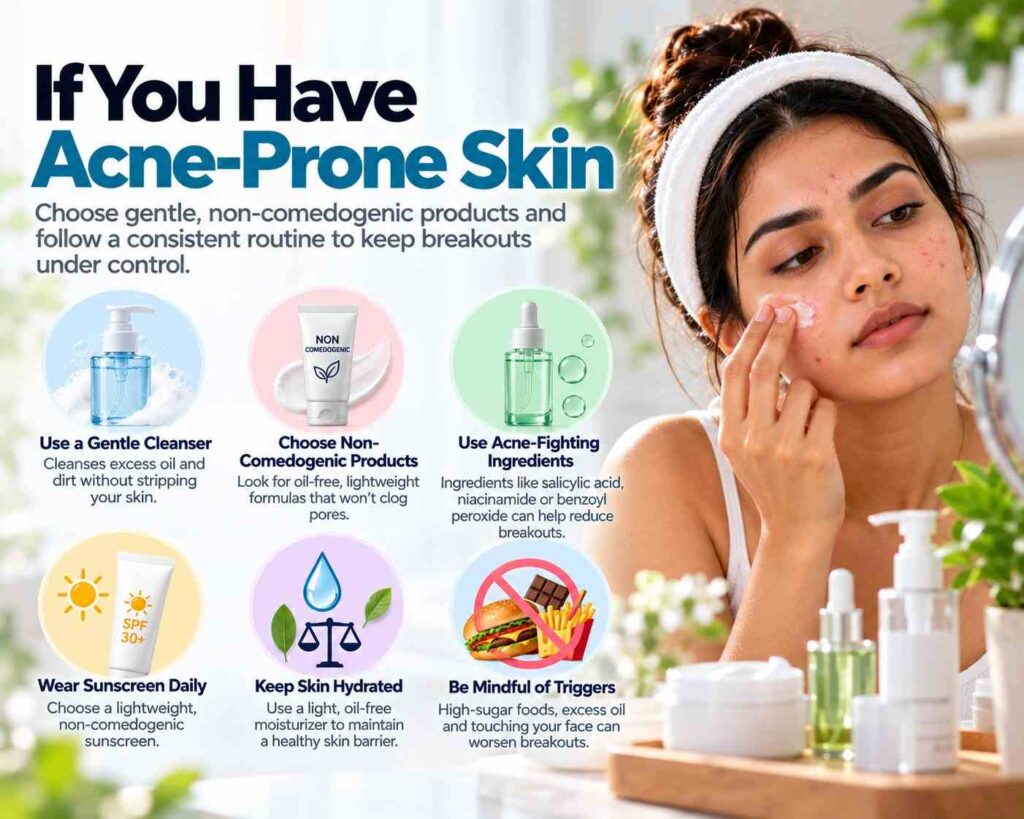
If You Have Acne-Prone Skin
Do
- Cleanse gently.
- Consider non-comedogenic products.
- Moisturize appropriately.
- Use appropriate sun protection.
- Follow your acne treatment plan.
Avoid
- Picking or squeezing pimples.
- Aggressive scrubbing.
- Heavy products that clog pores.
- Constantly changing treatments.
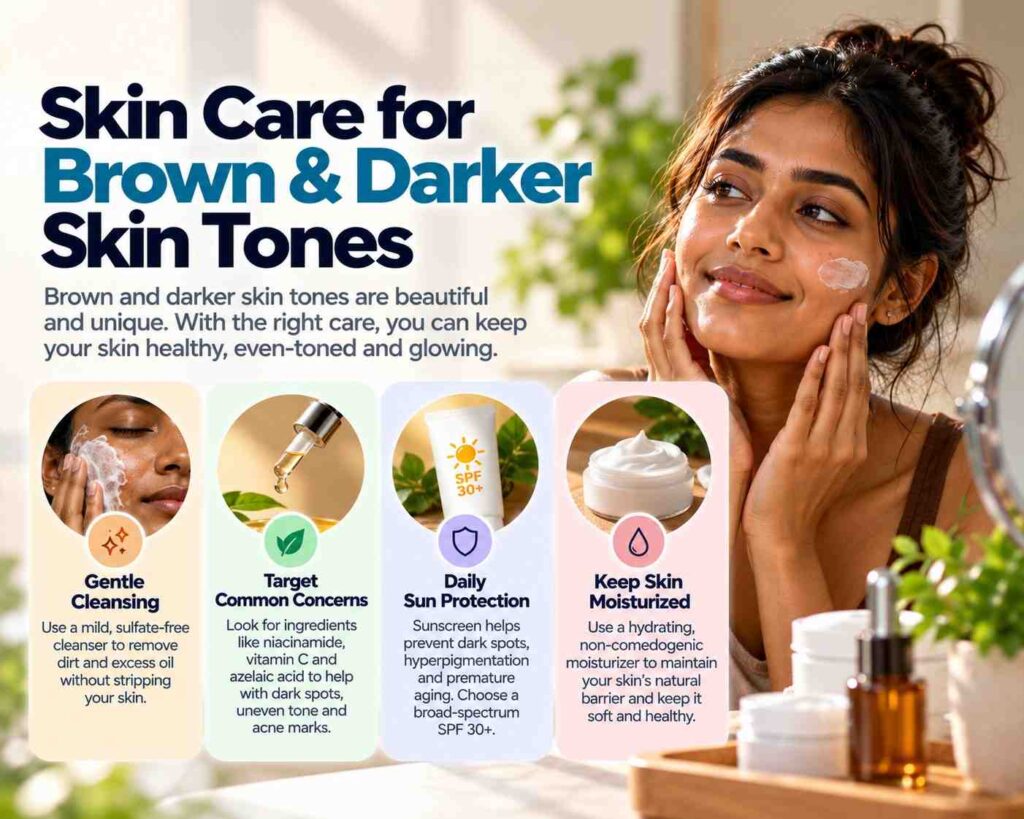
Skin Care for Brown & Darker Skin Tones
Skin conditions and inflammation can appear differently across skin tones. Some people with darker skin may notice dark or light discoloration after inflammation or injury, so recognizing changes in pigmentation can be important.
- Sun protection
- Hyperpigmentation
- Acne marks
- Irritation
- Dryness

How Seasons Can Affect Your Skin
Hot Weather
Sweat, humidity and increased sun exposure can affect skin comfort and oiliness.
Dry Weather
Lower humidity can contribute to dry, itchy skin.
Monsoon / Humid Conditions
Sweat and humidity can contribute to irritation or worsen certain skin concerns in some people.
Winter
Cold air and lower humidity can make dry skin worse.
Not Every Rash Is the Same
Acne, eczema, psoriasis, fungal infections, allergic reactions and other skin conditions can sometimes produce similar-looking symptoms. A dermatologist can examine the skin and determine whether further testing or treatment is needed.

Practical Guides for Healthier Skin
Learn simple, evidence-based skin care practices and understand when professional dermatology care may be needed.
Beginner Guides
Build a simple and effective skin care routine.
Condition-Specific Guides
Understand skin care considerations for common conditions.
Specialist Guides
Know when a dermatologist may be appropriate.
Frequently Asked Questions About Skin Care
Clear answers to common questions about daily skin care, skin types, sunscreen, moisturizers and when to see a dermatologist.
A simple routine generally focuses on gentle cleansing, moisturizing and protecting the skin from UV exposure. Your routine may need to be adjusted based on your skin type, age and any skin conditions you have.
The appropriate frequency depends on your skin and activities. Gentle cleansing can help remove sweat, excess oil and environmental debris, while excessive or harsh cleansing may irritate some skin types.
Yes. Oily skin can still benefit from moisturizing. Choose a formulation suited to oily or acne-prone skin, particularly if you are concerned about clogged pores.
Skin types are commonly described as normal, dry, oily, combination or sensitive. Skin characteristics can change over time, so your skin type isn't necessarily permanent.
Sunscreen helps protect skin from ultraviolet radiation. Regular sun protection can help reduce UV-related skin damage and the risk of skin cancer.
The right sunscreen depends on factors such as your skin type, activities and how much sun exposure you expect. Look for broad-spectrum protection and choose a formulation you can use consistently. For acne-prone skin, non-comedogenic products may be useful.
Some heavy or pore-clogging products may worsen acne for some people. If you have acne-prone skin, a lightweight, non-comedogenic moisturizer may be a better choice.
Gentle cleansing and regular moisturizing can help with many cases of dry skin. If dryness is severe, persistent, painful, cracked, bleeding or associated with another rash, consider seeing a dermatologist.
Not necessarily. Over-exfoliation can irritate the skin. The appropriate approach depends on your skin type and whether you have a condition such as acne, eczema or sensitive skin.
Common ingredients include salicylic acid, retinol, vitamin C, hyaluronic acid and alpha-hydroxy acids. Different ingredients have different uses and may not be suitable for everyone.
Gentle cleansing, appropriate moisturizing, sun protection and avoiding picking or squeezing pimples can help support acne-prone skin. Persistent or moderate-to-severe acne may require treatment from a dermatologist.
See a dermatologist for persistent, worsening, painful or recurrent skin problems, unexplained skin changes, significant itching, persistent acne, unusual growths, hair loss or other concerns that aren't improving.
No. Good skin-care habits can support skin health and reduce some risks, but they cannot prevent every skin condition. Some conditions are influenced by genetics, immune-system factors, infections, hormones and other causes.
Not necessarily. Effective skin care depends more on using appropriate products consistently and choosing products suited to your skin and concerns than simply choosing expensive products.
Skin-care needs vary between individuals. The information above is intended for general education and does not replace personalized advice, diagnosis or treatment from a qualified healthcare professional.
Your Skin Deserves More Than Guesswork
Whether you’re dealing with acne, dryness, pigmentation, a persistent rash or another skin concern, understanding the cause is an important first step.