
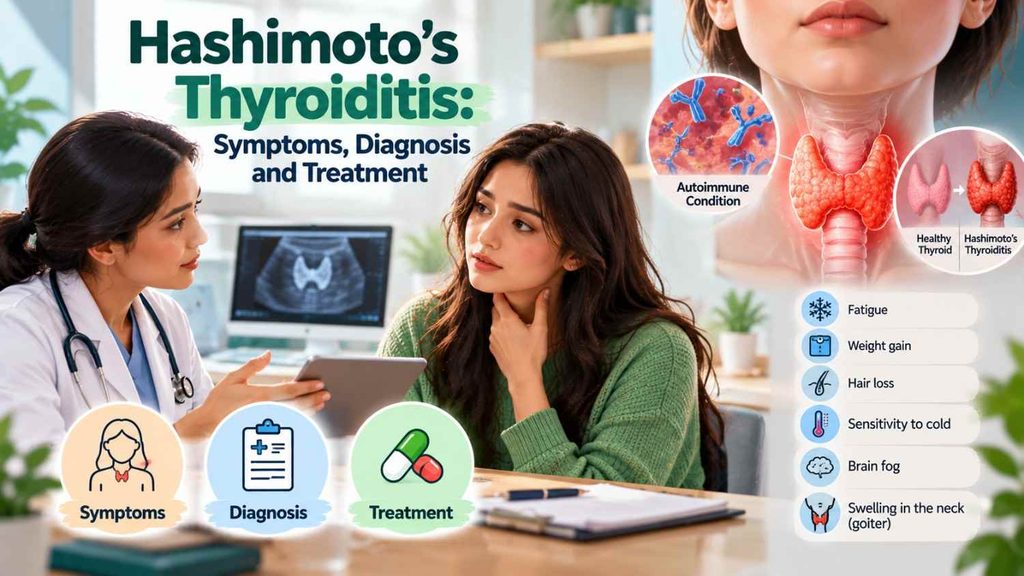
Hashimoto’s thyroiditis is an autoimmune condition that affects the thyroid gland. It develops when the immune system mistakenly attacks thyroid tissue, causing inflammation that can gradually reduce the gland’s ability to produce thyroid hormones.
Many people with Hashimoto’s thyroiditis eventually develop hypothyroidism, or an underactive thyroid. This may lead to symptoms such as persistent tiredness, unexplained weight gain, constipation, dry skin, and hair thinning. However, the condition can develop slowly, and some people have no noticeable symptoms for years.
Understanding the symptoms, blood tests, and available treatment options can help you know when to seek medical advice and how the condition is monitored over time.
What Is Hashimoto’s Thyroiditis?
Hashimoto’s thyroiditis, also called Hashimoto’s disease or autoimmune thyroiditis, is a chronic autoimmune disorder that affects the thyroid gland.
The thyroid is a small, butterfly-shaped gland located at the front of the neck. It produces hormones called thyroxine (T4) and triiodothyronine (T3), which help regulate metabolism, body temperature, energy use, and several other body functions.
In Hashimoto’s thyroiditis, the immune system produces antibodies that target components of the thyroid. This immune response can cause ongoing inflammation and damage to thyroid cells.
Over time, the thyroid may become unable to produce enough hormones. When this happens, hypothyroidism develops.
An important distinction: Hashimoto’s thyroiditis and hypothyroidism are related, but they are not identical. Hashimoto’s describes the autoimmune cause, while hypothyroidism describes a state in which the body does not have enough thyroid hormone.
Some people have evidence of Hashimoto’s thyroiditis while their thyroid hormone levels remain normal.
7 Common Symptoms of Hashimoto’s Thyroiditis
Symptoms often develop gradually and may resemble those of other health conditions. Not everyone experiences all the symptoms, and some people have no symptoms during the early stages.
1. Persistent Fatigue
Feeling unusually tired, sluggish, or lacking energy is a common symptom when Hashimoto’s thyroiditis leads to low thyroid hormone levels.
You may feel tired even after getting enough sleep or find that routine activities require more effort than usual.
Fatigue is not specific to thyroid disease. Sleep problems, anaemia, stress, and other medical conditions can also cause it.
2. Unexplained Weight Gain
Low thyroid hormone levels can slow energy expenditure and contribute to weight gain. The body may also retain more salt and water.
However, thyroid-related weight gain is often modest. Significant or continuing weight changes should not automatically be attributed to Hashimoto’s thyroiditis.
3. Cold Sensitivity
People with hypothyroidism may feel colder than others in the same environment. This happens because thyroid hormones help regulate the body’s energy use and heat production.
Persistent cold sensitivity may occur alongside fatigue, dry skin, constipation, and other symptoms of an underactive thyroid.
4. Dry Skin and Hair Thinning
Hashimoto’s thyroiditis can be associated with dry skin, brittle hair, and increased hair shedding when thyroid hormone levels become low.
Hair changes may develop gradually and can take several months to improve after thyroid hormone levels are brought under control.
Hair loss has many other possible causes, including iron deficiency, stress, recent illness, and genetic hair conditions. Persistent hair loss may require a separate assessment.
5. Constipation
Slower intestinal movement can cause constipation in people with hypothyroidism.
You may notice fewer bowel movements, harder stools, or difficulty passing stools. These symptoms can also result from dehydration, dietary changes, certain medicines, and other digestive conditions.
6. Difficulty Concentrating or Low Mood
Some people with low thyroid hormone levels experience difficulty concentrating, memory problems, reduced motivation, or low mood.
These symptoms are not proof of a thyroid disorder. A healthcare professional can assess whether thyroid dysfunction or another condition may be contributing.
7. Swelling at the Front of the Neck
Hashimoto’s thyroiditis can cause the thyroid gland to enlarge. This enlargement is called a goitre.
A goitre may appear as swelling at the front of the neck or create a feeling of fullness or pressure. A significantly enlarged gland can sometimes cause difficulty swallowing.
Not everyone with Hashimoto’s develops a goitre. Any new or persistent neck swelling should be evaluated, particularly if it is growing or affecting swallowing or breathing.
What Causes Hashimoto’s Thyroiditis?
The exact reason why Hashimoto’s thyroiditis develops is not fully understood. It involves an abnormal immune response in which the body’s defence system mistakenly targets thyroid tissue.
Several factors may influence the likelihood of developing the condition.
Autoimmune activity
The immune system produces antibodies that can target thyroid proteins, particularly thyroid peroxidase (TPO) and thyroglobulin. These antibodies are useful diagnostic clues, although their presence alone does not always mean thyroid hormone production is impaired.
Family history
Hashimoto’s thyroiditis and other thyroid disorders can run in families. Having a close relative with autoimmune thyroid disease may increase the likelihood of developing the condition.
Sex and age
Hashimoto’s thyroiditis is more common in women and becomes more common with increasing age, although it can affect people of any age and sex.
Other autoimmune conditions
People with one autoimmune condition may have an increased likelihood of developing another. Certain autoimmune conditions, including type 1 diabetes and coeliac disease, can occur alongside autoimmune thyroid disease.
These factors do not mean that a person will definitely develop Hashimoto’s thyroiditis. The condition can also occur without an obvious family history or identifiable risk factor.
How Is Hashimoto’s Thyroiditis Diagnosed?
Doctors diagnose Hashimoto’s thyroiditis using medical history, physical examination, and blood tests. Symptoms alone are not enough to confirm the condition because many of them occur in other illnesses.
1. TSH Test
The thyroid-stimulating hormone (TSH) test measures a hormone produced by the pituitary gland that signals the thyroid to make thyroid hormones.
When Hashimoto’s causes primary hypothyroidism, TSH is usually elevated because the pituitary gland is trying to stimulate an underactive thyroid.
TSH may remain within the laboratory’s reference range during the early stages of autoimmune thyroid disease.
2. Free T4 Test
The free T4 test measures the amount of unbound thyroxine available in the blood.
Results help determine whether thyroid hormone production is adequate.
- High TSH with low free T4: Commonly indicates overt primary hypothyroidism.
- High TSH with normal free T4: May indicate subclinical hypothyroidism.
- Normal TSH and normal free T4: Thyroid function may currently be normal, even when thyroid antibodies are present.
These patterns must be interpreted in context, including the laboratory’s reference ranges, medicines, pregnancy status, and medical history.
3. Thyroid Peroxidase Antibody (TPOAb) Test
The TPO antibody test looks for antibodies directed against thyroid peroxidase, a protein involved in thyroid hormone production.
Elevated TPO antibodies support a diagnosis of Hashimoto’s thyroiditis in the appropriate clinical context. Thyroglobulin antibodies may also be considered in selected cases.
However, positive thyroid antibodies do not automatically mean that thyroid hormone medication is necessary. Treatment decisions depend on thyroid function and the person’s overall clinical circumstances.
4. Thyroid Ultrasound
A thyroid ultrasound is not necessary for every person with suspected Hashimoto’s thyroiditis.
A clinician may recommend one if the thyroid is enlarged, a lump or nodule is suspected, neck symptoms are present, or further assessment is needed.
An ultrasound can show structural changes in the thyroid, but it does not replace blood tests for evaluating thyroid function.
Hashimoto’s Thyroiditis vs Hypothyroidism: What Is the Difference?
Although the terms are often used together, they describe different aspects of thyroid health.
| Feature | Hashimoto’s thyroiditis | Hypothyroidism |
|---|---|---|
| Meaning | An autoimmune condition affecting the thyroid | A condition in which thyroid hormone levels are insufficient |
| Main cause | Immune system attacks thyroid tissue | Can have several causes, including Hashimoto’s |
| Thyroid antibodies | Often present | May be present or absent |
| Thyroid hormone levels | Can initially be normal | Usually insufficient for the body’s needs |
| Treatment | Monitoring or treatment depending on thyroid function | Often requires thyroid hormone replacement |
Hashimoto’s thyroiditis is a common cause of hypothyroidism, but not every person with hypothyroidism has Hashimoto’s disease.
Learn more in our related guide: Hypothyroidism: Symptoms, Causes, Diagnosis and Treatment.
Treatment Options for Hashimoto’s Thyroiditis
Treatment depends on whether the condition has affected thyroid hormone production. There is no established treatment that reliably eliminates the underlying autoimmune process, but thyroid hormone deficiency can usually be managed effectively.
Levothyroxine for Hypothyroidism
When Hashimoto’s thyroiditis causes hypothyroidism, doctors commonly prescribe levothyroxine. This medicine replaces T4, a hormone the thyroid can no longer produce in sufficient amounts.
The dose is individualised according to factors such as thyroid test results, age, body weight, pregnancy, and other health conditions.
With appropriate treatment, thyroid hormone levels can be restored towards the target range, helping improve symptoms associated with hypothyroidism.
Monitoring When Thyroid Function Is Normal
People with positive thyroid antibodies but normal thyroid function may not need medication immediately.
A healthcare professional may recommend periodic TSH testing to check whether thyroid function changes over time. Monitoring intervals depend on individual risk factors and test results.
Starting thyroid hormone treatment solely to reduce antibody levels or lose weight is not appropriate without a clinical indication.
Managing Mild or Subclinical Hypothyroidism
Some people have a mildly elevated TSH with a normal free T4 result. This is known as subclinical hypothyroidism.
Medication may be recommended in some circumstances, while monitoring may be appropriate in others. Decisions depend on the TSH level, symptoms, age, pregnancy considerations, associated conditions, and other clinical factors.
Follow-Up Blood Tests
After starting levothyroxine or changing the dose, a clinician will usually arrange follow-up blood testing after an appropriate interval. Once levels are stable, regular monitoring is still important.
Do not adjust or stop prescribed medication without discussing it with your healthcare professional.
Can Diet or Supplements Cure Hashimoto’s Thyroiditis?
No particular diet or supplement has been established as a cure for Hashimoto’s thyroiditis.
A balanced diet can support general health, but restrictive diets and unproven supplements should not replace appropriate assessment or treatment.
Consider these precautions:
- Avoid excessive iodine: High-dose iodine supplements and kelp products can worsen some thyroid disorders.
- Correct nutritional deficiencies appropriately: Iron, vitamin B12, vitamin D, or other deficiencies may require assessment and treatment when indicated.
- Be cautious with “thyroid support” products: Some supplements contain substantial amounts of iodine or other ingredients that may interfere with thyroid health or medication.
- Tell your clinician about supplements: Biotin, commonly found in hair and nail supplements, can interfere with certain thyroid blood tests. Follow the laboratory or clinician’s instructions before testing.
If you suspect that a food or supplement affects your symptoms, discuss it with a qualified healthcare professional before making major dietary changes.
What Happens If Hashimoto’s Thyroiditis Is Left Untreated?
The outcome depends on thyroid function and how the condition progresses.
A person whose thyroid hormone levels remain normal may need monitoring without immediate treatment. If the thyroid becomes underactive and hypothyroidism remains untreated, complications can develop over time.
Possible complications of persistent, untreated hypothyroidism include:
- Elevated cholesterol levels
- Heart-related problems
- Fertility and menstrual difficulties
- Problems during pregnancy
- Significant fatigue and reduced quality of life
- Rarely, severe complications associated with profound hypothyroidism
An enlarged thyroid can also cause pressure symptoms in some people.
These complications are not inevitable. Appropriate monitoring and treatment, when needed, can help reduce the risks associated with thyroid hormone deficiency.
When Should You See a Doctor?
Consider arranging a medical assessment if you experience persistent fatigue, unexplained weight gain, constipation, unusual cold sensitivity, hair thinning, or swelling at the front of your neck.
You should also seek medical advice if you have a family history of thyroid disease and develop symptoms that concern you.
Seek urgent medical attention if neck swelling causes difficulty breathing or if you develop severe symptoms such as fainting, chest pain, or significant breathing difficulty.
A clinician can assess your symptoms, review your medical history, and decide whether thyroid blood tests or further investigations are appropriate.
Frequently Asked Questions
Is Hashimoto’s thyroiditis a lifelong condition?
Hashimoto’s thyroiditis is generally a chronic autoimmune condition. Its effects on thyroid function can change over time. People who develop persistent hypothyroidism often need long-term, sometimes lifelong, levothyroxine treatment.
Can you have Hashimoto’s thyroiditis with normal TSH levels?
Yes. During early disease, thyroid antibodies may be present while TSH and free T4 remain within their reference ranges. Periodic monitoring may be recommended, depending on the clinical situation.
Does a positive TPO antibody test mean I need medication?
Not necessarily. A positive TPO antibody result supports autoimmune thyroid disease but does not, by itself, establish a need for thyroid hormone treatment. TSH, free T4, symptoms, and individual circumstances guide management.
Can Hashimoto’s thyroiditis cause hair loss and weight gain?
It can, particularly when it leads to hypothyroidism. However, hair loss and weight gain have many possible causes. A medical assessment can help determine whether thyroid dysfunction is contributing.
Can Hashimoto’s thyroiditis be cured naturally?
There is no proven natural treatment that reliably cures Hashimoto’s thyroiditis. Healthy lifestyle habits can support overall well-being, but they do not replace indicated thyroid hormone treatment or follow-up testing.
Is Hashimoto’s thyroiditis dangerous?
Many people manage the condition successfully with monitoring or treatment. The main concern is the development of untreated hypothyroidism or, in some cases, an enlarged thyroid that causes pressure symptoms. Appropriate medical follow-up helps identify changes early.
Explore More About Thyroid and Endocrine Health
Hashimoto’s thyroiditis is one of several conditions that can affect hormone production and metabolism. Explore our Diabetes and Endocrine health resources for more educational information about endocrine conditions and their evaluation.

Pingback: Thyroid Nodules: 7 Warning Signs and When to Worry