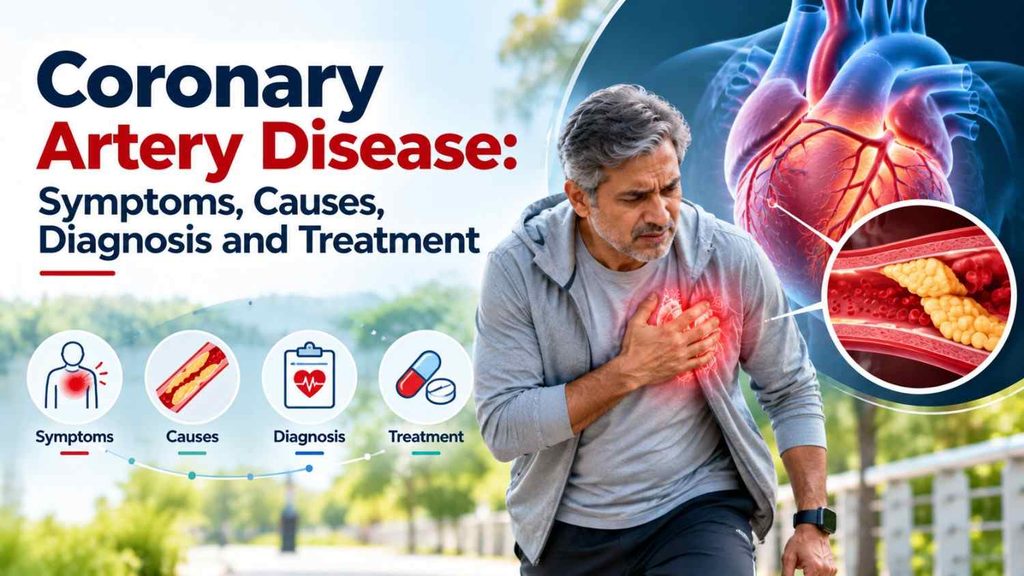
Coronary artery disease (CAD) develops when the blood vessels that supply the heart muscle become narrowed or damaged, often because fatty deposits accumulate within their walls. As the available space inside these arteries decreases, the heart may receive less oxygen-rich blood, particularly during physical activity or emotional stress.
The condition can develop gradually over many years. Some people experience chest discomfort or breathlessness, while others have no obvious symptoms until a serious complication occurs. Understanding coronary artery disease symptoms, causes, diagnostic methods, and treatment options can help people recognise potential warning signs and seek appropriate medical care.
Coronary artery disease is manageable. Depending on its severity, treatment may involve lifestyle changes, medication, a procedure to improve blood flow, or coronary artery bypass surgery.
What Is Coronary Artery Disease?
Coronary artery disease is a condition affecting the arteries responsible for delivering oxygen and nutrients to the heart muscle. These vessels are called the coronary arteries.
The disease most commonly develops through a process known as atherosclerosis, in which plaque builds up within artery walls. Plaque contains cholesterol, fats, cellular material, and other substances. Over time, this buildup can restrict circulation.
When the heart muscle cannot receive enough blood to meet its needs, the resulting shortage of oxygen is called myocardial ischemia.
Coronary artery disease is also commonly associated with the term coronary heart disease. Although the terms are often used interchangeably, coronary heart disease can refer to the consequences of coronary artery disease.
The condition can cause several complications, including:
- Angina, which is chest discomfort associated with reduced blood flow to the heart.
- Heart attack, which occurs when blood flow to part of the heart muscle is severely reduced or blocked.
- Heart failure, if the heart muscle becomes weakened or damaged.
- Certain abnormal heart rhythms, particularly when heart tissue has been damaged.
The severity of coronary artery disease varies. A person with early plaque buildup may have no symptoms, while another person may have significant narrowing or an acute blockage requiring urgent treatment.
What Causes Coronary Artery Disease?
The most common underlying cause is atherosclerosis. However, coronary artery disease can involve more than gradual plaque accumulation in the larger arteries.
1. Plaque Buildup in the Coronary Arteries
The inner lining of an artery can become affected by processes involving cholesterol, inflammation, and other cardiovascular risk factors. Plaque may gradually accumulate and reduce the space available for blood to pass through.
During exercise, the heart needs more oxygen. If the affected artery cannot deliver enough additional blood, symptoms such as chest discomfort or breathlessness may occur.
2. Plaque Rupture and Blood Clots
Some plaques can become unstable and rupture. When this happens, the body may form a blood clot at the damaged site.
A clot can suddenly restrict or block circulation, potentially causing a heart attack. This is one reason coronary artery disease can become dangerous even when symptoms were previously mild or absent.
3. Problems Affecting Smaller Heart Blood Vessels
Not all coronary circulation problems involve major arteries. Some people develop coronary microvascular dysfunction, in which the tiny blood vessels supplying the heart do not function properly.
This can cause symptoms of reduced blood flow even when major coronary arteries do not show significant obstruction.
4. Coronary Artery Spasm
A coronary artery may temporarily tighten or spasm, reducing the amount of blood reaching the heart muscle. This can cause chest pain and may occur with or without substantial plaque buildup.
A clinician needs to distinguish these mechanisms because they may require different investigations and treatment approaches.
Coronary Artery Disease Risk Factors
Several factors can increase the likelihood of developing coronary artery disease. Some are modifiable, while others cannot be changed.
Risk factors you can work to control
- High LDL cholesterol: Elevated levels can contribute to plaque formation in artery walls.
- High blood pressure: Persistent hypertension can damage blood vessels and increase cardiovascular strain.
- Diabetes: High blood glucose and related metabolic changes increase the risk of coronary artery disease.
- Smoking and tobacco exposure: Tobacco damages blood vessels and increases the risk of clot formation.
- Physical inactivity: Insufficient exercise can contribute to high blood pressure, unhealthy cholesterol levels, and metabolic problems.
- Unbalanced diet: A diet consistently high in saturated fats, trans fats, excess salt, and highly processed foods can contribute to cardiovascular risk.
- Excess body weight: Particularly when associated with high blood pressure, abnormal cholesterol, or diabetes, excess weight can increase risk.
- Chronic kidney disease: Kidney problems are associated with a greater likelihood of cardiovascular complications.
Risk factors you cannot change
Age, inherited susceptibility, and family history can influence risk. A close relative who developed cardiovascular disease at a young age may indicate a higher inherited risk.
Risk can also differ across the lifespan. Women generally experience an increase in coronary risk after menopause, although the disease can occur earlier.
Having one or more risk factors does not mean that you definitely have coronary artery disease. Similarly, people without obvious risk factors can still develop the condition. Individual assessment is more useful than relying on any single characteristic.
Coronary Artery Disease Symptoms: What to Watch For
Coronary artery disease may cause no noticeable symptoms in its early stages. When symptoms occur, they often reflect a mismatch between the oxygen the heart requires and the blood supply available.
1. Angina or Chest Discomfort
Angina is a common symptom of coronary artery disease. People may describe it as pressure, heaviness, squeezing, tightness, burning, or discomfort in the chest.
It may develop during exercise, walking uphill, climbing stairs, or emotional stress. In some cases, it improves with rest, but chest discomfort should never be self-diagnosed as harmless.
2. Breathlessness During Activity
Reduced blood supply can make physical exertion more difficult. Some people notice that they become breathless while walking, exercising, or completing tasks that previously felt manageable.
Breathlessness has many possible causes, including lung conditions, anaemia, and heart failure. A medical assessment is needed to identify the cause.
3. Discomfort Beyond the Chest
Pain or pressure may spread to the shoulder, one or both arms, the back, neck, jaw, or upper abdomen. Not everyone experiences the same pattern.
Symptoms that occur alongside sweating, nausea, or shortness of breath require particular attention.
4. Unusual Tiredness or Reduced Exercise Capacity
Some people notice that they tire more easily or cannot maintain their usual activity level. This symptom is nonspecific and can result from many health conditions, but a persistent or unexplained change deserves medical evaluation.
5. Nausea, Sweating, or Light-Headedness
These symptoms may accompany a heart attack or another acute cardiac problem. They are especially concerning when they occur with chest discomfort, breathlessness, or pain spreading to other areas.
Can Coronary Artery Disease Occur Without Chest Pain?
Yes. Some people have silent coronary artery disease or experience symptoms that are subtle or atypical. This can occur in people with diabetes and in older adults, among other groups.
Women can also experience coronary disease with symptoms beyond typical chest pressure. Fatigue, nausea, breathlessness, and discomfort in the back or jaw may occur, although chest discomfort remains an important possible warning sign.
Do not wait for a particular symptom pattern before seeking help. New, severe, persistent, or unexplained symptoms may require urgent evaluation.
How Is Coronary Artery Disease Diagnosed?
Doctors assess coronary artery disease by combining symptoms, medical history, cardiovascular risk factors, physical examination, and appropriate investigations. No single test is suitable for every patient.
Medical History and Physical Examination
A doctor may ask when symptoms began, what triggers them, how long they last, and whether they improve with rest. Blood pressure, pulse, heart sounds, and other clinical findings may also be assessed.
The clinician will consider factors such as diabetes, cholesterol levels, smoking, kidney disease, and family history.
Blood Tests
Blood tests can help assess cholesterol, triglycerides, glucose, and other relevant health indicators. If a heart attack is suspected, troponin testing may be used to detect heart muscle injury.
Cholesterol testing helps assess cardiovascular risk, but a high cholesterol result alone does not establish whether a coronary artery is narrowed.
Electrocardiogram (ECG)
An ECG records the electrical activity of the heart. It may reveal certain changes associated with reduced blood flow, a heart attack, or abnormal heart rhythms.
A normal ECG does not exclude all coronary artery disease, so other tests may be necessary when clinical suspicion remains.
Echocardiogram and Stress Testing
An echocardiogram uses ultrasound to assess heart structure, movement, and pumping function. A stress test examines how the heart responds to exercise or medication-induced stress.
Depending on the clinical situation, doctors may use stress imaging to investigate possible blood-flow problems.
Coronary CT Angiography
Coronary CT angiography produces detailed images of the coronary arteries, generally using injected contrast material. It can help identify plaque and narrowing in suitable patients.
A coronary calcium scan is a different test that estimates the amount of calcified plaque. Neither test is automatically required for every person.
Invasive Coronary Angiography
Invasive angiography uses a catheter and contrast material to visualise coronary arteries. It may be recommended when symptoms, other test results, or the suspected severity of disease justify a more direct assessment.
If a significant narrowing is identified, the medical team can discuss whether medication, angioplasty, bypass surgery, or another approach is most appropriate.
Coronary Artery Disease Treatment Options
Treatment aims to reduce the risk of heart attack and other complications, improve symptoms, and support quality of life. The appropriate plan depends on the severity and location of disease, associated conditions, symptoms, and the person’s overall health.
1. Lifestyle Changes
Lifestyle measures are an important part of treatment and prevention. They may help improve cardiovascular risk factors and support the effectiveness of prescribed medication.
A heart-healthy plan can include:
- Eating more vegetables, fruit, whole grains, legumes, nuts, and other fibre-rich foods.
- Choosing healthier sources of fats and limiting trans fats and excess saturated fat.
- Limiting excess salt and highly processed foods.
- Avoiding tobacco and seeking support to quit smoking.
- Building regular physical activity into daily life when medically appropriate.
- Working toward a healthy weight where needed.
- Managing stress and maintaining consistent sleep habits.
- Attending recommended follow-up appointments.
People with diagnosed coronary artery disease should ask their healthcare professional which level of activity is safe, especially after a heart attack or procedure.
2. Medicines for Coronary Artery Disease
Medication may reduce cardiovascular risk, relieve symptoms, or prevent blood clots, depending on the clinical situation.
Common medication categories include:
- Statins and other cholesterol-lowering medicines: Used to lower LDL cholesterol and reduce the risk of cardiovascular events.
- Antiplatelet medicines: Such as aspirin or clopidogrel, which may be prescribed to reduce clotting risk in selected patients.
- Beta blockers: May reduce the heart’s workload and help control certain symptoms or conditions.
- Nitrates: May be used to relieve angina by improving the balance between the heart’s oxygen supply and demand.
- ACE inhibitors or ARBs: May be recommended for selected patients, particularly when high blood pressure, diabetes, or certain heart conditions are present.
- Other anti-anginal medicines: May be considered when symptoms persist or specific medicines are unsuitable.
Not every person needs every medication. Antiplatelet drugs can cause bleeding, and other medicines have specific contraindications and monitoring requirements. Do not start, stop, or change heart medication without medical advice.
3. Coronary Angioplasty and Stenting
Coronary angioplasty is a procedure that opens a narrowed coronary artery using a small balloon. A stent, which is a small mesh tube, is often placed to help keep the artery open.
A clinician may recommend angioplasty when it is appropriate for the patient’s symptoms, anatomy, and clinical circumstances. It is also an important treatment option in many acute heart attack situations.
Angioplasty can improve blood flow through a treated artery, but it does not remove the underlying tendency to develop atherosclerosis elsewhere. Medication, risk-factor management, and follow-up remain important.
4. Coronary Artery Bypass Grafting (CABG)
Coronary artery bypass grafting is a surgical procedure that creates an alternative route for blood to reach heart muscle beyond narrowed or blocked coronary arteries.
Surgeons use a blood vessel from another part of the body to create the bypass. CABG may be considered for certain patterns of extensive coronary disease, complex narrowing, or situations in which it is expected to offer advantages over other approaches.
The decision between bypass surgery, angioplasty, and medication depends on individual clinical findings and should be discussed with the treating cardiology and surgical teams.
5. Cardiac Rehabilitation
Cardiac rehabilitation is a medically supervised programme that may include exercise training, education, nutritional guidance, support with risk-factor management, and help with recovery after a cardiac event or procedure.
For eligible patients, rehabilitation can support recovery and help them build sustainable habits for long-term cardiovascular health.
What Happens If Coronary Artery Disease Is Left Untreated?
The consequences depend on the degree of disease, the stability of plaque, and the person’s other health conditions. Some people remain stable for a long time, while others develop serious complications.
Potential consequences include:
- Heart attack: A sudden reduction or interruption of blood flow damages heart muscle.
- Heart failure: Damage or long-standing reduced blood supply may weaken the heart’s pumping ability.
- Abnormal heart rhythms: Electrical disturbances can develop, particularly after heart muscle injury.
- Reduced ability to exercise: Recurrent angina or breathlessness can interfere with work and daily activities.
Prompt assessment and appropriate treatment can reduce risk. If you have been diagnosed with coronary artery disease, follow your clinician’s treatment plan even if symptoms become less noticeable.
How Can You Reduce Your Risk of Coronary Artery Disease?
You cannot change your age or inherited risk, but many contributing factors can be managed.
Practical steps include:
- Check your blood pressure, cholesterol, and blood glucose at intervals recommended by your healthcare professional.
- Stop smoking and avoid second-hand smoke where possible.
- Eat a balanced diet that emphasises minimally processed foods and healthier fats.
- Stay physically active according to your health status and medical advice.
- Take prescribed medication consistently and attend follow-up appointments.
- Discuss your family history with your doctor, particularly if close relatives developed cardiovascular disease at a young age.
- Seek assessment for persistent or unexplained chest discomfort, breathlessness, or a change in exercise tolerance.
There is no guaranteed way to eliminate coronary artery disease risk. However, addressing several risk factors together can substantially improve cardiovascular health.
Frequently Asked Questions
Is coronary artery disease the same as a heart attack?
No. Coronary artery disease is a condition affecting the arteries that supply the heart. A heart attack is an acute event that occurs when blood flow to part of the heart muscle becomes severely restricted or blocked. Coronary artery disease is a major cause of heart attacks.
Can coronary artery disease be reversed?
Some early plaque changes may improve with intensive risk-factor management, and treatment can slow disease progression and reduce cardiovascular risk. However, established coronary artery disease cannot always be reversed completely. The goal is to control the condition and prevent complications.
Can coronary artery disease be present with normal cholesterol?
Yes. Cholesterol is an important risk factor, but it is not the only one. Age, blood pressure, diabetes, smoking, inherited susceptibility, and other factors also influence risk. A cholesterol result alone cannot confirm or exclude coronary artery disease.
Does coronary artery disease always require surgery?
No. Many people are treated with lifestyle changes and medication. Angioplasty or bypass surgery may be recommended when the pattern and severity of disease, symptoms, or clinical circumstances indicate that a procedure is likely to help.
Can exercise be safe for someone with coronary artery disease?
Physical activity is often an important part of long-term management, but the appropriate level depends on the person’s condition. People with new symptoms, unstable disease, or a recent cardiac event should obtain medical guidance before starting or increasing exercise.
When should someone with possible coronary artery disease seek emergency help?
Seek emergency assistance for new or severe chest pressure, tightness, or discomfort that does not settle, particularly when it occurs with breathlessness, sweating, nausea, faintness, or pain spreading to the arm, jaw, back, or shoulder. A heart attack can occur without a classic symptom pattern. Do not delay emergency care to arrange a routine appointment.
Take the Next Step for Your Heart Health
Coronary artery disease can develop quietly, but early assessment and an appropriate treatment plan can help reduce the risk of serious complications. If you have cardiovascular risk factors or symptoms that concern you, arrange an assessment with a qualified healthcare professional.
Explore our Heart Disease guide to learn about related conditions, or visit our General Physician page for information about an initial medical assessment.

Pingback: Heart Disease Risk Factors: 8 Key Things to Know
Pingback: ECG Test: What It Detects & How to Prepare
Pingback: Cardiac Arrest vs Heart Attack: Key Differences
Pingback: Angina: Symptoms, Causes, Types & Treatment
Pingback: Blocked Arteries: Warning Signs, Causes and Treatment
Pingback: Atherosclerosis: How Plaque Builds Up in Arteries