
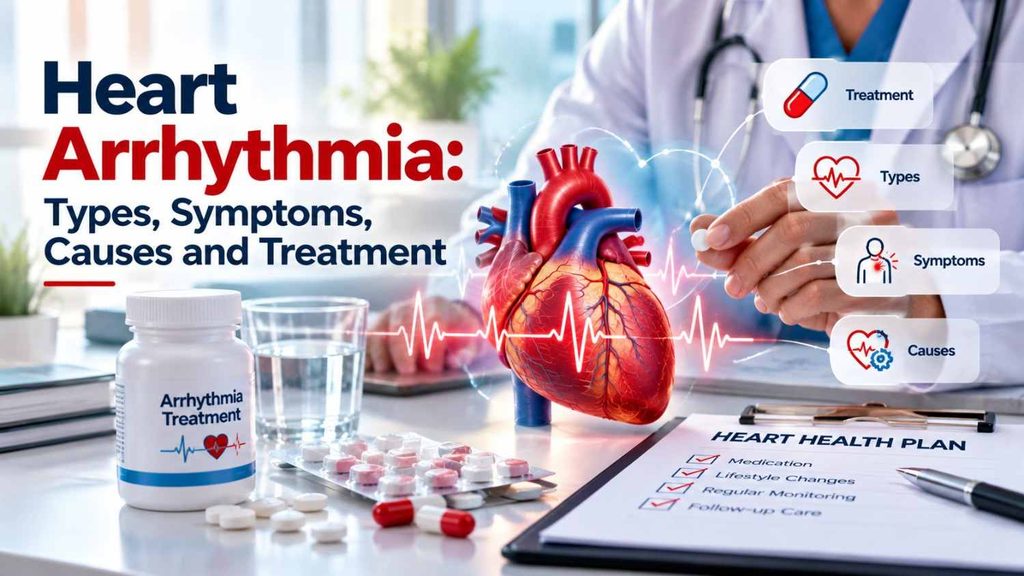
A heartbeat depends on carefully timed electrical signals that coordinate the heart’s contractions. When those signals start in the wrong place, travel abnormally, or occur too quickly or slowly, the heart may develop a rhythm disorder known as an arrhythmia.
Some arrhythmias cause little more than an occasional sensation of a skipped beat. Others can interfere with the heart’s ability to circulate blood, increase the risk of stroke, or lead to a medical emergency. The seriousness depends on the specific rhythm, how long it lasts, the presence of other heart conditions, and its effect on circulation.
What Is Heart Arrhythmia?
Heart arrhythmia is an abnormality in the speed or pattern of the heartbeat. It occurs when the electrical system controlling the heart does not function in its usual coordinated way.
The heart has four chambers: two upper chambers called the atria and two lower chambers called the ventricles. Electrical impulses normally begin in the sinoatrial (SA) node, travel through the atria, pass through the atrioventricular (AV) node, and continue through pathways that activate the ventricles.
This sequence allows the chambers to contract in a coordinated manner.
An arrhythmia may occur if an impulse starts somewhere unexpected, travels through an abnormal pathway, or encounters a delay or blockage. As a result, the heart can beat too fast, too slowly, or irregularly.
The main categories include:
- Tachycardia: A heart rate that is too fast for the circumstances.
- Bradycardia: A heart rate that is slower than expected.
- Irregular rhythms: Heartbeats that do not follow a consistent pattern.
- Premature beats: Extra heartbeats that occur earlier than expected.
- Conduction disorders: Problems with the transmission of electrical signals through the heart.
A resting heart rate below 60 beats per minute is often described as bradycardia, while a rate above 100 beats per minute is commonly described as tachycardia in adults. These thresholds do not establish a diagnosis by themselves. For example, a slow pulse can be normal during sleep or in a well-trained athlete, while a faster rate may be expected during exercise.
What Are the Main Types of Heart Arrhythmia?
Arrhythmias are classified according to where the abnormal rhythm begins, how the electrical signals behave, and whether the heart beats too quickly, too slowly, or irregularly.
1. Atrial Fibrillation (AFib)
Atrial fibrillation is a common type of sustained heart rhythm disorder. Instead of contracting in an organised pattern, the atria produce disordered electrical activity, resulting in an irregular heartbeat that is often fast.
AFib may occur in episodes or persist over longer periods. Some people notice palpitations, reduced exercise tolerance, or breathlessness, while others have no obvious symptoms.
One important concern is that blood can pool in parts of the atria, allowing clots to form. If a clot travels to the brain, it can cause an ischaemic stroke. Depending on the person’s risk factors, treatment may include heart-rate control, rhythm control, and medication to reduce clot-related stroke risk.
Read more about atrial fibrillation for a more detailed explanation of this condition.
2. Atrial Flutter
Atrial flutter occurs when an electrical impulse travels repeatedly through a circuit in the atria, producing a rapid and often organised atrial rhythm.
The pulse may be fast and sometimes regular, which can make it feel different from the irregular pulse commonly associated with AFib. Some people experience fatigue, palpitations, or shortness of breath.
Atrial flutter can also increase the risk of blood clots and stroke. Assessment and treatment may involve medication, electrical cardioversion, catheter ablation, and an individual evaluation of whether anticoagulant medication is needed.
3. Supraventricular Tachycardia (SVT)
Supraventricular tachycardia describes a group of fast rhythms that begin above the ventricles. Certain forms, including atrioventricular nodal re-entrant tachycardia, result from electrical signals travelling repeatedly through an abnormal circuit.
An episode may begin and end abruptly. A person might feel a racing heartbeat, chest discomfort, breathlessness, or light-headedness.
Some episodes stop without intervention, while others require medical treatment. Depending on the type and frequency, options may include clinician-guided vagal manoeuvres, medication, or catheter ablation.
A person experiencing a first episode of unexplained rapid heartbeat should seek medical assessment rather than assuming it is SVT.
4. Ventricular Tachycardia
Ventricular tachycardia begins in the lower chambers of the heart. It may occur in short episodes or continue long enough to compromise blood circulation.
Some episodes are associated with previous heart attacks, scarring of the heart muscle, or cardiomyopathy. Other causes are possible, including inherited electrical disorders.
Symptoms can include a rapid heartbeat, dizziness, fainting, chest discomfort, or breathlessness. Sustained ventricular tachycardia can be life-threatening and may progress to ventricular fibrillation.
A suspected episode requires urgent medical assessment. Treatment may involve emergency electrical therapy, medication, catheter ablation, or an implantable cardioverter-defibrillator (ICD), depending on the cause and risk.
5. Ventricular Fibrillation
Ventricular fibrillation is a medical emergency. Chaotic electrical activity causes the ventricles to quiver instead of pumping blood effectively.
Without immediate treatment, circulation stops and the person becomes unresponsive. This is a form of cardiac arrest.
Emergency treatment requires cardiopulmonary resuscitation (CPR) and rapid defibrillation with an automated external defibrillator (AED) or emergency medical equipment.
If someone collapses, is unresponsive, and is not breathing normally, call emergency services, begin CPR, and use an AED as soon as available.
6. Bradycardia
Bradycardia refers to a heart rate that is slower than expected. It can be a normal finding in some people, but it can also occur when the heart’s natural pacemaker does not produce impulses effectively or when electrical signals are delayed.
Possible symptoms include fatigue, dizziness, weakness, reduced exercise tolerance, and fainting.
Causes may include certain medicines, ageing-related changes in the electrical system, thyroid problems, or other medical conditions. Treatment depends on whether the slow rate is causing symptoms or affecting circulation.
Some people need only monitoring or adjustment of an underlying cause. Others with clinically significant bradycardia may require a pacemaker.
7. Premature Heartbeats
Premature beats occur when an electrical signal triggers a heartbeat earlier than expected.
Two common forms are:
- Premature atrial contractions (PACs): Early beats that begin in the atria.
- Premature ventricular contractions (PVCs): Early beats that begin in the ventricles.
People may describe these as a skipped beat, a flutter, or a sudden thump in the chest. The sensation of a skipped beat often occurs because the premature beat is followed by a brief pause and a stronger subsequent beat.
Occasional premature beats can occur in people without significant heart disease. Frequent episodes, new symptoms, fainting, or an underlying heart condition may warrant further investigation.
8. Heart Block and Other Conduction Disorders
A heart block occurs when electrical signals travelling from the atria to the ventricles are delayed or blocked.
The degree of interruption varies. Some forms require monitoring, while more advanced forms can cause a dangerously slow heartbeat or fainting.
Conduction disorders may arise from age-related changes, heart disease, inflammation, or medication effects. Depending on the type and symptoms, management may involve observation, treating the underlying cause, or pacemaker implantation.
Heart Arrhythmia Symptoms: How Can You Recognise Them?
Symptoms vary according to the rhythm, its duration, and whether it reduces the amount of blood reaching the brain and other organs.
Possible symptoms include:
- Palpitations: A racing, fluttering, pounding, or irregular heartbeat.
- Dizziness or light-headedness: This may occur if circulation temporarily falls.
- Fainting or near-fainting: Brief loss of consciousness can be a warning sign of a significant rhythm problem.
- Breathlessness: Some arrhythmias interfere with the heart’s ability to meet the body’s needs.
- Unusual fatigue: A persistent reduction in energy or exercise tolerance may occur.
- Chest discomfort: This can accompany an arrhythmia or indicate another heart problem that needs assessment.
- Weakness or reduced stamina: These symptoms can develop when the heart is not circulating blood efficiently.
Not everyone with an arrhythmia experiences symptoms. Some rhythm disturbances are discovered during a routine examination or an ECG performed for another reason.
These symptoms are not specific to arrhythmia and can occur with other conditions. Diagnosis requires clinical assessment rather than symptoms alone.
When Is an Irregular Heartbeat an Emergency?
Seek emergency medical assistance if palpitations or an abnormal heartbeat occur with chest pain, severe breathlessness, fainting, or a feeling that you may lose consciousness.
Call 112 in India if you suspect a life-threatening emergency. If a person collapses, becomes unresponsive, and is not breathing normally, call for help, start CPR, and use an AED if available.
Do not drive yourself to hospital during a suspected cardiac emergency.
What Causes Heart Arrhythmia?
An arrhythmia may arise from a problem within the heart’s electrical system, changes in heart tissue, another medical condition, or external factors that affect electrical activity.
Underlying Heart Conditions
Conditions that alter heart structure or damage heart tissue can disrupt electrical conduction. Examples include:
- Coronary artery disease and previous heart attacks.
- Cardiomyopathy, which affects the heart muscle.
- Heart valve disorders.
- Congenital heart conditions.
- Inflammation of the heart muscle, known as myocarditis.
- Previous heart surgery or procedures that affect electrical pathways.
Not everyone with these conditions develops an arrhythmia, but the presence of heart disease can change the level of risk.
Medical Conditions and Chemical Imbalances
The heart’s electrical activity depends on normal levels of minerals and appropriate hormonal regulation. Problems that may contribute to an abnormal rhythm include:
- Thyroid disorders, particularly an overactive thyroid in certain fast rhythms.
- Abnormal potassium, magnesium, or other electrolyte levels.
- Sleep apnoea.
- Kidney disease.
- Significant dehydration in some circumstances.
- Fever or acute illness, depending on the situation.
Correcting a contributing condition may improve the rhythm, although some people need additional treatment.
Medicines and Stimulants
Certain prescription medicines can affect heart rate, conduction, or the electrical properties of the heart. Some medicines may also interact with other drugs or become problematic when electrolyte levels are abnormal.
Caffeine affects people differently, and excessive intake may trigger palpitations in some individuals. Nicotine, recreational stimulants, and heavy alcohol use can also contribute to rhythm disturbances.
If symptoms start after a medication change or supplement use, discuss this with a healthcare professional. Do not discontinue prescribed treatment without medical guidance.
Stress, Sleep and Physical Activity
Emotional stress, inadequate sleep, and strenuous activity can be associated with palpitations or trigger some arrhythmias in susceptible people.
However, stress should not automatically be assumed to be the cause of a racing or irregular heartbeat. Recurrent, persistent, or unexplained episodes deserve assessment, especially if accompanied by dizziness, chest discomfort, or breathlessness.
Family History and Inherited Conditions
Some arrhythmias are linked to inherited electrical disorders or structural heart conditions. A family history of unexplained sudden death at a young age, inherited rhythm disorders, or cardiac arrest may be relevant when assessing risk.
In selected cases, a cardiologist may recommend specialist assessment or genetic testing.
How Is Heart Arrhythmia Diagnosed?
The challenge is that an arrhythmia may stop before the patient reaches a clinic. Doctors therefore consider both the symptoms and the best way to record the heart’s electrical activity.
Electrocardiogram (ECG)
An ECG records electrical signals from the heart over a short period. It is a key initial test for identifying many rhythm disorders.
If an arrhythmia is occurring during the recording, the ECG may show its pattern and help guide further evaluation. A normal result does not exclude an intermittent rhythm problem.
Holter Monitor or Event Recorder
Portable monitors record the heartbeat during everyday activities.
A Holter monitor typically records continuously for a defined period, often 24–48 hours or longer depending on the device. An event monitor or another extended recording device may be more useful when episodes happen less frequently.
Keeping a symptom diary with the time, activity, and sensations experienced can help doctors compare symptoms with the recorded rhythm.
Blood Tests
Blood tests may check thyroid function, electrolyte levels, kidney function, and other factors that could contribute to an arrhythmia.
The specific tests depend on the symptoms, medical history, examination, and suspected rhythm disorder.
Echocardiogram
An echocardiogram uses ultrasound to assess the heart’s structure and pumping function. It may be recommended when doctors suspect structural heart disease or need to understand whether the heart muscle or valves are contributing to the rhythm problem.
Exercise Testing
A supervised exercise test may be useful when symptoms occur during physical exertion or when the clinician needs to understand how the rhythm responds to exercise.
It is not suitable for every person and should be arranged according to medical advice.
Electrophysiology Study
An electrophysiology study is a specialised procedure in which thin catheters are guided into the heart to measure its electrical activity. The cardiology team may use it to identify the source of certain arrhythmias and determine whether a procedure such as ablation is appropriate.
It is generally reserved for selected situations rather than used as the first test for every patient.
Heart Arrhythmia Treatment: What Are the Options?
Treatment is based on the rhythm diagnosis, its effect on circulation, associated medical conditions, and the likelihood of future complications. Some benign or infrequent rhythm disturbances need no specific treatment beyond monitoring.
1. Medicines to Control Heart Rate or Rhythm
Medication may help slow an excessively fast heartbeat, reduce episodes of an arrhythmia, or maintain a more stable rhythm.
Depending on the condition, doctors may consider beta blockers, certain calcium channel blockers, or antiarrhythmic medicines. The choice depends on the specific rhythm and the patient’s overall heart health.
These medicines can have side effects, and some can worsen certain rhythm disorders if used inappropriately. They should be prescribed and monitored by a qualified clinician.
2. Anticoagulants for Selected Patients With AFib
Some people with atrial fibrillation need anticoagulant medication to reduce the risk of blood clots and stroke.
The decision depends on individual stroke risk, bleeding risk, other medical conditions, and the specific clinical situation. Anticoagulants do not treat every arrhythmia, and they should not be started or stopped without medical advice.
3. Electrical Cardioversion
Cardioversion uses a controlled electrical shock to restore a more normal rhythm in selected arrhythmias. It is performed in a monitored medical setting, often with sedation for planned procedures.
Emergency defibrillation is different: it is used to treat life-threatening rhythms such as ventricular fibrillation and certain forms of pulseless ventricular tachycardia during cardiac arrest.
4. Catheter Ablation
Catheter ablation is a procedure used to treat selected arrhythmias by targeting the small area or pathway responsible for abnormal electrical activity.
A clinician guides catheters through blood vessels to the heart and applies energy—commonly heat or cold—to alter the tissue causing the rhythm disturbance.
Ablation may be considered for conditions such as certain forms of SVT, atrial flutter, and selected cases of atrial fibrillation or ventricular arrhythmia. Its suitability and likelihood of success depend on the rhythm type and individual circumstances.
5. Pacemakers
A pacemaker is a small implanted device that helps maintain an adequate heart rate when the heart’s natural pacemaking or conduction system does not work properly.
It may be recommended for certain symptomatic slow rhythms or significant conduction disorders. Not everyone with a low pulse requires one.
6. Implantable Cardioverter-Defibrillator (ICD)
An ICD continuously monitors heart rhythm and can deliver treatment when it detects certain dangerous ventricular arrhythmias.
It may be recommended for people who have survived particular life-threatening arrhythmias or who have a sufficiently high risk of them because of specific heart conditions.
An ICD is different from a standard pacemaker, although some devices can perform both pacing and defibrillation functions.
7. Treating the Underlying Cause
When an arrhythmia is related to a contributing condition, managing that condition may be an important part of care. Examples include correcting an electrolyte imbalance, addressing thyroid disease, reviewing a medicine, or treating sleep apnoea.
The appropriate approach depends on the findings. Rhythm treatment and management of the underlying condition may both be necessary.
Can Heart Arrhythmia Be Prevented?
Not every arrhythmia can be prevented, particularly when it results from inherited conditions or changes in the heart’s electrical system. However, some measures may lower the likelihood of certain episodes or reduce associated cardiovascular risks.
Consider these steps:
- Manage high blood pressure, diabetes, and other relevant health conditions.
- Avoid smoking and recreational stimulants.
- Limit alcohol if it triggers symptoms or your clinician recommends doing so.
- Get adequate sleep and seek assessment for possible sleep apnoea.
- Maintain appropriate hydration, particularly during illness or exercise.
- Follow instructions for prescribed medicines and attend recommended reviews.
- Discuss recurring palpitations instead of relying only on a smartwatch or pulse reading.
- Follow medical advice about exercise if you have a diagnosed rhythm disorder.
Avoid taking potassium, magnesium, or other supplements solely to treat palpitations unless a healthcare professional has identified a reason. Unnecessary supplementation can be harmful, particularly for people with kidney disease or those taking certain medicines.
What Is the Difference Between Arrhythmia and Atrial Fibrillation?
Atrial fibrillation is one specific type of arrhythmia. The word arrhythmia describes a broad group of rhythm problems, including fast rhythms, slow rhythms, premature beats, and conduction disorders.
AFib specifically involves disorganised electrical activity in the atria and is associated with an increased risk of stroke in affected patients. Other arrhythmias have different mechanisms, risks, and treatment approaches.
For this reason, identifying the exact rhythm is important. Two people may both report palpitations but require very different management.
Frequently Asked Questions
Is heart arrhythmia dangerous?
Some arrhythmias are relatively harmless, while others can cause fainting, stroke, heart failure, or cardiac arrest. The level of danger depends on the rhythm, its duration, underlying heart health, and symptoms. A clinician can assess the specific risk.
Can heart arrhythmia go away on its own?
Some episodes stop without treatment, particularly certain intermittent fast rhythms or premature beats. However, an episode ending does not prove that the cause is harmless. Recurrent or unexplained symptoms should be evaluated.
Can anxiety cause heart palpitations?
Anxiety and stress can cause a person to notice their heartbeat or may trigger palpitations. However, an arrhythmia can also cause similar sensations. Persistent or recurrent palpitations should not automatically be attributed to anxiety without appropriate assessment.
Can a smartwatch detect an arrhythmia?
Some smartwatches can record a single-lead ECG or flag possible irregular rhythms. These features may provide useful information, but they do not diagnose every arrhythmia and can produce false alarms or miss episodes. Share relevant recordings with your healthcare professional rather than relying on the device alone.
Can heart arrhythmia lead to a stroke?
Certain arrhythmias, especially atrial fibrillation, can increase stroke risk because blood clots may form in the heart and travel to the brain. Stroke-prevention treatment depends on the specific condition and an individual’s risk assessment.
Which doctor treats heart arrhythmia?
A general physician may perform an initial assessment and arrange an ECG or other tests. A cardiologist evaluates heart conditions, while a cardiac electrophysiologist specialises in heart rhythm disorders and may provide advanced treatment such as catheter ablation or device therapy.
When should I see a doctor about palpitations?
Arrange medical evaluation if palpitations keep recurring, become more frequent, last longer than usual, or occur alongside reduced exercise tolerance or other concerning symptoms. Seek emergency assistance if they occur with chest pain, severe breathlessness, fainting, or near-fainting.
Get the Right Assessment for Heart Rhythm Problems
An abnormal heartbeat can have several explanations, ranging from occasional premature beats to a rhythm disorder requiring specialist treatment. Identifying the exact rhythm helps determine whether monitoring, medication, a procedure, or a device is appropriate.
If you have recurring palpitations or unexplained changes in your heartbeat, seek medical assessment rather than assuming the symptoms are harmless.
Explore our Heart Disease guide for information about related cardiac conditions, or visit the General Physician page to learn about an initial medical assessment.

Pingback: ECG Test: What It Detects & How to Prepare
Pingback: Cardiologist in Ghaziabad: 9 Signs to See a Heart Specialist