
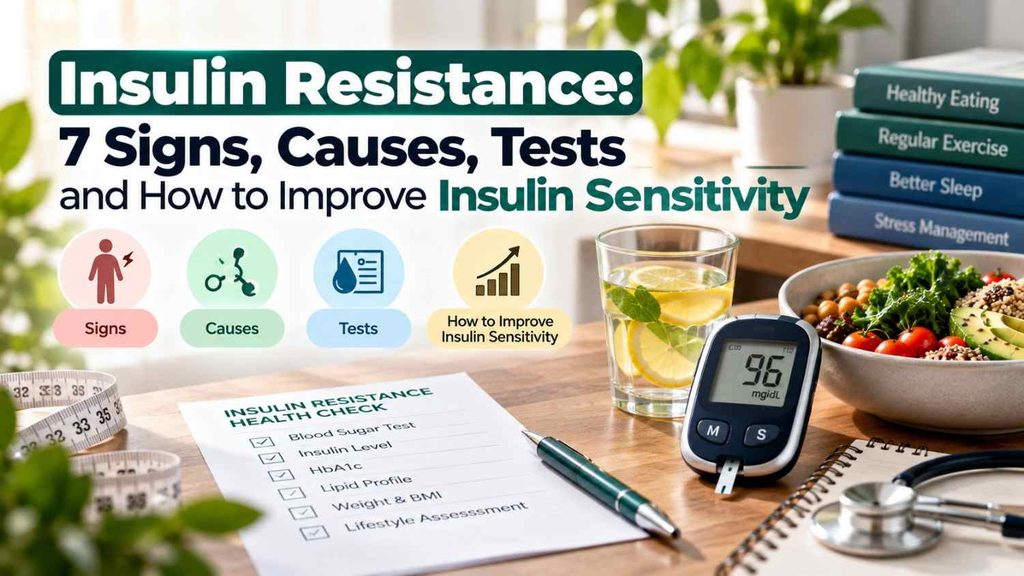
Insulin resistance occurs when the body’s cells respond less effectively to insulin, a hormone that helps regulate blood glucose (blood sugar). To compensate, the pancreas may produce more insulin, allowing blood glucose to remain within the usual range for some time. If the body can no longer compensate adequately, blood glucose may rise, increasing the risk of prediabetes and type 2 diabetes.
Does insulin resistance cause symptoms? Often, it does not. Some people have possible physical clues, such as darkened skin around the neck, while others have no noticeable symptoms. Blood tests can help identify prediabetes or diabetes, but they do not directly measure insulin resistance in every case.
What Is Insulin Resistance?
Insulin is a hormone produced by the pancreas. After you eat, carbohydrates are broken down into glucose, which enters your bloodstream. Insulin helps muscle, fat and liver cells respond to glucose and supports healthy blood sugar regulation.
When these cells become less responsive to insulin, the body may need more of the hormone to achieve a similar effect. This is called insulin resistance.
Initially, the pancreas may compensate by producing additional insulin, helping keep blood glucose within the usual range. If the body cannot compensate sufficiently over time, blood glucose may rise and prediabetes or type 2 diabetes may develop.
Insulin resistance, prediabetes and type 2 diabetes are related, but they are not the same:
- Insulin resistance: The body’s cells respond less effectively to insulin.
- Prediabetes: Blood glucose is higher than normal but below the diagnostic threshold for diabetes.
- Type 2 diabetes: Blood glucose meets established diagnostic criteria for diabetes.
A person can have insulin resistance without having diabetes. Insulin resistance may also be present when a routine blood glucose result is normal.
What Are the 7 Possible Signs and Risk Clues of Insulin Resistance?
Insulin resistance often develops without obvious symptoms. The findings below may be associated with insulin resistance or related metabolic conditions, but they are not all symptoms, and none can confirm the condition on its own.
1. Dark, Velvety Patches of Skin
Acanthosis nigricans is a skin condition that causes darker, thicker and sometimes velvety-looking patches. These patches commonly appear around the neck, armpits or groin.
Acanthosis nigricans can be associated with insulin resistance. However, other explanations are possible, so the appearance of dark skin alone does not establish a diagnosis.
If you notice new or unexplained skin changes, consult a healthcare professional. They can assess the affected skin and decide whether checking for metabolic conditions is appropriate.
2. Multiple Skin Tags
Skin tags are small, soft growths that often develop around the neck, underarms and other skin folds. They are common and generally harmless.
Having multiple skin tags may occur alongside insulin resistance or other metabolic risk factors. However, skin tags are also common in people without insulin resistance and should not be treated as a diagnostic test.
Seek medical advice if a growth changes rapidly, bleeds, becomes painful or looks unusual.
3. Increased Waist Size or Abdominal Weight Gain
Excess fat around the abdomen is associated with a greater likelihood of insulin resistance and related metabolic problems.
However, waist size and body weight cannot determine whether someone has insulin resistance. The condition can occur in people of different body sizes, and not everyone with a larger waist has it.
A healthcare professional may consider waist circumference, medical history, blood pressure and laboratory results together when assessing metabolic risk.
4. Persistent Tiredness or Low Energy
Some people with abnormal glucose regulation report fatigue or low energy. However, tiredness is a nonspecific symptom with many possible causes, including poor sleep, anaemia, thyroid disorders, stress, medication effects and other health conditions.
Feeling tired alone does not establish insulin resistance. If fatigue persists, affects your daily activities or occurs alongside other symptoms, discuss it with a healthcare professional rather than assuming it is caused by blood sugar problems.
5. Increased Thirst or Frequent Urination
Increased thirst and frequent urination are more concerning as possible symptoms of high blood glucose than as early signs of insulin resistance itself. They may occur when glucose levels become substantially elevated, including in diabetes.
Other possible symptoms of high blood glucose include:
- Blurred vision.
- Unexplained weight loss.
- Increased hunger.
- Unusual tiredness.
These symptoms do not prove that you have diabetes, but they should not be ignored. Arrange a prompt medical assessment and appropriate blood glucose testing if you experience them, particularly if several occur together.
Seek urgent medical care if these symptoms occur with vomiting, abdominal pain, deep or rapid breathing, severe dehydration, confusion or marked drowsiness. These can indicate a serious medical emergency.
6. Irregular Periods or Features of PCOS
Polycystic ovary syndrome (PCOS) is a hormonal condition associated with insulin resistance in some people. Possible features of PCOS include irregular menstrual periods, acne, increased facial or body hair and difficulty ovulating.
However, PCOS has multiple contributing factors, and not everyone with PCOS has the same degree of insulin resistance. Irregular periods alone do not confirm either condition.
If you have irregular menstrual cycles or other possible PCOS symptoms, a healthcare professional can assess your reproductive and metabolic health and recommend appropriate investigations.
7. Abnormal Blood Sugar or Cholesterol Results
For some people, the first clue is a laboratory result rather than a physical symptom.
Findings that may prompt further metabolic assessment include:
- Blood glucose in the prediabetes range.
- Elevated triglycerides or low HDL cholesterol.
- High blood pressure.
- Several features of metabolic syndrome occurring together.
These findings can indicate increased metabolic risk, but none independently proves insulin resistance. Blood glucose tests help assess prediabetes and diabetes, while cholesterol and triglyceride tests assess other aspects of metabolic health.
Important: You do not need to experience all seven findings. Many people with insulin resistance have no noticeable symptoms. Risk factors and appropriate medical assessment are more useful than trying to identify the condition from a checklist.
What Causes Insulin Resistance?
Insulin resistance can develop through a combination of genetic, biological, hormonal and lifestyle-related factors. There is no single cause in every person.
Excess Abdominal Fat and Metabolic Health
Excess body fat, particularly around the abdomen, is associated with a greater likelihood of insulin resistance. However, body weight alone does not explain every case. Fat distribution, genetics, hormonal factors and overall metabolic health can also matter.
Low Physical Activity
Muscles use glucose for energy. Regular physical activity helps muscles use glucose more effectively and supports metabolic health.
Insufficient physical activity and prolonged sitting may contribute to metabolic risk, especially when combined with other risk factors.
Family History and Genetics
Having a parent or sibling with type 2 diabetes can increase your risk of developing related metabolic problems. Genetic factors influence glucose regulation, while shared environmental and lifestyle factors may also contribute.
A family history does not mean insulin resistance or diabetes is inevitable.
Hormonal Conditions
Some hormonal disorders are associated with insulin resistance, including:
- Polycystic ovary syndrome (PCOS): A hormonal condition that can affect menstrual cycles and ovulation.
- Cushing’s syndrome: A condition involving prolonged exposure to excess cortisol.
- Acromegaly: A condition involving excess growth hormone.
A healthcare professional may investigate an underlying hormonal condition when symptoms and medical history suggest one.
Certain Medicines
Some medicines, including glucocorticoids and certain antipsychotic medicines, can affect glucose regulation or increase the risk of high blood sugar in some people.
Do not stop or change a prescribed medicine on your own. If you are concerned about your metabolic health, ask the prescribing clinician whether monitoring or an alternative treatment is appropriate.
Sleep Problems and Other Health Factors
Sleep apnoea, disrupted sleep, smoking and other health conditions may contribute to metabolic risk. The relationships between sleep, weight, hormones and glucose regulation can be complex.
Insulin resistance is not simply the result of eating sugar or lacking willpower. It can develop through multiple interacting factors, including factors a person cannot control.
Who Is at Higher Risk of Insulin Resistance?
Consider discussing your metabolic health with a healthcare professional if you have one or more of the following:
- A parent or sibling with type 2 diabetes.
- Prediabetes or a history of gestational diabetes.
- PCOS.
- A larger waist circumference or overweight or obesity.
- High blood pressure or abnormal cholesterol or triglyceride levels.
- Low levels of physical activity.
- Acanthosis nigricans, particularly alongside other metabolic risk factors.
- A condition or medicine associated with abnormal glucose regulation.
Risk assessment should be individualised. Having a risk factor does not mean you definitely have insulin resistance, and people can develop metabolic problems without having every listed risk factor.
How Is Insulin Resistance Diagnosed?
There is no single routine test that definitively diagnoses insulin resistance in everyone. Healthcare professionals usually consider medical history, physical findings, associated conditions and relevant laboratory results.
Tests such as HbA1c, fasting plasma glucose and the oral glucose tolerance test help identify prediabetes or diabetes. They assess aspects of blood glucose regulation; they do not directly measure insulin sensitivity itself.
This distinction matters because insulin resistance may be present before blood glucose rises above the usual range.
1. Medical History and Physical Examination
Your healthcare professional may ask about:
- Family history of diabetes.
- Changes in weight or waist size.
- Menstrual irregularities or possible PCOS.
- Previous gestational diabetes.
- Current medicines and relevant medical conditions.
- Physical activity and sleep patterns.
The examination may include blood pressure, weight, waist circumference and assessment of relevant skin changes.
Based on your individual circumstances, the clinician may recommend blood tests or further investigations.
2. HbA1c Test
The HbA1c test estimates average blood glucose over approximately the previous two to three months. It can help identify prediabetes or diabetes and generally does not require fasting.
Commonly used diagnostic ranges for nonpregnant adults are:
| HbA1c result | Interpretation |
|---|---|
| Below 5.7% | Below the prediabetes range |
| 5.7%–6.4% | Prediabetes range |
| 6.5% or higher | Diabetes range; confirmation is generally required |
What does HbA1c tell you about insulin resistance? It indicates average blood glucose, not insulin sensitivity itself. A normal HbA1c does not necessarily rule out insulin resistance.
Certain conditions, including some forms of anaemia, haemoglobin variants and factors affecting red blood cells, can influence HbA1c accuracy. A clinician may choose another test when appropriate.
3. Fasting Blood Glucose Test
A fasting blood glucose test measures blood glucose after fasting, usually for at least eight hours. Follow the laboratory’s instructions about fasting and any other preparation.
Commonly used diagnostic ranges for nonpregnant adults are:
| Fasting blood glucose | Interpretation |
|---|---|
| Below 100 mg/dL | Below the prediabetes range |
| 100–125 mg/dL | Prediabetes range |
| 126 mg/dL or higher | Diabetes range; confirmation is generally required |
These are commonly used criteria for nonpregnant adults. A clinician will interpret results in context, and a single abnormal result does not always establish a diagnosis of diabetes.
A normal fasting glucose result does not necessarily rule out insulin resistance.
4. Oral Glucose Tolerance Test (OGTT)
An oral glucose tolerance test assesses how the body handles a measured glucose drink. Blood glucose is measured before and after the drink, with the key diagnostic reading for the standard test usually taken two hours later.
For a standard 75-gram test in nonpregnant adults, the two-hour result is interpreted as follows:
- Below 140 mg/dL: Below the impaired glucose tolerance range.
- 140–199 mg/dL: Impaired glucose tolerance, within the prediabetes range.
- 200 mg/dL or higher: Diabetes range; confirmation is generally required.
An OGTT may be useful when a clinician needs additional information or when other test results do not provide a clear picture.
An OGTT requires specific preparation and timed blood samples. Follow the laboratory or clinician’s instructions, including fasting requirements. Do not try to perform or interpret the test yourself.
Do Abnormal Diabetes Test Results Always Need Confirmation?
In the absence of unequivocal hyperglycaemia, a diabetes diagnosis generally requires confirmation with a second abnormal test result. This may involve repeating the same test or using another diagnostic test.
However, a person with classic symptoms of high blood glucose or a hyperglycaemic crisis and a random plasma glucose of 200 mg/dL (11.1 mmol/L) or higher may meet diagnostic criteria without waiting for routine repeat testing.
A healthcare professional must interpret the results alongside symptoms and the clinical situation. Do not diagnose yourself using a single online chart or home reading.
5. Cholesterol, Triglycerides and Other Tests
Depending on your risk factors, your clinician may recommend a lipid profile to assess cholesterol and triglyceride levels. Blood pressure, liver health and other conditions may also need assessment.
These tests help identify associated metabolic risks. They are not direct measurements of insulin resistance.
Is There a Specific Blood Test for Insulin Resistance?
You may see fasting insulin tests or calculations such as HOMA-IR discussed online. These can be used in research and selected clinical contexts, but there is no universally accepted cutoff that makes them a routine, definitive diagnostic test for everyone.
Clinicians may not routinely test directly for insulin resistance because the result may not change management in many situations. Instead, they often assess risk factors and test for prediabetes or diabetes.
Ask a qualified clinician whether additional testing is appropriate for your circumstances and whether the result would change your care.
Home glucose meters and continuous glucose monitors can provide information about glucose levels, but they do not, by themselves, diagnose insulin resistance or replace the recommended laboratory tests used to diagnose diabetes.
Important: The HbA1c, fasting glucose and OGTT ranges above are used to assess prediabetes and diabetes in nonpregnant adults. They are not diagnostic thresholds for insulin resistance itself. Different criteria may apply during pregnancy and in certain clinical situations.
Insulin Resistance vs. Prediabetes vs. Type 2 Diabetes
| Feature | Insulin resistance | Prediabetes | Type 2 diabetes |
|---|---|---|---|
| What it means | Cells respond less effectively to insulin | Blood glucose is above normal but below the diabetes range | Blood glucose meets diagnostic criteria for diabetes |
| Symptoms | Often none | Often none | May be absent or include symptoms of high blood glucose |
| Assessment | Clinical context and associated metabolic risks | HbA1c, fasting glucose or OGTT | HbA1c, fasting glucose or OGTT, with confirmation when required |
| Relationship | Can contribute to abnormal glucose regulation | Indicates increased risk of developing type 2 diabetes | May develop when glucose regulation can no longer be maintained adequately |
These conditions overlap but are not interchangeable. A person may have insulin resistance while blood glucose remains within the usual range. Conversely, abnormal blood glucose requires proper assessment rather than an assumption that insulin resistance is the only explanation.
What Should You Do If You Suspect Insulin Resistance?
If you recognise possible risk factors or physical clues, focus on appropriate assessment rather than self-diagnosis.
- Arrange a medical consultation. Explain your symptoms, family history, medicines and any previous blood test results.
- Discuss glucose screening. Your clinician may recommend HbA1c, fasting blood glucose or an OGTT, depending on your circumstances.
- Review associated risk factors. Blood pressure, cholesterol, PCOS, sleep problems and other health conditions may affect your care plan.
- Adopt sustainable habits. Regular movement, balanced meals, adequate sleep and avoiding tobacco can support metabolic health.
- Follow up on your results. The appropriate testing interval depends on your results and individual risk. People with prediabetes commonly need more frequent monitoring than people with normal results.
If you have excessive thirst and urination, unexplained weight loss or persistent blurred vision, seek prompt medical assessment.
Seek urgent medical care if possible high blood glucose occurs alongside vomiting, abdominal pain, deep or rapid breathing, severe dehydration, confusion or marked drowsiness. These can be signs of a serious medical emergency.
Can Insulin Resistance Be Reversed?
Insulin sensitivity can improve, although the outcome varies between individuals and depends on the underlying causes and other health conditions. The phrase “reversing insulin resistance” should not be taken to mean that improvement is guaranteed or that future metabolic risk disappears.
Approaches that may help include:
Regular Physical Activity
Walking, cycling, swimming and other sustainable activities can improve how the body uses glucose. Strength training may also be beneficial.
If you are new to exercise or have a medical condition that affects physical activity, ask your healthcare professional how to begin safely. Consistency is generally more useful than an unsustainable routine.
Balanced Meals
Include vegetables, appropriate portions of high-fibre carbohydrates, protein sources and healthy fats. Whole grains, pulses, beans and other fibre-rich foods can form part of a balanced eating pattern.
Your eating pattern should reflect your health needs, culture, budget and preferences. No single diet is ideal for everyone, and extreme dietary restrictions are not necessary for every person with metabolic risk.
Weight Management When Appropriate
For people with overweight or obesity, a clinician-supported, sustainable reduction in weight may improve metabolic health. Weight loss is not the only way to support insulin sensitivity, and body weight alone does not determine whether someone has insulin resistance.
Focus on sustainable health habits rather than rapid weight-loss promises.
Adequate Sleep
Address ongoing sleep difficulties and seek assessment if you may have sleep apnoea. Sleep, hormonal regulation and metabolic health can influence one another.
Medical Management
Treating PCOS, hormonal disorders or other contributing conditions may form part of the plan. Depending on a person’s diagnosis and overall risk, a clinician may also recommend medication to manage blood glucose or related conditions.
There is no single diet, supplement or medicine that is appropriate for everyone with suspected insulin resistance. Medicines should be selected by a qualified clinician based on the individual’s diagnosis and overall health.
Be cautious of products or online programmes promising a guaranteed cure, rapid reversal or a specific supplement-based solution.
Frequently Asked Questions
1. What are the first signs of insulin resistance?
Many people have no symptoms. Darkened, velvety skin around the neck or armpits can be a clue, while abnormal glucose or lipid results may prompt further assessment. No single sign confirms insulin resistance.
2. Can you have insulin resistance with normal blood sugar?
Yes. The pancreas may initially produce enough additional insulin to keep blood glucose within the usual range. Normal glucose results do not automatically rule out insulin resistance.
3. Does insulin resistance mean I have diabetes?
No. Insulin resistance can increase the risk of prediabetes and type 2 diabetes, but it is not the same as either condition. Blood tests and clinical assessment are needed to determine whether glucose levels meet diagnostic criteria for diabetes.
4. Which test is best for insulin resistance?
There is no single routine test that definitively diagnoses insulin resistance in everyone. A clinician may use medical history, physical findings and blood tests such as HbA1c, fasting glucose or an OGTT to assess glucose regulation and related risks. These blood glucose tests do not directly measure insulin sensitivity.
5. Can thin people develop insulin resistance?
Yes. Insulin resistance can occur in people who are not overweight. Genetics, fat distribution, hormonal conditions, medicines and other factors can influence risk.
6. Is dark skin around the neck always a sign of insulin resistance?
No. Acanthosis nigricans is associated with insulin resistance, but other explanations are possible. A healthcare professional can assess the skin changes and determine whether further testing is appropriate.
7. When should I get tested for prediabetes or diabetes?
Discuss testing with a healthcare professional if you have risk factors, possible symptoms of high blood glucose, PCOS, a history of gestational diabetes or a family history of type 2 diabetes. Your clinician can advise when to start screening and how often to repeat it.
8. Can lifestyle changes help improve insulin sensitivity?
Yes. Regular physical activity, balanced eating, adequate sleep and addressing relevant health conditions can help improve metabolic health. The most suitable approach depends on individual circumstances, and results vary.
9. Can insulin resistance be treated with medication?
Medication may be appropriate in certain circumstances, depending on a person’s glucose levels, associated conditions and overall risk. There is no single medication that is suitable for everyone with suspected insulin resistance. A qualified clinician should determine whether treatment is needed.
10. Can insulin resistance go away permanently?
Insulin sensitivity may improve, but the degree of improvement varies. Underlying risk factors can persist, so ongoing healthy habits and recommended follow-up may still be important. No treatment can guarantee permanent resolution for every person.
Take the Next Step for Your Metabolic Health
Insulin resistance can remain unnoticed for years because it often causes no obvious symptoms. Recognising possible risk factors and checking blood glucose when appropriate can help you make informed decisions about your health.
If you are concerned about insulin resistance, unexplained skin changes, a family history of diabetes or abnormal glucose results, speak with a qualified healthcare professional. An individualised assessment is more useful than relying on symptoms, appearance or a single online test.
Early assessment can help identify prediabetes or diabetes when present and guide appropriate steps to support long-term metabolic health.