
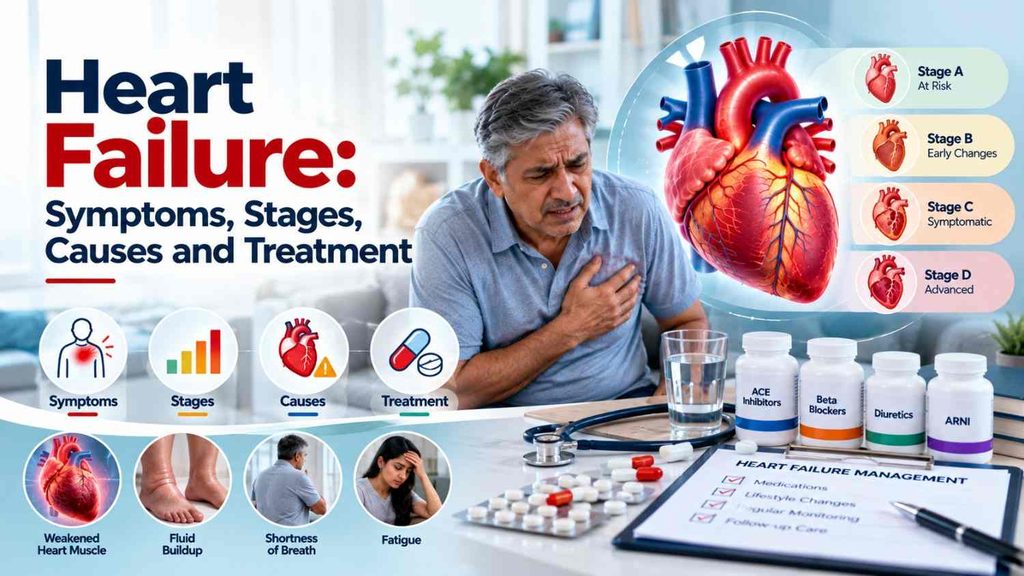
Heart failure is a serious medical condition in which the heart cannot pump blood effectively enough to meet the body’s needs or cannot fill properly between beats. It can develop gradually or appear suddenly, depending on the underlying cause. Although the term may sound alarming, heart failure does not mean that the heart has stopped working.
Recognizing heart failure symptoms early can help people receive an accurate diagnosis and appropriate treatment. With the right medical care, medicines, and lifestyle adjustments, many people can manage their symptoms and maintain a better quality of life.
What Is Heart Failure?
Heart failure occurs when the heart muscle becomes too weak or stiff to circulate blood effectively. As a result, the body may not receive enough oxygen-rich blood, and fluid can accumulate in the lungs or other tissues.
Heart failure can affect the left side, right side, or both sides of the heart. It may be chronic, developing over months or years, or acute, developing suddenly and requiring urgent medical care.
Heart failure is different from a heart attack. A heart attack usually occurs when blood flow to part of the heart muscle is blocked, while heart failure describes a problem with the heart’s ability to fill or pump blood adequately. However, a heart attack can damage the heart muscle and eventually lead to heart failure.
7 Common Symptoms of Heart Failure
Heart failure symptoms may develop gradually, making them easy to mistake for ageing, reduced fitness, or other health problems. Symptoms can vary depending on the severity of the condition and whether fluid is building up in the lungs or elsewhere in the body.
1. Shortness of Breath
Breathlessness is one of the most common symptoms of heart failure. It may occur while walking, climbing stairs, performing everyday activities, or even resting when the condition becomes more severe.
Fluid accumulation in the lungs can make breathing difficult. Some people also notice that breathing becomes harder when lying flat or that they wake up at night gasping for air.
2. Persistent Fatigue and Weakness
When the heart cannot supply enough blood to meet the body’s demands, everyday activities may become exhausting. A person might feel unusually tired while walking, shopping, climbing stairs, or completing routine household tasks.
Persistent fatigue that is new, worsening, or accompanied by other heart failure symptoms should be assessed by a healthcare professional.
3. Swelling in the Feet, Ankles, or Legs
Heart failure can cause fluid to accumulate in the tissues, particularly in the lower legs and feet. This swelling, known as oedema, may become more noticeable after sitting or standing for extended periods.
Shoes may feel tighter, socks may leave deeper marks, or the legs may appear swollen. Swelling can also occur in the abdomen.
4. Sudden Weight Gain
Unexpected weight gain over a short period may indicate that the body is retaining excess fluid rather than gaining body fat.
People already diagnosed with heart failure may be advised to monitor their weight regularly. Follow the healthcare team’s instructions about when to report weight changes, as the relevant threshold can differ between individuals.
5. Persistent Coughing or Wheezing
Fluid buildup in the lungs can cause a persistent cough, wheezing, or difficulty breathing, particularly at night or when lying down. In some cases, a person may cough up white or pink-tinged, frothy mucus.
Coughing has many possible causes, so it does not confirm heart failure on its own. However, a new cough combined with breathlessness or swelling deserves medical assessment.
6. Reduced Appetite or Abdominal Discomfort
Fluid retention and changes in circulation may cause abdominal swelling, a feeling of fullness, nausea, or reduced appetite. Some people feel full after eating only a small amount.
These symptoms are not specific to heart failure, but persistent abdominal discomfort accompanied by leg swelling or breathlessness should not be ignored.
7. Rapid Heartbeat, Dizziness, or Confusion
Some people experience a racing or pounding heartbeat, light-headedness, or dizziness. These symptoms may be related to heart rhythm abnormalities, changes in circulation, medication effects, or other conditions.
New confusion, fainting, or severe dizziness can signal a serious problem and requires urgent medical assessment.
When to seek emergency help: Call your local emergency number if you experience severe or sudden difficulty breathing, fainting with failure to recover normally, or chest pain or pressure that may indicate a heart attack. Do not wait for symptoms to improve on their own.
What Causes Heart Failure?
Heart failure usually develops because another condition damages the heart muscle, increases the workload on the heart, or interferes with its ability to fill or pump blood.
Common causes and contributing conditions include:
Coronary Artery Disease and Heart Attack
Coronary artery disease occurs when the arteries supplying the heart muscle become narrowed or blocked. Reduced blood flow can weaken the heart muscle, while a heart attack can cause lasting damage that contributes to heart failure.
Learn more in our guide to coronary artery disease.
High Blood Pressure
Long-term high blood pressure forces the heart to work harder to move blood through the body. Over time, the heart muscle may become thickened, stiff, or weakened, increasing the risk of heart failure.
Regular blood pressure checks and appropriate management can help reduce this risk.
Cardiomyopathy
Cardiomyopathy refers to diseases of the heart muscle. The muscle may become enlarged, thickened, stiff, or weakened, affecting the heart’s ability to fill or pump blood. Some forms are inherited, while others are associated with infections, certain medicines, or other medical conditions.
Heart Valve Disease
Heart valves help blood move through the heart in the correct direction. If a valve becomes narrowed or does not close properly, the heart may have to work harder to maintain circulation. Severe or untreated valve disease can contribute to heart failure.
Heart Rhythm Disorders
An abnormally fast, slow, or irregular heartbeat can interfere with effective pumping. Some persistent rhythm disorders can weaken the heart muscle over time.
Read our article on heart arrhythmia to understand abnormal heart rhythms and their management.
Diabetes, Obesity, and Other Medical Conditions
Diabetes and obesity increase the risk of developing heart failure, particularly when they occur alongside high blood pressure or coronary artery disease.
Other contributing conditions can include thyroid disorders, chronic kidney disease, certain infections affecting the heart, and exposure to some medicines or substances that damage the heart muscle.
In some cases, several risk factors contribute to heart failure at the same time.
What Are the Four Stages of Heart Failure?
Healthcare professionals commonly use the American College of Cardiology and American Heart Association (ACC/AHA) staging system to describe the progression of heart failure risk and disease. It includes four stages, labelled A through D.
These stages are not the same as the four symptom-severity classes sometimes used by clinicians. Your doctor determines the appropriate stage using your medical history, examination, and test results.
Stage A: At Risk for Heart Failure
At this stage, a person has risk factors for heart failure but does not have established structural heart disease or current or previous symptoms of heart failure.
Risk factors can include high blood pressure, diabetes, obesity, coronary artery disease, and a family history of certain heart muscle conditions.
Management focus: Control risk factors, maintain healthy habits, and manage existing conditions to reduce the chance of developing heart failure.
Stage B: Pre-Heart Failure
At Stage B, there is evidence of structural heart disease, abnormal heart function, or other findings associated with heart failure, but the person has not experienced current or previous symptoms of heart failure.
For example, testing may reveal changes in the heart muscle or valve disease before noticeable symptoms develop.
Management focus: Treat the underlying condition and follow the recommended monitoring plan to reduce the risk of progression.
Stage C: Symptomatic Heart Failure
Stage C applies when a person has structural heart disease and has experienced current or previous symptoms of heart failure.
Symptoms may include breathlessness, fatigue, swelling, or difficulty performing normal activities. Symptoms can improve with treatment, but improvement does not necessarily mean the condition has disappeared.
Management focus: Use appropriate medical treatment, monitor symptoms, manage fluid retention when present, and follow an individualised care plan.
Stage D: Advanced Heart Failure
Stage D refers to advanced disease in which symptoms significantly interfere with daily life or repeated hospital visits may occur despite appropriate treatment.
Some people may need specialist heart failure care and assessment for advanced therapies.
Management focus: A specialist team may consider additional medicines, devices, carefully selected procedures, or other supportive care based on the person’s health, preferences, and treatment goals.
Important: Heart failure stages help clinicians guide care; they cannot accurately predict an individual’s future on their own. The severity of symptoms can also vary over time.
How Is Heart Failure Diagnosed?
No single symptom or test can confirm every case of heart failure. A doctor considers the patient’s symptoms, medical history, physical examination, and appropriate investigations.
Common diagnostic tests include:
1. Physical Examination and Medical History
The doctor may ask about breathlessness, fatigue, swelling, changes in weight, existing medical conditions, family history, and medicines. The examination may include checking blood pressure, heart rate, breathing, and signs of fluid retention.
2. Blood Tests
Blood tests can assess kidney and liver function, blood counts, electrolytes, and other factors that may contribute to symptoms.
Tests for natriuretic peptides, such as BNP or NT-proBNP, can help evaluate suspected heart failure when interpreted alongside the clinical findings.
3. Electrocardiogram (ECG)
An ECG records the electrical activity of the heart. It can help identify rhythm abnormalities and other findings that may indicate an underlying heart problem.
4. Echocardiogram
An echocardiogram uses ultrasound to examine the heart’s structure and movement. It helps assess how well the heart chambers pump and fill, how the valves work, and the heart’s ejection fraction.
Ejection fraction measures the proportion of blood pushed out of the left ventricle with each contraction. It helps clinicians classify heart failure, but a normal ejection fraction does not rule out every form of the condition.
5. Chest X-ray and Other Imaging Tests
A chest X-ray may show fluid in the lungs or an enlarged heart. Depending on the suspected cause, additional investigations may include cardiac MRI, CT imaging, or coronary angiography.
6. Additional Tests When Needed
A doctor may recommend a stress test, rhythm monitoring, or other investigations to identify an underlying condition and guide treatment.
The tests required depend on the person’s symptoms, examination findings, and medical history.
For a broader overview of cardiac investigations, see our guide to how heart disease is diagnosed.
Heart Failure Treatment: What Are the Options?
Heart failure treatment aims to relieve symptoms, improve quality of life, reduce hospital admissions, and, for many patients, improve survival. The most suitable approach depends on the type of heart failure, its stage, the underlying cause, other medical conditions, and the person’s response to treatment.
There is currently no universal cure for chronic heart failure, but treatment can make a meaningful difference.
1. Medicines for Heart Failure
Depending on the type of heart failure and the patient’s health, clinicians may prescribe one or more medicines.
These may include:
- ARNI, ACE inhibitors, or ARBs: These medicines help reduce strain on the heart and may improve outcomes in appropriate patients.
- Beta blockers: Certain beta blockers can help manage heart failure and improve outcomes in suitable patients.
- Mineralocorticoid receptor antagonists (MRAs): These may help selected patients, with monitoring of kidney function and potassium levels.
- SGLT2 inhibitors: These medicines can benefit many patients with heart failure, including some who do not have diabetes.
- Diuretics: Often called water tablets, these medicines help the body remove excess fluid and can relieve swelling and breathlessness.
Not every medicine is appropriate for every patient. Treatment selection and doses require medical supervision, and blood tests may be needed to monitor safety.
Never start, stop, or change heart failure medicines without consulting your treating clinician.
2. Lifestyle Changes
Lifestyle measures can support medical treatment and help manage risk factors. Recommendations may include:
- Following a balanced eating pattern and limiting excess salt when advised.
- Monitoring weight and symptoms according to the healthcare team’s instructions.
- Taking prescribed medicines consistently.
- Avoiding smoking and discussing alcohol use with a clinician.
- Staying physically active within medically recommended limits.
- Attending follow-up appointments and managing conditions such as diabetes and high blood pressure.
Fluid restrictions are not necessary for everyone with heart failure. Follow individual medical advice about fluid intake, sodium, and exercise rather than applying a strict plan without assessment.
3. Medical Devices
Some people may benefit from an implanted device. Depending on the heart’s electrical activity and pumping function, options may include a pacemaker, cardiac resynchronisation therapy (CRT), or an implantable cardioverter-defibrillator (ICD).
These devices are suitable only for selected patients and require specialist assessment.
4. Procedures and Surgery
When heart failure is caused or worsened by a treatable structural problem, a procedure or operation may be considered.
Examples include coronary interventions to improve blood flow, surgery to repair or replace a damaged heart valve, and selected advanced treatments for severe disease. A small group of people with advanced heart failure may be assessed for a ventricular assist device or heart transplantation.
The decision depends on the cause of heart failure, disease severity, other health conditions, and the potential benefits and risks.
5. Cardiac Rehabilitation and Follow-Up Care
A supervised cardiac rehabilitation programme may help suitable patients improve exercise tolerance, understand their condition, and build safer long-term habits.
Regular follow-up also allows clinicians to assess symptoms, review medicines, monitor kidney function and electrolytes when needed, and adjust the care plan.
Can Heart Failure Be Prevented?
Not every case of heart failure can be prevented, but managing risk factors can reduce the likelihood of developing it.
Helpful steps include:
- Control blood pressure: Have it checked regularly and follow treatment advice.
- Manage diabetes: Keep up with recommended monitoring and treatment.
- Address cholesterol and coronary artery disease: Follow a clinician’s advice about testing, medication, and lifestyle.
- Avoid tobacco: Smoking increases cardiovascular risk.
- Maintain a healthy weight: Seek sustainable, medically appropriate support if needed.
- Stay active: Choose physical activity appropriate for your health and fitness level.
- Attend regular health check-ups: Discuss persistent symptoms and relevant family history with a healthcare professional.
People who already have heart disease may need additional monitoring to identify changes before symptoms become severe.
When Should You See a Doctor?
Arrange a medical assessment if you notice persistent or worsening breathlessness, unexplained fatigue, swelling in your legs or abdomen, sudden weight gain, or difficulty breathing when lying down.
These symptoms can have causes other than heart failure, but an early evaluation can help identify the problem.
Seek emergency medical help if you experience severe breathing difficulty, collapse or unresponsiveness, or chest pain or pressure that could indicate a heart attack. Do not delay emergency care while trying home remedies.
If you have already been diagnosed with heart failure, contact your care team promptly when symptoms worsen or you notice changes they have told you to report.
Frequently Asked Questions
1. What are the first signs of heart failure?
Early symptoms can include shortness of breath during activity, unusual tiredness, reduced exercise tolerance, or swelling in the feet and ankles. Some people have few or no noticeable symptoms in the earlier stages.
2. What are the four stages of heart failure?
The ACC/AHA system describes Stage A as at risk, Stage B as pre-heart failure, Stage C as symptomatic heart failure, and Stage D as advanced heart failure. A clinician determines the stage using medical history and diagnostic findings.
3. Can heart failure be cured?
Chronic heart failure does not have a universal cure, but treatment can reduce symptoms, slow progression in many cases, and improve quality of life. Some underlying causes may be treatable, so the outlook varies from person to person.
4. How long can someone live with heart failure?
Life expectancy varies considerably according to the cause, stage, heart function, age, other medical conditions, and response to treatment. No single statistic can accurately predict an individual’s outlook. Regular follow-up and appropriate treatment are important.
5. What is the difference between heart failure and a heart attack?
A heart attack usually occurs when blood flow to part of the heart muscle is blocked. Heart failure occurs when the heart cannot fill or pump blood adequately. A heart attack can cause damage that later contributes to heart failure, but the two conditions are not the same.
6. Does heart failure always cause swelling?
No. Some people mainly experience breathlessness or fatigue, while others develop swelling from fluid retention. The symptoms depend on the type and severity of heart failure and other medical conditions.
7. When is heart failure an emergency?
Severe or sudden difficulty breathing, collapse, unresponsiveness, or possible heart attack symptoms require emergency assessment. Do not wait for a routine appointment if these warning signs occur.
Conclusion
Heart failure is a serious condition that affects the heart’s ability to fill or pump blood effectively. Understanding its symptoms, causes, stages, and treatment options can help people recognise warning signs and seek appropriate care.
Although chronic heart failure cannot always be cured, a personalised treatment plan, regular monitoring, and management of underlying conditions can help many people control symptoms and improve their quality of life.
If you experience persistent breathlessness, unusual fatigue, swelling, or unexplained weight changes, consult a qualified healthcare professional rather than trying to diagnose the cause yourself.
National Heart, Lung, and Blood Institute (NHLBI). Heart Failure: Treatment
