
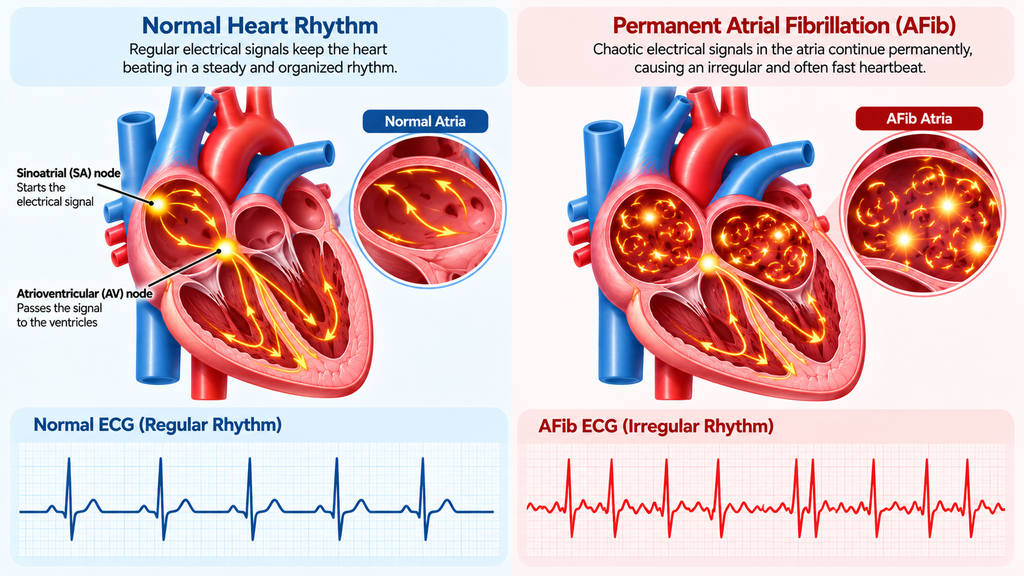
Permanent AFib, or permanent atrial fibrillation, is a type of irregular heart rhythm in which the patient and healthcare professional have jointly decided not to pursue further attempts to restore or maintain the heart’s normal rhythm. Although the condition may be managed over the long term, it requires appropriate medical care to control the heart rate, reduce stroke risk, and support overall heart health.
Some people with permanent AFib experience noticeable symptoms, such as palpitations, fatigue, or breathlessness, while others may have few symptoms. However, feeling well does not necessarily mean the condition is harmless.
Understanding permanent AFib, its possible complications, and available treatment options can help patients make informed decisions with their healthcare team.
What Is Permanent AFib?
Permanent AFib is a form of atrial fibrillation in which the patient and clinician have decided together to stop further attempts to restore or maintain a normal heart rhythm, also called sinus rhythm.
During atrial fibrillation, the heart’s upper chambers, known as the atria, produce disorganized electrical signals. This causes an irregular heartbeat and can affect how efficiently blood moves through the heart.
Unlike paroxysmal AFib, which comes and goes, permanent AFib is managed with the understanding that atrial fibrillation will continue rather than with a plan to restore normal rhythm.
Important: Permanent AFib does not simply mean that an irregular heartbeat has lasted for a long time. It describes a treatment decision made by the patient and clinician. If the treatment goals change, the decision can be reviewed.
For a broader overview of atrial fibrillation types, symptoms, and care, read our Atrial Fibrillation health guide.
7 Key Facts About Permanent AFib
1. Permanent AFib Involves an Ongoing Irregular Heart Rhythm
In permanent AFib, the heart continues to experience atrial fibrillation, and treatment generally focuses on managing its effects rather than trying to restore normal rhythm.
The irregular electrical activity can cause the ventricles—the heart’s lower chambers—to beat too quickly or irregularly. This may reduce the heart’s pumping efficiency, particularly when the heart rate is not adequately controlled.
The condition can be associated with other health problems, including high blood pressure, coronary artery disease, heart failure, and sleep apnoea. Managing these conditions is an important part of long-term care.
2. Permanent AFib Symptoms Can Vary From Person to Person
Some people experience frequent symptoms, while others notice very little difference in their daily lives.
Common permanent AFib symptoms include:
- An irregular or racing heartbeat
- Heart palpitations or a fluttering sensation in the chest
- Fatigue or reduced energy
- Shortness of breath, especially during activity
- Dizziness or light-headedness
- Reduced ability to exercise
- General weakness or reduced stamina
Symptoms may become more noticeable when the heart rate increases or another medical condition worsens. Some patients may also have no obvious symptoms, which is why follow-up appointments remain important.
Seek emergency medical care if an irregular heartbeat occurs with chest pain, severe breathlessness, fainting, or signs of a stroke, such as sudden facial drooping, arm weakness, or difficulty speaking.
3. Permanent AFib Can Increase the Risk of Stroke
One of the most important concerns associated with permanent AFib is the increased risk of blood clots and stroke.
When the atria do not contract effectively, blood can collect in parts of the heart and form a clot. If a clot travels to the brain, it can block blood flow and cause an ischaemic stroke.
However, the risk is not the same for every patient. Clinicians assess individual factors such as age, high blood pressure, diabetes, previous stroke, heart failure, and other medical conditions.
Depending on the person’s risk, a doctor may prescribe an anticoagulant, commonly called a blood thinner, to reduce the likelihood of a clot forming.
Patients should not start, stop, or change anticoagulant medication without medical advice. Aspirin should not be used as a substitute for prescribed anticoagulation unless a clinician has specifically advised an appropriate treatment plan.
4. Permanent AFib Diagnosis Requires Medical Assessment
A healthcare professional evaluates symptoms, medical history, heart rate, and possible underlying causes before confirming atrial fibrillation and determining an appropriate management plan.
Tests may include:
- Electrocardiogram (ECG): Records the heart’s electrical activity and can identify atrial fibrillation.
- Holter monitor or other ambulatory monitoring: Records heart rhythm over an extended period when additional information is needed.
- Echocardiogram: Uses ultrasound to assess heart structure and pumping function.
- Blood tests: May check thyroid function, electrolytes, kidney function, and other relevant health indicators.
- Additional investigations: May be recommended depending on symptoms and suspected underlying conditions.
A smartwatch or wearable device may flag an irregular rhythm, but a clinician must review appropriate ECG evidence to confirm the diagnosis.
5. Permanent AFib Treatment Often Focuses on Heart Rate Control
Because the treatment goal is generally not to restore normal rhythm, permanent AFib treatment often prioritizes keeping the heart rate within an appropriate range and reducing symptoms.
A clinician may recommend:
Heart rate control medicines: Depending on the patient’s condition, medicines such as beta blockers or certain calcium channel blockers may be used to slow the heart rate. Other options may be considered in selected circumstances.
Treatment of associated conditions: Managing heart failure, high blood pressure, thyroid disorders, and other contributing health problems can improve overall cardiovascular care.
Regular monitoring: Follow-up visits help assess symptoms, heart rate, medication effects, and possible complications.
Selected procedures: For some patients whose heart rate remains difficult to control despite medication, a specialist may consider procedures such as atrioventricular node ablation combined with pacing. This does not restore normal atrial rhythm and is appropriate only for selected cases.
The choice of treatment depends on symptoms, age, heart function, other illnesses, medication tolerance, and individual goals. Never adjust heart medication without professional guidance.
6. Long-Term AFib Management Includes Stroke Prevention and Lifestyle Changes
Managing permanent AFib involves more than controlling the heartbeat. A comprehensive plan should address stroke risk, other cardiovascular conditions, and factors that may worsen symptoms.
Helpful steps may include:
- Taking prescribed medicines consistently.
- Attending regular medical appointments and monitoring heart rate as advised.
- Managing blood pressure, diabetes, and cholesterol.
- Maintaining a healthy weight where appropriate.
- Engaging in regular physical activity suited to individual ability and medical advice.
- Avoiding smoking and limiting or avoiding alcohol as recommended.
- Maintaining a consistent sleep schedule and seeking assessment for possible sleep apnoea.
- Discussing persistent fatigue, breathlessness, dizziness, or medication side effects with a clinician.
Lifestyle changes support treatment but do not replace prescribed medication or follow-up care.
7. Permanent AFib Is Different From Persistent and Long-Standing Persistent AFib
The main distinction between these types is not simply how severe the symptoms are. The classification also reflects the pattern of the rhythm and the agreed treatment approach.
| Type of AFib | What it means |
|---|---|
| Paroxysmal AFib | Episodes stop spontaneously or within seven days of onset. |
| Persistent AFib | Atrial fibrillation continues for more than seven days and requires intervention to terminate. |
| Long-standing persistent AFib | Atrial fibrillation has continued for more than 12 months. |
| Permanent AFib | The patient and clinician have jointly decided to stop further attempts to restore or maintain normal rhythm. |
A person with long-standing persistent AFib may still consider rhythm-control treatment. Permanent AFib, by contrast, reflects a shared decision about treatment goals. The term does not automatically mean that the condition is more severe or that all treatment has stopped.
What Is the Long-Term Outlook for Permanent AFib?
The long-term outlook varies according to the patient’s overall health, heart function, stroke risk, symptoms, and response to treatment.
Many people live with permanent AFib for years with appropriate medical management. However, possible complications include stroke, heart failure, and reduced quality of life, particularly when associated conditions or a persistently high heart rate are not adequately managed.
Regular follow-up allows the healthcare team to review stroke prevention, heart rate control, medication safety, and changes in symptoms or health status.
A diagnosis of permanent AFib does not mean that a person must stop normal activities. Activity levels should be tailored to individual symptoms and medical advice.
When Should You Seek Medical Help?
Arrange a medical assessment if you experience recurring palpitations, unexplained fatigue, breathlessness, dizziness, or a newly irregular heartbeat.
Seek emergency care immediately if you experience:
- Chest pain or pressure
- Severe or sudden difficulty breathing
- Fainting or collapse
- Sudden weakness or numbness on one side of the body
- Facial drooping, difficulty speaking, or sudden confusion
These symptoms may indicate a serious heart problem or stroke and should not be ignored.
Frequently Asked Questions About Permanent AFib
1. Can permanent AFib be cured?
Permanent AFib describes a shared decision not to pursue further attempts to restore normal rhythm. Treatment generally focuses on heart rate control, stroke prevention, and symptom management. If treatment goals change, the patient and clinician can reassess the plan.
2. Is permanent AFib dangerous?
It can increase the risk of stroke and other cardiovascular complications. The level of risk varies by individual, so medical assessment and an appropriate management plan are important even when symptoms are mild.
3. What is the best treatment for permanent AFib?
There is no single best treatment for everyone. Management may include heart rate control medicines, anticoagulation when indicated, treatment of associated conditions, lifestyle changes, and regular monitoring.
4. Do people with permanent AFib need blood thinners?
Some do, depending on their individual risk of stroke and bleeding. A clinician assesses these risks before recommending anticoagulation. The decision is based on the person’s risk factors, not simply on the AFib type.
5. Can a person with permanent AFib exercise?
Many people can remain physically active, but the appropriate level depends on symptoms, heart function, other conditions, and treatment. Ask your healthcare professional which activities are suitable, and stop exercising and seek help if you develop chest pain, severe breathlessness, or faintness.
6. How often should permanent AFib be monitored?
Follow-up frequency depends on symptom control, medication changes, heart rate, kidney function where relevant, and other medical conditions. Your healthcare team can recommend an appropriate schedule.
Final Thoughts
Permanent AFib is a long-term heart rhythm condition that requires an individualized approach to care. Although treatment may no longer aim to restore normal rhythm, heart rate control, stroke prevention, management of other health conditions, and regular follow-up remain essential.
If you have been diagnosed with permanent AFib or are experiencing symptoms of an irregular heartbeat, consult a qualified healthcare professional for an assessment and a treatment plan tailored to your needs.