
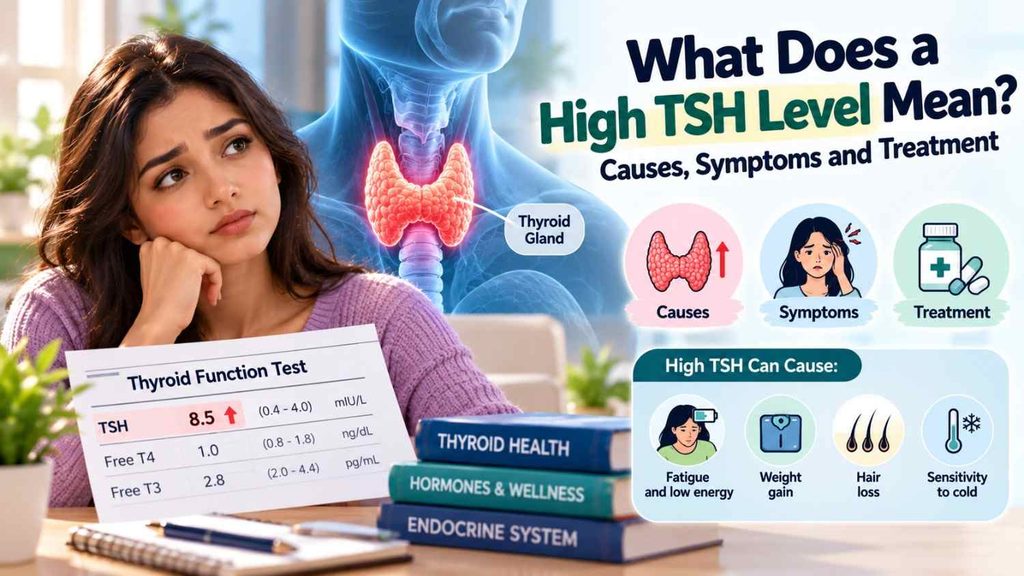
A high TSH level means that the amount of thyroid-stimulating hormone in your blood is above the reference range used by the laboratory. In many cases, this happens because the thyroid gland is not producing enough thyroid hormone, a condition known as hypothyroidism.
However, a high TSH level does not always mean you have a thyroid disorder that requires immediate treatment. Your free T4 level, symptoms, medical history, medicines, and sometimes repeat blood tests help determine what the result means.
If your thyroid report shows elevated TSH, understanding the possible causes and next steps can help you have a more informed discussion with your doctor. This guide explains what a high TSH result means, common symptoms, how doctors investigate it, and when treatment may be needed.
What Is TSH and Why Does It Matter?
TSH stands for thyroid-stimulating hormone. It is produced by the pituitary gland, a small gland located at the base of the brain. TSH signals the thyroid gland, which sits at the front of the neck, to produce thyroid hormones called thyroxine (T4) and triiodothyronine (T3).
These hormones help regulate metabolism, body temperature, heart rate, digestion, and energy use.
The relationship between TSH and thyroid hormones works a little like a thermostat:
- When thyroid hormone levels are too low, the pituitary usually releases more TSH to stimulate the thyroid.
- When thyroid hormone levels are high enough, the pituitary generally reduces TSH production.
This is why a high TSH level often points toward an underactive thyroid. However, doctors need to interpret TSH alongside other test results and the clinical situation.
What Is Considered a High TSH Level?
The reference range for TSH varies by laboratory, testing method, age, and certain medical circumstances. A commonly used example of an adult reference range is approximately 0.4–4.0 mIU/L, although some laboratories use different limits.
A result above your laboratory’s upper reference limit is considered elevated.
| TSH result pattern | What it may mean |
|---|---|
| Slightly above the laboratory range | May indicate mild or temporary thyroid dysfunction |
| High TSH with normal free T4 | May indicate subclinical hypothyroidism |
| High TSH with low free T4 | Commonly indicates overt primary hypothyroidism |
| High TSH in someone taking thyroid medicine | May indicate that the treatment plan needs review, among other possible explanations |
These patterns are general guides, not diagnostic rules. The actual interpretation depends on the result, free T4 level, symptoms, and individual circumstances.
What Does a High TSH Level Mean?
A high TSH result can have several explanations. The most common is that the thyroid is not producing enough hormone, but the degree of thyroid dysfunction can vary.
1. Hypothyroidism or an Underactive Thyroid
Primary hypothyroidism occurs when the thyroid gland cannot produce enough thyroid hormone for the body’s needs.
When T4 levels fall, the pituitary releases more TSH to encourage the thyroid to work harder. This can cause TSH to rise above the laboratory’s reference range.
Common causes include Hashimoto’s disease, previous thyroid surgery, radioactive iodine treatment, certain medicines, and some forms of thyroiditis.
When TSH is high and free T4 is low, the pattern commonly supports a diagnosis of overt primary hypothyroidism.
2. Subclinical Hypothyroidism
Sometimes TSH is elevated while free T4 remains within the laboratory’s reference range. This pattern may be called subclinical hypothyroidism.
The word subclinical refers to the blood-test pattern; it does not necessarily mean that a person has no symptoms. Some people feel well, while others report tiredness or other nonspecific symptoms.
Subclinical hypothyroidism does not always require immediate treatment. A doctor may recommend repeating the blood tests, checking thyroid antibodies, or monitoring thyroid function over time. Treatment decisions depend on factors such as the TSH level, symptoms, age, pregnancy status, and other health conditions.
3. Hashimoto’s Disease
Hashimoto’s disease is an autoimmune condition in which the immune system mistakenly attacks the thyroid gland. Over time, this can reduce the gland’s ability to produce thyroid hormones.
It is a common cause of hypothyroidism. Doctors may recommend a thyroid peroxidase antibody test, also known as a TPO antibody test, when an autoimmune cause is suspected.
A positive antibody result can help explain thyroid dysfunction, but it must be interpreted alongside thyroid hormone levels and the person’s clinical history.
4. Thyroid Medication or Other Medicines
A high TSH level in someone taking levothyroxine may mean that the current dose is not meeting their hormone requirements. However, other factors should also be considered.
For example, missed doses, changes in medication timing, inconsistent use, and reduced absorption can affect treatment. Calcium and iron supplements, certain medicines, and some gastrointestinal conditions can interfere with levothyroxine absorption.
Other medicines can also affect thyroid function. Tell your doctor about all prescription medicines, over-the-counter products, and supplements you take.
Do not increase your dose or stop medication on your own.
5. Temporary Changes in Thyroid Function
TSH may sometimes be temporarily abnormal during or after an illness or during recovery from thyroid inflammation. Test results can also be affected by certain medicines and laboratory factors.
When the result does not fit the symptoms or other test findings, a clinician may recommend repeating the test at an appropriate interval before making a diagnosis.
Pregnancy and the period after childbirth can also change thyroid hormone requirements and thyroid function. These situations need appropriate clinical interpretation.
What Are the Symptoms of a High TSH Level?
An elevated TSH level does not directly cause symptoms by itself. Symptoms may occur when the result reflects insufficient thyroid hormone production.
Possible symptoms of hypothyroidism include:
- Persistent tiredness: Feeling unusually exhausted or lacking energy.
- Unexplained weight gain: Weight may increase even without an obvious change in eating habits.
- Cold sensitivity: Feeling colder than people around you.
- Constipation: Bowel movements may become less frequent.
- Dry skin or hair changes: Skin may become dry, and hair may thin.
- Difficulty concentrating: Some people report brain fog, slower thinking, or memory difficulties.
- Mood changes: Low mood can occur.
- Menstrual changes: Periods may become heavier, irregular, or otherwise change.
Not everyone with elevated TSH experiences symptoms. These symptoms also occur in many other conditions, so they cannot confirm hypothyroidism without appropriate evaluation.
How Is a High TSH Level Diagnosed?
A doctor generally considers the TSH result alongside free T4, symptoms, medical history, and other relevant findings.
TSH Blood Test
The TSH test measures how much thyroid-stimulating hormone is circulating in your blood. It is commonly the first test used to investigate suspected thyroid dysfunction.
Free T4 Test
Free T4 measures the portion of thyroxine that is not bound to blood proteins. It helps determine whether elevated TSH is accompanied by low thyroid hormone levels.
The combination of TSH and free T4 is especially useful for distinguishing overt primary hypothyroidism from a possible subclinical pattern.
Thyroid Antibody Test
A doctor may order a TPO antibody test if Hashimoto’s disease is suspected. This test can help identify an autoimmune cause of thyroid dysfunction.
Repeat Testing
If TSH is only mildly elevated, the result is unexpected, or temporary factors may be involved, the doctor may recommend repeating thyroid function tests.
The timing depends on the clinical situation. People who are pregnant, planning pregnancy, taking thyroid medication, or experiencing significant symptoms may need a different follow-up approach.
How Is a High TSH Level Treated?
Treatment depends on why TSH is elevated and whether free T4 is low.
Levothyroxine for Hypothyroidism
When hypothyroidism requires treatment, doctors commonly prescribe levothyroxine. This medicine replaces thyroxine, the hormone the thyroid gland is not producing adequately.
The dose is individualised based on factors such as age, body weight, thyroid test results, pregnancy status, heart health, and other medicines.
After starting treatment or changing the dose, follow-up blood tests help the doctor determine whether the dose is appropriate. Do not adjust your dose based on symptoms or a single result without medical advice.
Monitoring Mildly Elevated TSH
Some people with mildly elevated TSH and normal free T4 do not need immediate medication. Their doctor may monitor thyroid function and review symptoms and risk factors over time.
Treatment may be considered depending on how high TSH is, whether the abnormality persists, thyroid antibody results, pregnancy-related factors, and other individual considerations.
Addressing the Underlying Cause
If medication, inconsistent dosing, or an absorption problem is contributing to an elevated result, the doctor may review the treatment routine and other medicines. If an underlying thyroid condition is responsible, treatment is directed toward that condition.
There is no single home remedy that reliably corrects a persistently high TSH level caused by hypothyroidism. Avoid taking thyroid supplements or high-dose iodine without professional advice.
Can a High TSH Level Return to Normal?
Yes, in some circumstances. TSH can return to the reference range when a temporary cause resolves, when a thyroid condition is treated appropriately, or when a medication plan is adjusted by a clinician.
However, the outcome depends on the cause. People with lasting hypothyroidism may need long-term thyroid hormone replacement, while selected people with mild abnormalities may need monitoring rather than medication.
A repeat test and clinical review help determine whether the result is improving, persistent, or requires further investigation.
When Should You See a Doctor About High TSH?
Arrange a medical appointment if your TSH result is above the laboratory’s reference range, especially if you also have symptoms such as persistent fatigue, unexplained weight changes, constipation, or unusual sensitivity to cold.
Contact your healthcare professional promptly if you are pregnant, planning pregnancy, have a known thyroid condition, or take thyroid medication and your test results are abnormal.
A high TSH result alone is not usually an emergency. However, severe symptoms such as confusion, extreme drowsiness, unusually low body temperature, or difficulty breathing require urgent medical assessment.
Frequently Asked Questions
1. Does a high TSH level always mean hypothyroidism?
No. A high TSH level often suggests an underactive thyroid, but the interpretation depends on free T4, symptoms, medicines, and other factors. A mildly elevated result may need repeat testing before a diagnosis is confirmed.
2. Can I have high TSH without symptoms?
Yes. Some people with elevated TSH, particularly those with normal free T4, experience few or no noticeable symptoms. Blood tests can identify thyroid changes before symptoms become obvious.
3. Is a TSH level of 5 considered high?
A TSH of 5 mIU/L is above the upper limit in many commonly used adult reference ranges, but it is not interpreted in isolation. Your laboratory’s range, free T4 result, age, pregnancy status, and clinical history all matter.
4. What is the difference between high TSH and high T4?
High TSH often indicates that the pituitary is asking the thyroid to produce more hormone. High free T4 may indicate excess thyroid hormone. A high TSH combined with low free T4 commonly suggests primary hypothyroidism, while a low TSH with high free T4 often suggests hyperthyroidism.
5. Can stress cause a high TSH level?
Stress alone is not a reliable explanation for an elevated TSH result. Illness, medicines, thyroid disease, and other factors may affect thyroid tests. Persistent abnormalities should be evaluated rather than attributed to stress without investigation.
6. Should I take medicine immediately if my TSH is high?
Not necessarily. Some people need levothyroxine, while others with mild elevation and normal free T4 may be monitored. A clinician should determine the appropriate next step using your complete test results and medical circumstances.
7. How often should I repeat a high TSH test?
There is no single interval that is right for everyone. Your doctor may recommend repeat testing after considering the degree of elevation, symptoms, recent illness, pregnancy status, and whether you are taking thyroid medication.
Explore More Diabetes and Endocrine Health Topics
Thyroid function is part of endocrine health, which covers hormones and the glands that produce them. Visit the Diabetes endocrine section on Ghaziabad Clinic for more educational information about thyroid conditions, diabetes, blood sugar management, and other hormone-related health topics.
Explore more: https://ghaziabadclinic.com/diabetes-endocrine/