
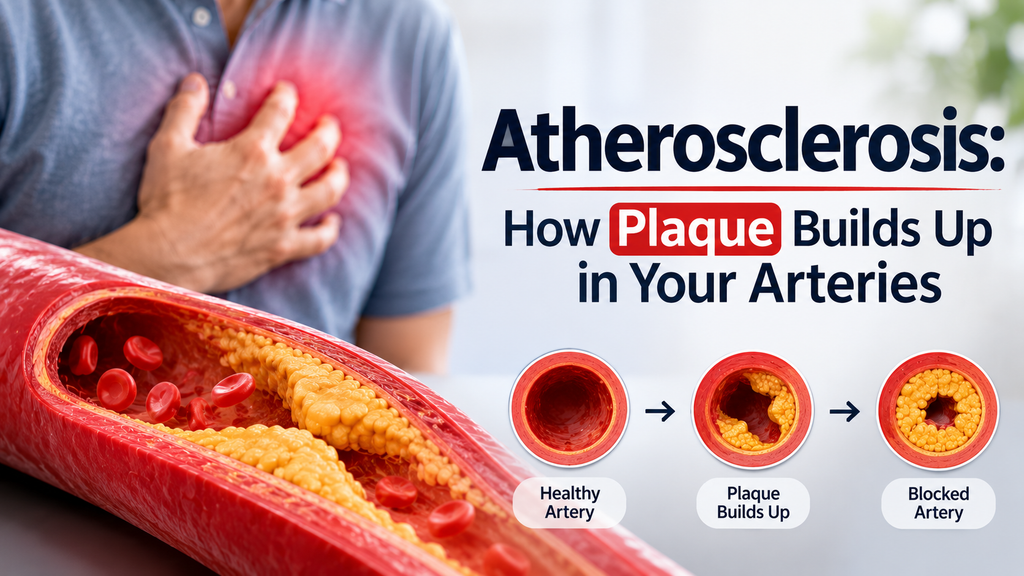
Atherosclerosis is a condition in which plaque gradually builds up inside the walls of your arteries. This plaque contains cholesterol, fats, cellular waste, calcium, and other substances. As it accumulates, it can make arteries narrower and reduce the flow of oxygen-rich blood to important organs, including the heart and brain.
The condition often develops slowly over many years and may not cause noticeable symptoms in its early stages. However, if plaque significantly restricts blood flow—or ruptures and triggers a blood clot—it can lead to serious complications such as a heart attack or stroke.
Understanding how atherosclerosis develops, what increases your risk, and how it can be detected may help you take steps to protect your cardiovascular health.
What Is Atherosclerosis?
Atherosclerosis is a disease that affects the arteries, the blood vessels responsible for carrying blood from the heart to the body’s tissues. It develops when plaque accumulates within the artery walls, causing them to thicken, stiffen, or narrow.
Healthy arteries allow blood to flow efficiently. As plaque grows, the space available for blood to pass through may become smaller. This can limit the amount of oxygen and nutrients reaching the organs and muscles.
Atherosclerosis can affect arteries throughout the body, not just those supplying the heart. Depending on the location, it may contribute to coronary artery disease, carotid artery disease, or peripheral artery disease.
It is also important to distinguish atherosclerosis from arteriosclerosis. Arteriosclerosis is a broader term for the thickening and loss of flexibility of artery walls, while atherosclerosis specifically refers to plaque buildup.
How Does Plaque Build Up in Your Arteries?
Atherosclerosis is a gradual process involving changes in the inner lining of the arteries, cholesterol accumulation, inflammation, and the development of plaque. It does not usually happen overnight
1. The artery’s inner lining becomes affected
The inner surface of an artery is lined with a thin layer of cells called the endothelium. High blood pressure, smoking, diabetes, and other risk factors can impair this lining and promote conditions that allow plaque to develop.
2. Cholesterol and other substances accumulate
Low-density lipoprotein (LDL), often called “bad cholesterol,” can enter the artery wall. When LDL accumulates and undergoes changes within the wall, it contributes to an inflammatory response.
3. Inflammation contributes to plaque formation
Immune cells move into the affected area and take up cholesterol. Over time, these cells and other materials can accumulate within the artery wall, forming a fatty streak that may develop into a more established plaque.
4. Plaque grows and the artery may narrow
As plaque develops, it may contain cholesterol, inflammatory cells, connective tissue, and calcium. The growing deposit can narrow the space through which blood flows. Some plaques grow gradually, while others may remain relatively stable for a long time.
5. Plaque may rupture and cause a blood clot
Some plaques have a fragile surface. If a plaque ruptures or its surface erodes, the body may form a blood clot at that location. The clot can suddenly restrict or completely block blood flow, potentially causing a heart attack or stroke, depending on which artery is affected.
Why this matters: Atherosclerosis is not only about how narrow an artery becomes. The characteristics of a plaque and whether it triggers a clot can also influence the risk of a sudden cardiovascular event.
Which Arteries Can Be Affected by Atherosclerosis?
Atherosclerosis can develop in several parts of the circulatory system. The symptoms and complications depend on which arteries are affected.
| Affected arteries | Possible condition or effect |
|---|---|
| Coronary arteries | Coronary artery disease, chest discomfort, heart attack |
| Carotid arteries in the neck | Reduced blood supply to the brain, increased stroke risk |
| Arteries supplying the legs | Peripheral artery disease, leg pain during walking |
| Renal arteries supplying the kidneys | Reduced blood flow to the kidneys and possible blood pressure problems |
| Arteries supplying the intestines | Reduced intestinal blood flow, which can cause abdominal symptoms |
Plaque may be present in more than one artery at the same time. That is one reason a healthcare professional may assess overall cardiovascular risk rather than focusing on a single symptom.
What Causes Atherosclerosis?
There is no single cause of atherosclerosis. It develops through a combination of biological processes and risk factors that affect artery health over time.
Common contributors include:
High LDL cholesterol
High levels of LDL cholesterol can increase the amount of cholesterol available to accumulate in artery walls. The risk depends on factors such as the level and duration of exposure, along with a person’s overall health and other risk factors.
High blood pressure
Persistently elevated blood pressure places stress on artery walls and can contribute to changes that encourage atherosclerosis. If you have hypertension, learn more about its management on our hypertension information page.
Diabetes and elevated blood sugar
Diabetes is associated with a higher risk of cardiovascular disease. Persistently elevated blood sugar can damage blood vessels and often occurs alongside other risk factors, including abnormal cholesterol and high blood pressure.
Smoking and tobacco exposure
Smoking damages blood vessels, promotes inflammation, and increases cardiovascular risk. Quitting smoking is one of the most important steps a person can take to protect artery health.
Physical inactivity
Regular physical activity supports cardiovascular health and can help manage blood pressure, cholesterol, blood sugar, and body weight. A sedentary lifestyle can make these risk factors harder to control.
Unhealthy dietary patterns
Diets high in saturated fat, trans fat, excess salt, and highly processed foods may contribute to cardiovascular risk. Eating patterns that include vegetables, fruits, whole grains, legumes, nuts, and appropriate sources of protein can support better heart health.
Excess body weight
Overweight and obesity can increase the likelihood of high blood pressure, abnormal cholesterol, insulin resistance, and type 2 diabetes, all of which may contribute to cardiovascular risk.
Age and family history
The risk of atherosclerosis generally increases with age. Having close relatives who developed cardiovascular disease at an early age may also increase your risk, even if you maintain a healthy lifestyle.
What Are the Symptoms of Atherosclerosis?
Atherosclerosis may not cause symptoms in its early stages. Some people discover that they have atherosclerosis only after testing or when a related condition develops.
Symptoms depend on the location and severity of the disease.
Symptoms involving the heart
When plaque affects the coronary arteries, possible symptoms include:
- Chest pain, pressure, tightness, or discomfort
- Shortness of breath, particularly during exertion
- Discomfort in the arms, shoulders, jaw, back, or upper abdomen
- Reduced exercise tolerance or unusual fatigue
These symptoms may be associated with coronary artery disease or angina. Read more about coronary artery disease and angina.
Symptoms involving the brain
When atherosclerosis affects arteries supplying the brain, it can increase the risk of a stroke or transient ischaemic attack (TIA). Warning signs may include:
- Sudden weakness or numbness, especially on one side of the body
- Sudden difficulty speaking or understanding speech
- Sudden loss or blurring of vision
- Sudden loss of balance or coordination
These symptoms require emergency medical attention, even if they improve after a few minutes.
Symptoms involving the legs
Atherosclerosis in leg arteries may cause peripheral artery disease. Symptoms can include:
- Leg pain or cramping during walking that improves with rest
- Coldness in one foot or leg compared with the other
- Slow-healing sores on the feet or legs
- Changes in skin colour or reduced hair growth on the legs
Not everyone experiences these symptoms, and similar symptoms can have other causes. Medical assessment is important for an accurate diagnosis.
How Do Doctors Find Plaque Buildup in Arteries?
Atherosclerosis cannot always be identified through symptoms alone. Some people have plaque buildup for years without noticing any changes in their health. Doctors therefore consider a person’s cardiovascular risk, symptoms, and examination findings before deciding whether further investigation is needed.
The evaluation focuses on two important questions: Is blood flow being affected, and which arteries may be involved?
Assessing Your Risk of Artery Disease
Your doctor may ask about smoking, diabetes, high blood pressure, cholesterol levels, family history of early heart disease, and symptoms such as chest discomfort or leg pain during walking. These details help determine whether atherosclerosis is a possibility and whether further assessment is appropriate.
Checking Cholesterol and Other Risk Factors
Blood tests may be used to measure LDL cholesterol, HDL cholesterol, triglycerides, and blood glucose or HbA1c. These results help identify factors associated with plaque development. However, a cholesterol test cannot confirm the presence, location, or severity of plaque inside an artery.
Investigating Blood Flow in the Affected Area
When symptoms suggest reduced circulation, the next step depends on where the problem may be occurring.
- Suspected heart artery disease: A doctor may recommend selected cardiac investigations, which could include coronary CT angiography or invasive coronary angiography, depending on the symptoms and level of concern.
- Possible reduced circulation in the legs: An ankle-brachial index or vascular ultrasound may help assess blood flow.
- Possible disease in the neck arteries: A carotid ultrasound may be considered when clinically appropriate.
An ECG may help assess certain heart-related problems, but it does not directly show plaque throughout the arteries. Similarly, not everyone needs advanced imaging or an invasive procedure.
Understanding What the Results Mean
The findings help the clinician determine whether further testing, lifestyle changes, medication, or specialist care may be appropriate. The right approach depends on the artery involved, the person’s symptoms, and their overall cardiovascular risk.
If you experience sudden chest pressure, severe breathlessness, facial drooping, one-sided weakness, or difficulty speaking, seek emergency medical help rather than waiting for a routine diagnostic appointment.
Can Atherosclerosis Be Treated?
Yes. Treatment aims to reduce the risk of heart attack and stroke, manage contributing conditions, and improve blood flow when necessary. The treatment plan depends on the arteries involved, the extent of disease, symptoms, and the person’s overall health.
Lifestyle changes
Lifestyle changes are a key part of managing atherosclerosis and reducing cardiovascular risk.
- Choose heart-supportive foods: Include vegetables, fruits, whole grains, beans, lentils, nuts, and suitable protein sources. Limit trans fats and reduce excessive saturated fat, salt, and added sugar.
- Be physically active: Aim for regular activity suited to your health and fitness. If you have chest pain, significant breathlessness, or diagnosed cardiovascular disease, ask your clinician what level of activity is safe.
- Stop smoking: Seek support if you need help quitting tobacco.
- Manage your weight: If needed, work towards a sustainable, medically appropriate weight.
- Control blood pressure and blood sugar: Follow your treatment plan and attend recommended check-ups.
- Get adequate sleep and manage stress: These habits can support overall cardiovascular health.
Lifestyle changes are valuable, but they do not replace prescribed medication or urgent treatment when those are needed.
Medicines
Depending on the diagnosis and individual risk, a clinician may prescribe medicines such as:
- Cholesterol-lowering medicines, including statins, to reduce LDL cholesterol and cardiovascular risk.
- Blood pressure medicines to help control hypertension.
- Diabetes medicines to manage blood sugar and reduce related health risks.
- Antiplatelet medicines, such as aspirin, for selected patients when the expected benefits outweigh bleeding risks.
Not everyone with atherosclerosis needs every type of medicine. Do not start aspirin or stop a prescribed medication without medical advice.
Angioplasty, stenting, or surgery
Some people with significant narrowing, reduced blood flow, or certain complications may need a procedure. Depending on the affected artery and clinical findings, options can include angioplasty and stenting, bypass surgery, or procedures for selected carotid or peripheral artery conditions.
These procedures are not automatically required whenever plaque is detected. A specialist weighs the potential benefits and risks before recommending an intervention.
Can Atherosclerosis Be Reversed?
Atherosclerosis should be taken seriously, but its progression and associated cardiovascular risks can often be reduced with appropriate treatment.
In some people, intensive cholesterol management and sustained lifestyle changes can lead to modest regression of plaque. Treatment can also help stabilize plaques, making them less likely to cause dangerous complications. However, established plaque does not always disappear completely, and results vary.
The goal is to lower the chance of a heart attack, stroke, and other complications—not simply to achieve a better-looking test result.
How Can You Reduce Your Risk of Atherosclerosis?
You cannot change every risk factor, such as age or inherited susceptibility, but you can take practical steps to reduce your overall risk.
- Check your cholesterol: Ask a healthcare professional how often you need a lipid profile.
- Monitor blood pressure: Have it checked at appropriate intervals, especially if you have hypertension or other risk factors.
- Manage diabetes: Follow recommended blood glucose monitoring and treatment.
- Avoid tobacco: Do not smoke, and avoid second-hand smoke where possible.
- Stay active: Build regular physical activity into your routine according to your health needs.
- Eat a balanced diet: Choose minimally processed foods and limit excess salt, added sugar, and unhealthy fats.
- Discuss family history: Tell your clinician if close relatives developed heart disease or stroke at a young age.
- Attend recommended follow-ups: Risk factors can change over time, so prevention may require ongoing review.
For more information on cardiovascular health and prevention, you can also consult the Indian government’s clinical guidance on stroke prevention and management.
When Should You See a Cardiologist?
Arrange a medical assessment if you have persistent or recurring chest discomfort, unexplained shortness of breath, leg pain when walking, or known risk factors such as diabetes, high blood pressure, or high cholesterol that need review.
A cardiologist may assess suspected disease affecting the heart’s arteries and advise whether further investigations or treatment are appropriate.
You can learn more about consulting a cardiologist in Ghaziabad.
Seek emergency medical help immediately if you or someone else develops chest pressure or pain that may indicate a heart attack, severe difficulty breathing, sudden one-sided weakness, facial drooping, or difficulty speaking. Do not wait for symptoms to pass or attempt to arrange a routine appointment first.
Frequently Asked Questions
1. What is the main cause of atherosclerosis?
Atherosclerosis develops through a combination of processes involving the artery wall, cholesterol accumulation, and inflammation. High LDL cholesterol, high blood pressure, smoking, diabetes, age, and family history can increase the risk.
2. Can atherosclerosis occur without symptoms?
Yes. It can develop for years without obvious symptoms. Symptoms may appear when blood flow becomes limited or a complication occurs, which is why appropriate assessment of cardiovascular risk matters.
3. Is atherosclerosis the same as having blocked arteries?
Not exactly. Atherosclerosis is the process of plaque buildup in artery walls. As plaque grows, it can narrow an artery or contribute to a clot that causes a sudden blockage. The degree and consequences depend on the artery involved and the characteristics of the plaque.
4. Can plaque buildup in arteries be reduced?
In some cases, intensive risk-factor management can modestly reduce plaque burden. Cholesterol-lowering medicines, lifestyle changes, and management of conditions such as hypertension and diabetes can also help stabilize plaque and lower the risk of cardiovascular events.
5. Does high cholesterol always cause atherosclerosis?
High LDL cholesterol increases risk, but it does not mean every person will develop the same degree of disease. Atherosclerosis is influenced by several factors, including blood pressure, smoking, diabetes, age, genetics, and the duration of exposure to risk factors.
6. Which tests can detect atherosclerosis?
The appropriate test depends on the symptoms and the artery being assessed. Blood tests evaluate risk factors, while tests such as vascular ultrasound, ankle-brachial index, CT angiography, or coronary angiography may be used in selected situations to evaluate blood vessels.
7. Can young adults develop atherosclerosis?
Yes. Early changes can begin during childhood or young adulthood, although clinically significant disease is more common with increasing age. Inherited cholesterol disorders, smoking, diabetes, and other risk factors can increase the likelihood of earlier disease.
8. Does everyone with atherosclerosis need surgery?
No. Many people are managed with lifestyle changes, medicines, and regular follow-up. Procedures are considered when the location and severity of disease, symptoms, and expected benefits justify them.
Conclusion
Atherosclerosis is a gradual buildup of plaque in the artery walls that can restrict blood flow and increase the risk of heart attack, stroke, and other cardiovascular complications. Because it may develop without noticeable symptoms, understanding your risk factors and seeking appropriate medical assessment are important.
Managing cholesterol, blood pressure, blood sugar, tobacco use, diet, and physical activity can help reduce cardiovascular risk. If you have concerning symptoms or several risk factors, speak with a qualified healthcare professional about the right evaluation and treatment plan.
