
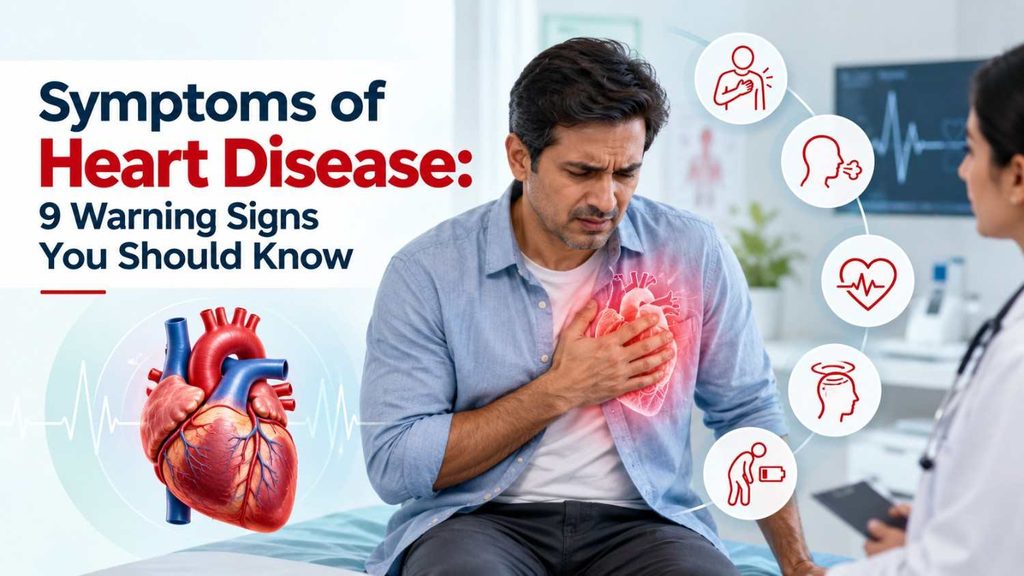
Heart disease does not always begin with sudden, severe chest pain. Sometimes, the first symptoms are less obvious, such as getting unusually tired while walking, feeling breathless during everyday activities, noticing an irregular heartbeat, or developing swelling around the ankles.
The symptoms of heart disease depend on the underlying condition. Problems affecting the arteries that supply blood to the heart may cause chest discomfort, while heart failure can lead to breathlessness and fluid retention. Heart rhythm disorders may cause palpitations, dizziness, or fainting.
Recognising these warning signs can help you seek appropriate medical attention before a condition becomes more serious. However, some heart conditions cause no noticeable symptoms until a complication occurs.
What Are the Common Symptoms of Heart Disease?
Heart disease includes several conditions that affect the heart’s blood supply, electrical activity, valves, or ability to pump blood. Because these conditions affect the body differently, their symptoms are not always the same.
Common symptoms of heart disease include:
- Chest pain, pressure, tightness, or discomfort
- Shortness of breath during activity or at rest
- Unusual tiredness or weakness
- Pain spreading to the arm, shoulder, back, neck, or jaw
- A racing, fluttering, or irregular heartbeat
- Dizziness or light-headedness
- Fainting or near-fainting
- Swelling in the feet, ankles, legs, or abdomen
- Reduced ability to perform normal physical activities
Experiencing one of these symptoms does not automatically mean you have heart disease. Many symptoms can have other causes. Nevertheless, persistent, unexplained, new, or worsening symptoms deserve medical assessment.
9 Symptoms of Heart Disease You Should Not Ignore
1. Chest Pain or Discomfort Can Be an Early Warning Sign of Heart Disease
Chest discomfort is one of the best-known warning signs of a heart problem, particularly coronary artery disease.
When the heart muscle does not receive enough oxygen-rich blood, a person may experience angina. This discomfort can feel like pressure, heaviness, squeezing, tightness, burning, or an uncomfortable fullness in the chest.
It may occur during physical activity, emotional stress, or other situations that increase the heart’s demand for oxygen. Some people notice that it improves with rest, although symptoms vary.
Chest discomfort can also result from digestive problems, muscle strain, lung conditions, or anxiety. You should not try to diagnose the cause based on how the pain feels.
Seek emergency medical care for new, severe, persistent, or recurring chest discomfort that may indicate a heart attack, particularly if it occurs with sweating, nausea, breathlessness, or pain spreading to other areas.
2. Shortness of Breath May Indicate an Underlying Heart Problem
Feeling breathless after strenuous exercise can be normal. However, becoming unusually short of breath during routine activities, such as walking a short distance, climbing a few steps, or getting dressed, may indicate a health problem.
Heart-related breathlessness can occur when the heart cannot pump blood effectively or when pressure builds up in the blood vessels of the lungs.
You may notice:
- Difficulty breathing during everyday activities
- Breathlessness that is new or getting worse
- Difficulty breathing when lying flat
- Waking at night feeling short of breath
- Reduced exercise tolerance compared with your usual ability
Shortness of breath can also be caused by asthma, lung disease, anaemia, infections, and other conditions.
If breathlessness is sudden or severe, or occurs with chest pain, fainting, or blue or grey lips, seek emergency care immediately.
3. Unusual Fatigue and Weakness Can Be Signs of Heart Disease
Feeling tired after a busy day is common. The concern arises when fatigue is persistent, unexplained, or disproportionate to the amount of activity you perform.
Some people with heart disease notice that everyday tasks become more difficult. Walking, shopping, climbing stairs, or doing household work may leave them unusually exhausted.
Fatigue can occur when the heart is not delivering enough blood to meet the body’s needs. It may also accompany heart failure or other cardiovascular conditions.
However, tiredness is not specific to heart disease. Poor sleep, stress, thyroid disorders, nutritional deficiencies, infections, and anaemia can also cause fatigue.
Pay attention to changes from your normal energy level, particularly when fatigue appears alongside breathlessness, chest discomfort, dizziness, or swelling.
4. Pain in the Arm, Shoulder, Back, Neck, or Jaw May Be Heart-Related
Heart-related pain does not always remain in the chest. During a heart attack, discomfort may spread to one or both arms, the shoulders, upper back, neck, jaw, or upper abdomen.
Some people experience pressure or discomfort in these areas without recognising it as a possible heart problem.
This is particularly important when the discomfort is new, occurs with physical activity, or is accompanied by sweating, nausea, breathlessness, or unusual weakness.
Although these symptoms can result from muscle or joint problems, do not assume that unexplained upper-body discomfort is harmless when it occurs with other heart attack warning signs.
If you suspect a heart attack, seek emergency assistance rather than waiting for the pain to become severe.
5. Palpitations or an Irregular Heartbeat May Signal a Rhythm Disorder
Palpitations are sensations that make you unusually aware of your heartbeat. Your heart may feel as though it is racing, fluttering, pounding, skipping beats, or beating irregularly.
These sensations can occur with an arrhythmia, a condition involving an abnormal heart rhythm. Some rhythm disturbances are relatively harmless, while others may require treatment.
Palpitations can also occur because of caffeine, stress, dehydration, certain medicines, thyroid problems, or other causes.
Arrange a medical assessment if palpitations are new, frequent, persistent, or associated with reduced exercise tolerance.
Emergency warning: Palpitations accompanied by chest pain, severe breathlessness, fainting, or collapse require immediate medical attention.
6. Dizziness, Light-Headedness, or Fainting Can Be Important Warning Signs
Feeling dizzy occasionally may have several explanations, including dehydration, low blood pressure, medication effects, or low blood sugar.
However, dizziness or fainting can sometimes occur when the brain temporarily receives insufficient blood flow, including because of certain heart rhythm disorders or structural heart problems.
Pay particular attention if you experience:
- Sudden fainting without an obvious explanation
- Repeated episodes of near-fainting
- Dizziness during physical exertion
- Light-headedness with palpitations
- Fainting accompanied by chest discomfort or breathlessness
These symptoms should not be dismissed as ordinary weakness, especially if they are new or recurring. Sudden collapse, fainting with chest pain, or fainting accompanied by severe breathing difficulty requires emergency assessment.
7. Swelling in the Feet, Ankles, or Legs May Be a Sign of Heart Failure
Swelling caused by fluid accumulation is known as oedema. It can develop in the feet, ankles, lower legs, or abdomen.
When the heart cannot pump blood effectively, pressure changes within the circulation may contribute to fluid retention. This can occur in people with heart failure.
Other symptoms may include breathlessness, difficulty lying flat, persistent fatigue, and rapid weight gain caused by fluid accumulation.
However, leg swelling does not always mean heart disease. Vein problems, kidney disease, liver disease, and certain medications can also cause it.
Seek medical advice if swelling is persistent, unexplained, or increasing. Sudden swelling accompanied by severe breathlessness requires urgent emergency care.
8. Nausea, Indigestion-Like Discomfort, or Cold Sweating May Accompany a Heart Attack
A heart attack can sometimes feel like indigestion or an upset stomach rather than the severe chest pain people expect.
Possible warning signs include:
- Nausea or vomiting
- Cold sweating without an obvious reason
- Uncomfortable fullness or burning in the chest or upper abdomen
- Sudden weakness or light-headedness
- Unexplained upper-body discomfort
These symptoms are not specific to heart disease. Nevertheless, they are concerning when they occur together, begin suddenly, or accompany chest pressure or breathlessness.
Do not assume that the symptoms are caused by food, acidity, or gas when a heart attack is possible. Prompt emergency assessment is essential.
9. Reduced Exercise Tolerance Can Be an Early Sign of a Heart Problem
One of the more easily overlooked symptoms of heart disease is a gradual decline in physical stamina.
For example, you may notice that a walk you previously completed comfortably now leaves you breathless, or that you need to stop more frequently when climbing stairs.
Reduced exercise tolerance can occur when the heart’s blood supply is limited, when the heart’s pumping function is impaired, or when a rhythm problem affects circulation.
It can also result from lung conditions, anaemia, inactivity, and other health problems.
If your ability to exercise changes without a clear explanation, arrange a medical assessment, particularly if the change is progressive or accompanied by other cardiovascular symptoms.
Early Signs of Heart Disease in Women
Heart disease can affect people of every sex, and women can experience the same major warning signs as men. Chest pain or discomfort remains a common symptom of a heart attack in women.
However, some women may also experience symptoms that are easier to mistake for other health problems, including:
- Unusual or persistent tiredness
- Shortness of breath
- Nausea or vomiting
- Pain or discomfort in the back, shoulder, arm, neck, or jaw
- Indigestion-like discomfort
- Light-headedness or cold sweating
These symptoms should not be automatically attributed to stress, anxiety, hormonal changes, or digestive issues.
Women may also have heart disease without noticeable symptoms. If you have risk factors such as diabetes, high blood pressure, high cholesterol, smoking, or a family history of early heart disease, discuss your cardiovascular risk with a healthcare professional.
Symptoms of Heart Disease in Men
Men may experience chest pressure or discomfort, shortness of breath, pain spreading to the arm or jaw, sweating, nausea, or light-headedness during a heart attack.
Other cardiovascular conditions can cause palpitations, fatigue, reduced exercise capacity, or swelling.
However, symptoms do not follow a fixed pattern based on sex. Men may have less obvious symptoms, and women may experience classic chest discomfort. No one should wait for a particular symptom pattern before seeking emergency help.
Can You Have Heart Disease Without Symptoms?
Yes. Some heart conditions can develop silently, with no obvious symptoms during the early stages.
For example, coronary artery disease may remain undetected until a person develops angina or experiences a heart attack. Some rhythm disorders may occur intermittently, and certain structural heart problems may be discovered during an examination or investigation.
The absence of symptoms does not guarantee that your heart is healthy.
Risk assessment is particularly important if you have high blood pressure, diabetes, high cholesterol, smoke, have obesity, or have a strong family history of cardiovascular disease.
A healthcare professional can help determine whether you need blood tests, an ECG, or other investigations based on your medical history and individual risk.
When Should You See a Doctor for Heart Disease Symptoms?
You should arrange a medical consultation if you experience:
- Repeated chest discomfort, even if it settles
- New or unexplained breathlessness
- Persistent fatigue that affects daily activities
- Frequent or irregular palpitations
- Recurrent dizziness or unexplained fainting
- Swelling in the legs or ankles
- A noticeable decline in exercise tolerance
A doctor can evaluate your symptoms, identify possible causes, and determine whether further testing or specialist assessment is necessary.
When Is It a Medical Emergency?
Do not wait for a routine appointment if you think you may be having a heart attack.
Call your local emergency number immediately if you experience chest pressure or discomfort that may be cardiac, especially when it spreads to the arm, jaw, back, or neck, or occurs with sweating, nausea, or breathlessness. Sudden severe breathlessness, collapse, or fainting with concerning symptoms also requires emergency help.
In India, call 112 or your available local ambulance emergency service. Do not drive yourself to the hospital if you may be having a heart attack.
If someone becomes unresponsive and is not breathing normally, call emergency services and begin CPR if you are able to do so, following the emergency dispatcher’s instructions.
How Is Heart Disease Diagnosed?
Symptoms alone cannot confirm or rule out heart disease. The appropriate tests depend on the suspected condition, the urgency of the symptoms, and the person’s medical history.
A clinician may recommend:
Medical history and physical examination: The doctor asks about symptoms, their timing, medical conditions, medicines, family history, and lifestyle factors. Blood pressure, pulse, and other relevant measurements may be checked.
Electrocardiogram (ECG): Records the electrical activity of the heart and can help identify certain rhythm abnormalities or signs of a heart attack.
Blood tests: May include cholesterol, blood glucose, kidney function, and other tests. When a heart attack is suspected, cardiac troponin testing can help identify heart muscle injury.
Echocardiogram: Uses ultrasound to examine the heart’s structure, valves, and pumping function.
Additional investigations: Depending on the suspected problem, a clinician may consider exercise testing, ambulatory heart rhythm monitoring, coronary CT imaging, or other investigations.
A person with possible heart attack symptoms needs emergency assessment; they should not delay care to arrange outpatient tests.
Who Is at Higher Risk of Developing Heart Disease?
Several factors can increase the likelihood of cardiovascular disease. Some cannot be changed, while others can be managed with appropriate care.
Medical and family-related risk factors
- High blood pressure
- High LDL cholesterol
- Diabetes
- Increasing age
- A family history of heart disease, especially at an early age
- Certain chronic kidney or inflammatory conditions
Lifestyle-related risk factors
- Smoking or tobacco use
- Physical inactivity
- A diet high in salt, trans fats, or heavily processed foods
- Overweight or obesity
- Excessive alcohol consumption
- Poorly managed sleep problems
Having one or more risk factors does not mean that you definitely have heart disease. It does mean that prevention and appropriate health checks may be particularly important.
How Can You Reduce Your Risk of Heart Disease?
Although not every heart condition can be prevented, addressing modifiable risk factors can help protect cardiovascular health.
- Monitor blood pressure: Have it checked as recommended and follow your treatment plan if it is high.
- Check cholesterol and blood glucose: Ask your healthcare professional when screening is appropriate for your age and risk profile.
- Eat a balanced diet: Include vegetables, fruits, whole grains, legumes, nuts, and suitable protein sources while limiting excess salt and unhealthy fats.
- Stay physically active: Choose activity appropriate for your health and fitness level. If you have concerning symptoms, obtain medical advice before strenuous exercise.
- Avoid tobacco: Smoking and other tobacco use increase cardiovascular risk.
- Maintain a healthy weight: Work towards sustainable habits rather than extreme diets.
- Manage existing conditions: Take prescribed medicines and attend follow-up appointments.
- Prioritise sleep: Seek assessment if you have persistent sleep problems or symptoms of sleep apnoea.
Prevention should be tailored to the individual. Supplements and home remedies are not substitutes for evidence-based treatment.
Frequently Asked Questions
What is the first sign of heart disease?
There is no single first sign. Some people develop chest discomfort during activity, while others notice breathlessness, unusual fatigue, palpitations, or reduced exercise tolerance. Some heart conditions cause no obvious symptoms before they are discovered.
Can heart disease cause tiredness without chest pain?
Yes. Fatigue can occur with certain heart conditions, including heart failure, and some people experience unusual tiredness during a heart attack. Fatigue has many possible causes, so persistent or unexplained symptoms should be assessed.
What does heart-related chest pain feel like?
It may feel like pressure, tightness, squeezing, heaviness, burning, or discomfort in the chest. It may spread to the arms, back, neck, or jaw. Symptoms vary, so the sensation alone cannot confirm the cause.
Are heart disease symptoms different in women?
Some women experience additional symptoms such as unusual fatigue, nausea, shortness of breath, or back and jaw discomfort. However, chest discomfort remains common in women, and symptoms can overlap substantially between women and men.
Can a normal ECG rule out heart disease?
No. An ECG provides useful information about the heart’s electrical activity, but a single normal ECG cannot exclude every heart condition. Depending on symptoms and clinical findings, additional tests may be needed.
At what age should I start worrying about heart disease?
Heart disease risk generally increases with age, but it can also affect younger adults. Family history, diabetes, high blood pressure, high cholesterol, smoking, and other factors can increase risk at younger ages. Screening should be based on individual circumstances rather than age alone.
Should I see a cardiologist or a general physician for heart symptoms?
For non-emergency symptoms, a general physician can perform an initial assessment and arrange appropriate tests or referral to a cardiologist when needed. Suspected heart attack symptoms require emergency care rather than a routine appointment.
Take the Next Step for Your Heart Health
Unexplained chest discomfort, breathlessness, palpitations, or persistent fatigue should not be ignored. Identifying the cause early can help you understand your cardiovascular risk and determine the next steps in your care.
Visit the Heart Disease health guide at Ghaziabad Clinic to learn more about heart conditions, their warning signs, and available care options.
If you have persistent or unexplained symptoms, consider arranging an assessment with a qualified healthcare professional. You can also explore our General Physician page to learn about general medical consultation options.
Your health matters: If you have symptoms that may indicate a heart attack, seek emergency medical help immediately rather than waiting for an appointment.
World Health Organization. Heart Attack.