
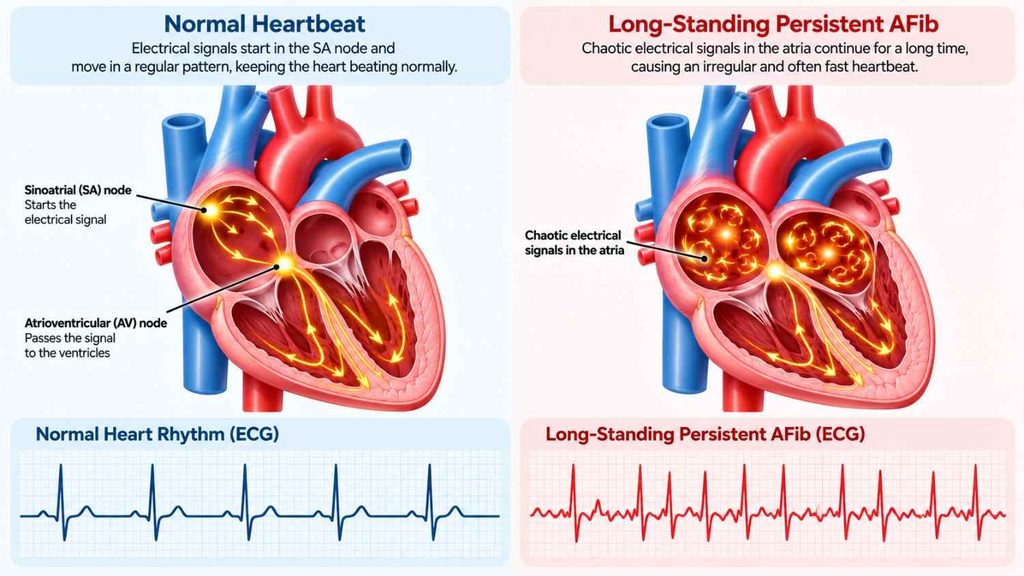
Long-standing persistent atrial fibrillation, also called long-standing persistent AFib, is a heart rhythm condition in which atrial fibrillation continues continuously for at least 12 months, while restoring a normal heart rhythm remains a treatment option for selected patients.
Unlike AFib that occurs in short, intermittent episodes, this type involves a prolonged period of irregular heart rhythm. Some people experience persistent palpitations, tiredness, or breathlessness, while others have few noticeable symptoms. The duration of the condition can influence treatment planning, but it does not determine a person’s risk on its own.
Long-standing persistent AFib may require a more detailed discussion about rhythm-control procedures, medication, stroke prevention, and management of other cardiovascular conditions.
What Is Long-Standing Persistent AFib?
Long-standing persistent AFib is a form of atrial fibrillation that has continued without interruption for at least 12 months, with a strategy to restore normal heart rhythm still being considered.
The heart normally uses coordinated electrical signals to make its chambers contract. During atrial fibrillation, abnormal electrical activity causes the upper chambers, called the atria, to quiver rather than contract in a coordinated manner. This creates an irregular heart rhythm.
When AFib continues for many months, doctors may need to consider the duration of the arrhythmia, the heart’s structure and function, previous treatment results, symptoms, and the patient’s goals before recommending a management strategy.
An important distinction: Long-standing persistent AFib is not simply another name for permanent AFib. The former describes continuous AFib lasting at least 12 months when rhythm restoration remains a possible treatment option. Permanent AFib describes a shared decision between the patient and healthcare professional not to pursue further attempts to restore normal rhythm.
The classification is used to guide clinical discussions. It does not mean that every patient with long-standing persistent AFib needs an operation or that restoring normal rhythm is impossible.
For a broader explanation of AFib types, causes, diagnosis, and treatment, read our Atrial Fibrillation health guide.
7 Important Facts About Long-Standing Persistent AFib
1. Long-Standing Persistent AFib Means Continuous AFib for at Least 12 Months
The defining feature of long-standing persistent AFib is the duration of the continuous rhythm disturbance.
Doctors distinguish it from shorter-lasting persistent AFib because a prolonged period of AFib can affect the considerations involved in rhythm-control treatment. The likelihood of maintaining a normal rhythm after treatment depends on several factors, not duration alone.
These may include the size and condition of the atria, other heart diseases, the person’s overall health, previous treatment attempts, and how long AFib has been present.
The 12-month classification should not be interpreted as a point at which the condition suddenly becomes more dangerous. It is a clinical category that helps describe the history of the rhythm disturbance.
A person should seek assessment for a new irregular heartbeat or concerning symptoms rather than waiting for a specific duration.
2. What Are the Symptoms of Long-Standing Persistent AFib?
Symptoms vary widely. Some people notice their irregular heartbeat throughout the day, while others primarily experience changes in energy or exercise tolerance.
Possible symptoms include:
- Palpitations or an irregular heartbeat
- Unusual fatigue or weakness
- Shortness of breath during physical activity
- Reduced stamina
- Dizziness or lightheadedness
- A feeling of a racing heartbeat
- Chest discomfort
Some patients have few or no obvious symptoms, even when AFib continues. A lack of palpitations does not confirm that the heart rhythm has returned to normal.
Long-standing symptoms may also be difficult to recognize because people can gradually adjust their daily activities. For example, someone may stop walking as far as before without realizing that reduced exercise tolerance could be associated with a heart condition.
These symptoms are not specific to AFib and can occur with other heart, lung, blood, or thyroid conditions. An ECG or other appropriate heart rhythm recording is needed to establish the diagnosis.
Seek emergency medical care for chest pain, severe breathlessness, fainting, or possible stroke symptoms.
3. Why Can Long-Standing Persistent AFib Be More Challenging to Treat?
When AFib continues over an extended period, changes in the electrical and structural properties of the atria may develop. These changes can help sustain the abnormal rhythm and may make maintaining a normal rhythm more challenging in some patients.
However, treatment response is not determined by duration alone. Two people who have had AFib for a similar length of time may respond differently to the same treatment.
Doctors may consider:
- How long AFib has continued
- Whether the atria are enlarged or show other structural changes
- Whether heart pumping function is affected
- The presence of high blood pressure, heart failure, or valve disease
- Previous responses to medication or cardioversion
- The person’s symptoms and quality-of-life goals
These details help a clinician discuss whether rhythm control is worthwhile and which treatment approach may offer the most suitable balance of benefit and risk.
A prolonged history of AFib does not automatically rule out cardioversion or catheter ablation. It does mean that the decision should be based on an individualized assessment rather than a promise that one procedure will permanently eliminate the condition.
4. How Is Long-Standing Persistent AFib Diagnosed?
The diagnosis relies on documenting AFib and establishing its pattern over time. A clinician will usually review the patient’s history, previous ECG recordings, symptoms, medical conditions, and any earlier treatment.
Tests may include:
Electrocardiogram (ECG or EKG): Records the heart’s electrical activity and can identify AFib when the abnormal rhythm is present.
Ambulatory rhythm monitoring: A Holter monitor or another ECG-based device may be used when doctors need to understand the rhythm over a longer period. The most suitable device depends on the clinical question.
Echocardiogram: An ultrasound examination that evaluates heart structure, chamber size, valve function, and pumping performance.
Blood tests: May help identify contributing conditions or guide medication choices. These can include tests for thyroid function, electrolyte levels, and kidney function when indicated.
Additional cardiac assessment: Depending on the person’s history and treatment plans, further investigations may be needed to assess underlying heart disease or prepare for a procedure.
There is no single test that independently establishes every aspect of the long-standing classification. The clinician combines rhythm evidence with the history of continuous AFib and the treatment strategy being considered.
5. Can Long-Standing Persistent AFib Increase the Risk of Stroke?
Yes. AFib can increase the risk of blood clot formation in the heart. A clot may travel through the bloodstream and block an artery supplying the brain, causing an ischemic stroke.
The risk is influenced by factors such as age, previous stroke or transient ischemic attack, high blood pressure, diabetes, heart failure, and vascular disease.
The duration of AFib is only one part of the clinical picture. Doctors assess individual stroke risk to decide whether anticoagulant medication is appropriate.
Anticoagulants reduce the blood’s tendency to form clots, but they can also increase bleeding risk. The choice of medicine and the decision to use it require consideration of the patient’s health, kidney function where relevant, other medicines, and personal circumstances.
Do not stop prescribed anticoagulants because you feel well or because a procedure appears to have restored a normal rhythm. Stroke-prevention decisions depend on the person’s ongoing risk, not just whether the latest rhythm recording is normal.
Seek emergency care if you notice sudden facial drooping, weakness or numbness on one side, difficulty speaking, sudden vision loss, or other possible signs of a stroke. Do not wait to see whether these symptoms resolve.
6. What Treatment Options May Be Considered?
Treatment for long-standing persistent AFib is individualized. The plan may include controlling the heart rate, attempting to restore normal rhythm, preventing stroke, and addressing other health conditions.
The decision to pursue rhythm control depends on symptoms, heart function, the duration and pattern of AFib, previous treatment, procedural risks, and the patient’s preferences.
Rate control
Rate-control medicines help prevent the lower chambers of the heart from beating too quickly during AFib. Depending on the person’s condition, doctors may consider beta-blockers or other appropriate medicines.
Rate control can improve symptoms related to a fast heartbeat, but it does not necessarily restore a normal rhythm. The choice of medicine and target heart rate must be individualized.
Rhythm-control medication
Antiarrhythmic medicines may be used to help restore or maintain a normal rhythm in selected patients. The most suitable option depends on the person’s heart function, other medical conditions, potential drug interactions, and risks of side effects.
These medicines require medical supervision. Patients should not start, stop, or change their dose without guidance from the prescribing clinician.
Electrical cardioversion
Electrical cardioversion uses a controlled electrical shock under medical supervision to restore a normal heart rhythm.
Before cardioversion, clinicians assess the risk of blood clots and consider how long AFib has been present. Anticoagulation and, in selected cases, imaging to assess for clots may be needed according to the patient’s circumstances and current clinical guidance.
Cardioversion can restore normal rhythm, but AFib may return afterward. The healthcare team will discuss the likely benefits, risks, and follow-up plan.
Catheter ablation
Catheter ablation is a procedure that targets areas involved in abnormal electrical signaling in the heart. It may be considered for selected patients when rhythm control is appropriate, particularly if medication has not controlled symptoms adequately or has caused unacceptable side effects.
Long-standing persistent AFib can be more complex to manage than shorter-duration AFib. Some patients may need repeat procedures or additional treatment, and success varies.
A specialist can explain whether ablation is appropriate, which approach may be considered, and what outcomes are realistic in the individual case.
7. Long-Term Management Requires Regular Review
Long-standing persistent AFib is not managed through a one-time decision alone. Symptoms, heart function, stroke risk, other medical conditions, and treatment goals may change over time.
Follow-up may involve:
- Reviewing symptoms and functional capacity
- Checking heart rate and rhythm
- Monitoring medication effects and side effects
- Reassessing stroke and bleeding risk
- Managing blood pressure, diabetes, and other contributing conditions
- Reviewing whether the current rate-control or rhythm-control strategy remains suitable
The treatment plan should reflect the person’s overall health and preferences. If symptoms worsen or daily activities become more difficult, the healthcare team should reassess the situation.
Long-Standing Persistent AFib vs. Permanent AFib
These terms are related but describe different clinical situations.
| Feature | Long-standing persistent AFib | Permanent AFib |
|---|---|---|
| Rhythm duration | Continuous AFib for at least 12 months | May also have been present for a long time |
| Rhythm restoration | Still being considered as a treatment option in selected patients | Further attempts to restore normal rhythm are no longer planned following a shared decision |
| Main distinction | Duration and ongoing consideration of rhythm control | Agreed treatment strategy |
| Can the classification change? | Yes, if the clinical situation and treatment goals change | Yes, if the patient and clinician later reconsider the treatment strategy |
Permanent AFib does not mean that every possible treatment has stopped. Patients may still receive medicines to control heart rate, anticoagulants when indicated, and treatment for other cardiovascular conditions.
Likewise, long-standing persistent AFib does not mean that rhythm restoration must be attempted. The decision depends on the patient’s clinical circumstances and preferences.
Can Long-Standing Persistent AFib Be Reversed?
The answer depends on what is meant by “reversed.” Treatment may restore a normal rhythm in some patients, and it may reduce symptoms or the amount of time spent in AFib. However, no treatment can guarantee that the rhythm disturbance will never return.
A clinician may discuss cardioversion, antiarrhythmic medicines, catheter ablation, or other approaches when rhythm control is appropriate. The expected results depend on factors such as heart structure, other medical conditions, and the history of AFib.
Managing contributing conditions can also support overall heart health. This may include controlling blood pressure, treating sleep apnea, managing diabetes, addressing obesity where relevant, and reducing excessive alcohol consumption.
Patients should avoid unproven remedies that claim to cure AFib or replace prescribed treatment.
Lifestyle Measures That Support Long-Term AFib Care
Lifestyle changes do not replace medical treatment, but they can support cardiovascular health and help address conditions associated with AFib.
Depending on individual needs, useful measures may include:
- Following a suitable physical activity plan recommended by a clinician
- Managing high blood pressure
- Maintaining a healthy weight where appropriate
- Limiting excessive alcohol consumption
- Stopping smoking
- Getting assessed for possible sleep apnea
- Managing diabetes and other chronic conditions
- Following medication instructions and attending scheduled reviews
The right plan differs from person to person. Ask your healthcare professional before making major changes to exercise, alcohol intake, or medication, especially if you have other heart conditions.
When Should You Seek Medical Help?
Arrange a medical assessment if you have a new irregular heartbeat, unexplained palpitations, increasing fatigue, or breathlessness. If you already have long-standing persistent AFib, seek advice when symptoms change, become more severe, or begin to limit your normal activities.
Seek emergency help immediately if you experience chest pain or pressure, severe breathlessness, fainting or collapse, or possible stroke symptoms such as sudden weakness on one side or difficulty speaking.
In India, call 112 for emergency assistance. Do not drive yourself if you may be experiencing a medical emergency.
Frequently Asked Questions About Long-Standing Persistent AFib
How long does long-standing persistent AFib last?
It refers to continuous AFib lasting at least 12 months when restoring normal rhythm remains a treatment option in selected patients. The classification describes the duration and treatment context; it does not predict the outcome for every individual.
Is long-standing persistent AFib the same as permanent AFib?
No. Long-standing persistent AFib means the rhythm has continued for at least 12 months while rhythm restoration is still being considered. Permanent AFib describes a shared decision between the patient and clinician not to pursue further attempts to restore normal rhythm.
Can long-standing persistent AFib be treated with ablation?
Catheter ablation may be considered for selected patients. Its potential benefits and risks depend on the patient’s symptoms, heart structure, other medical conditions, previous treatment, and goals. Some people need more than one procedure or additional treatment.
Does long-standing persistent AFib always cause symptoms?
No. Some people experience palpitations, fatigue, or breathlessness, while others have few noticeable symptoms. The absence of symptoms does not remove the need for appropriate assessment and stroke-risk evaluation.
Do all patients with long-standing persistent AFib need blood thinners?
Not necessarily. Anticoagulation is considered according to an individual’s risk of stroke and bleeding, along with other clinical factors. Do not start or stop anticoagulants without medical advice.
Can lifestyle changes eliminate long-standing persistent AFib?
Lifestyle measures can support heart health and help manage contributing conditions, but they cannot be relied upon to eliminate established AFib. They should complement, not replace, a clinician-directed treatment plan.
Can long-standing persistent AFib lead to heart failure?
AFib and heart failure can occur together, and a persistently rapid heart rate may weaken heart function in some people. The relationship varies, so clinicians assess heart function and treat contributing conditions when appropriate.
Conclusion
Long-standing persistent AFib describes continuous atrial fibrillation lasting at least 12 months when restoring normal rhythm remains a treatment option for selected patients. Its management may involve rate control, rhythm-control medication, cardioversion, catheter ablation, stroke prevention, and attention to other cardiovascular risk factors.
The duration of AFib is important, but it does not determine treatment or stroke risk by itself. Regular medical review helps ensure that the management plan remains appropriate as symptoms, health conditions, and treatment goals change.
For a broader overview of AFib, including its different types, causes, diagnosis, and management, visit our Atrial Fibrillation health guide.