
Glaucoma: Symptoms, Causes, Diagnosis & Treatment
Glaucoma is a group of eye conditions that can damage the optic nerve and lead to vision loss. It often develops without noticeable early symptoms, making regular eye examinations important. Learn about glaucoma symptoms, risk factors, diagnosis, treatment options, and ways to protect your vision.
What Is Glaucoma?
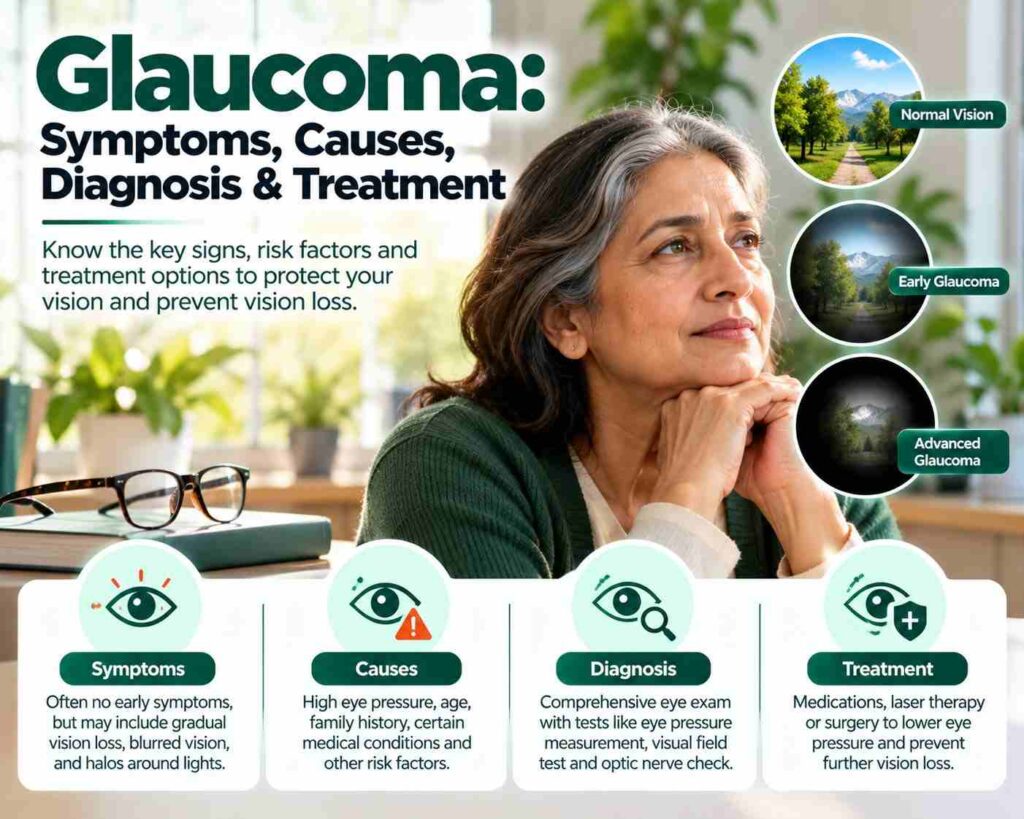
Glaucoma is a group of eye conditions that damage the optic nerve, which carries visual information from the eye to the brain. It is often associated with increased pressure inside the eye, although glaucoma can also develop when eye pressure is within the normal range.
The condition often progresses slowly without noticeable early symptoms. Without appropriate treatment, glaucoma can cause permanent vision loss, making regular eye examinations important.
How Does Glaucoma Affect Vision?
Damage to the optic nerve can gradually affect peripheral (side) vision and may progress to more extensive vision loss. Vision already lost because of glaucoma generally cannot be restored, but timely treatment can help slow or prevent further damage.
Can Glaucoma Develop Without Symptoms?
Yes. Many forms of glaucoma develop silently in their early stages. A person may not notice vision changes until significant damage has occurred, which is why recommended eye examinations are important even when vision seems normal.
Recognise the Warning Signs
What Are the Symptoms of Glaucoma?
Glaucoma symptoms depend on the type and stage of the condition. Many forms develop gradually without noticeable warning signs, while acute angle-closure glaucoma can cause sudden, severe symptoms that require emergency medical attention.
Early Symptoms of Glaucoma
Open-Angle Glaucoma May Have No Early Symptoms
Open-angle glaucoma often develops without noticeable symptoms. As it progresses, it may cause gradual loss of peripheral (side) vision, which can be difficult to notice at first. Regular eye examinations can help detect changes before obvious vision loss develops.
Symptoms of Acute Angle-Closure Glaucoma
Seek emergency medical care if you experience any of the following symptoms, particularly if they begin suddenly.
These symptoms may indicate acute angle-closure glaucoma, a medical emergency that requires immediate treatment. Do not wait for symptoms to improve on their own.

What Causes Glaucoma?
Glaucoma develops when the optic nerve becomes damaged. Increased pressure inside the eye is a common risk factor, but glaucoma can also occur when eye pressure is within the normal range.
Common Glaucoma Risk Factors
Age: The risk increases as you get older.
Family history: Having a close relative with glaucoma can increase your risk.
High eye pressure: Elevated pressure inside the eye increases the likelihood of optic nerve damage.
Medical conditions: Certain health conditions, including diabetes, may be associated with a higher risk.
Eye injuries: Previous eye injuries or certain eye conditions can increase the risk.
Long-term steroid use: Some steroid medicines can raise eye pressure in susceptible people.
What Are the Different Glaucoma Types ?
1. Open-Angle Glaucoma
The most common type, usually developing gradually. It often causes no noticeable early symptoms and may lead to progressive loss of peripheral vision.
2. Angle-Closure Glaucoma
This occurs when fluid drainage becomes blocked. Sudden angle-closure can cause severe eye pain, redness, blurred vision, halos around lights, headache, and nausea. It requires emergency medical care.
3. Normal-Tension Glaucoma
Optic nerve damage occurs even though eye pressure remains within the usual range. Its exact cause is not always clear.
4. Secondary Glaucoma
This develops because of another condition, eye injury, inflammation, or certain medicines, including some steroid treatments.
5. Congenital Glaucoma
A rare type present at birth or developing in early childhood. Warning signs can include excessive tearing, light sensitivity, and an unusually enlarged or cloudy eye.

How Is Glaucoma Diagnosed?
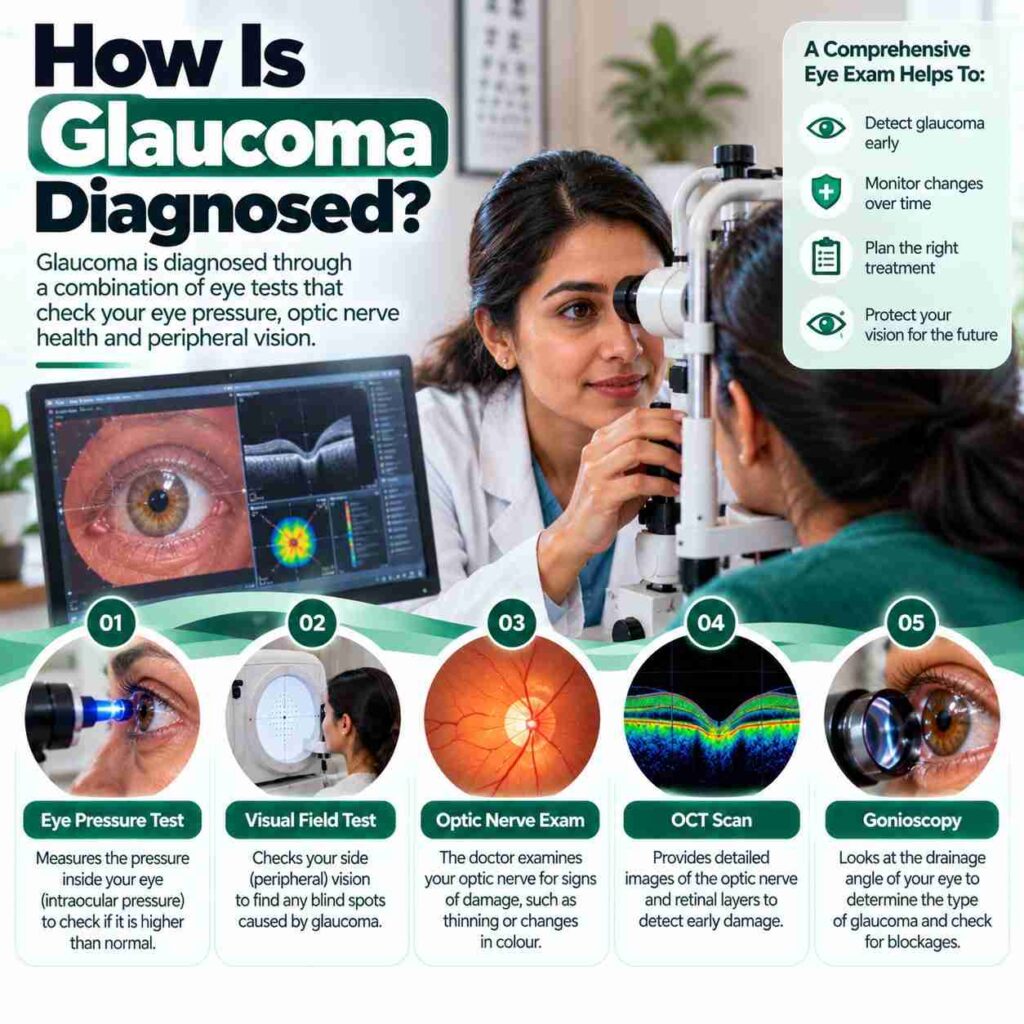
Glaucoma is diagnosed through a comprehensive eye examination. Because early glaucoma often has no symptoms, an eye care professional may perform several tests to assess eye pressure, optic nerve health, and peripheral vision.
Common Tests for Glaucoma
Eye pressure test: Measures the pressure inside your eyes.
Optic nerve examination: Checks for signs of nerve damage.
Visual field test: Evaluates your side vision.
Dilated eye examination: Helps the eye care professional examine the optic nerve and retina.
OCT scan: Creates detailed images of the optic nerve and surrounding retinal layers.
Drainage angle examination: Helps identify whether the eye’s fluid drainage angle is open or narrow.
What Are the Treatment Options for Glaucoma?
Glaucoma treatment aims to lower eye pressure and slow further optic nerve damage. Although existing vision loss generally cannot be reversed, appropriate treatment can help preserve remaining vision.
1. Prescription Eye Drops
Eye drops are commonly used to lower eye pressure by reducing fluid production or improving fluid drainage. Use them exactly as prescribed and attend follow-up appointments.
2. Oral Medicines
In certain cases, a doctor may prescribe oral medication to lower eye pressure. These medicines may be used for a limited period or alongside other treatments, depending on the situation.
3. Laser Treatment
Laser procedures may improve fluid drainage or help prevent an acute angle-closure attack. The appropriate procedure depends on the type of glaucoma and your eye examination.
4. Glaucoma Surgery
If medicines or laser treatment do not adequately control eye pressure, surgery may be recommended to improve fluid drainage or reduce pressure and help protect the optic nerve.
Can Glaucoma Be Cured?
Glaucoma usually requires ongoing management. Treatment can help control eye pressure and reduce the risk of additional optic nerve damage, but it generally cannot restore vision already lost.
Regular eye examinations and following your prescribed treatment plan are important, even when your vision feels normal. Your ophthalmologist can recommend the most appropriate approach for your type and stage of glaucoma.
How to Live with Glaucoma
Living with glaucoma involves regular eye check-ups, following your prescribed treatment, and monitoring changes in your vision.
Tips for Managing Glaucoma
Use prescribed eye drops: Follow your treatment schedule and ask your doctor if you experience side effects.
Attend follow-up appointments: Regular examinations help monitor eye pressure and optic nerve health.
Know your symptoms: Seek urgent care for sudden vision changes or severe eye pain.
Maintain a healthy lifestyle: Manage conditions such as diabetes and high blood pressure with professional guidance.
Tell your healthcare providers: Share your glaucoma diagnosis and medication list with your doctors.

Frequently Asked Questions About Glaucoma
Find clear answers about glaucoma, its causes, early symptoms, treatment, risk factors and when to seek urgent medical attention.
1. What is the main cause of glaucoma?
Glaucoma develops when the optic nerve becomes damaged. Increased eye pressure is a common risk factor, but glaucoma can also occur when eye pressure is within the normal range.
2. Can glaucoma cause blindness?
Yes. Untreated glaucoma can cause permanent vision loss and, in advanced cases, blindness. Early detection and appropriate treatment can help reduce the risk of further damage.
3. Can glaucoma be cured?
There is currently no cure for most forms of glaucoma. However, medicines, laser procedures and surgery can help control eye pressure and slow or prevent further vision loss.
4. Does glaucoma have early symptoms?
Many forms of glaucoma have no noticeable early symptoms. Regular comprehensive eye examinations can help detect damage before significant vision loss occurs.
5. Who is at higher risk of glaucoma?
Risk can increase with age, a family history of glaucoma, elevated eye pressure, certain medical conditions and previous eye injuries. An eye specialist can assess your individual risk.
6. When should I seek urgent care?
Seek emergency medical attention for sudden vision loss, severe eye pain, or sudden blurred vision with redness, halos around lights, headache or nausea. These symptoms may indicate an acute eye emergency.
