

Rheumatoid Arthritis
Rheumatoid arthritis (RA) is an autoimmune condition that causes inflammation in the joints and can affect other parts of the body. Learn about its symptoms, causes, diagnosis, treatment, and ways to manage the condition.
WHAT IS RHEUMATOID ARTHRITIS?
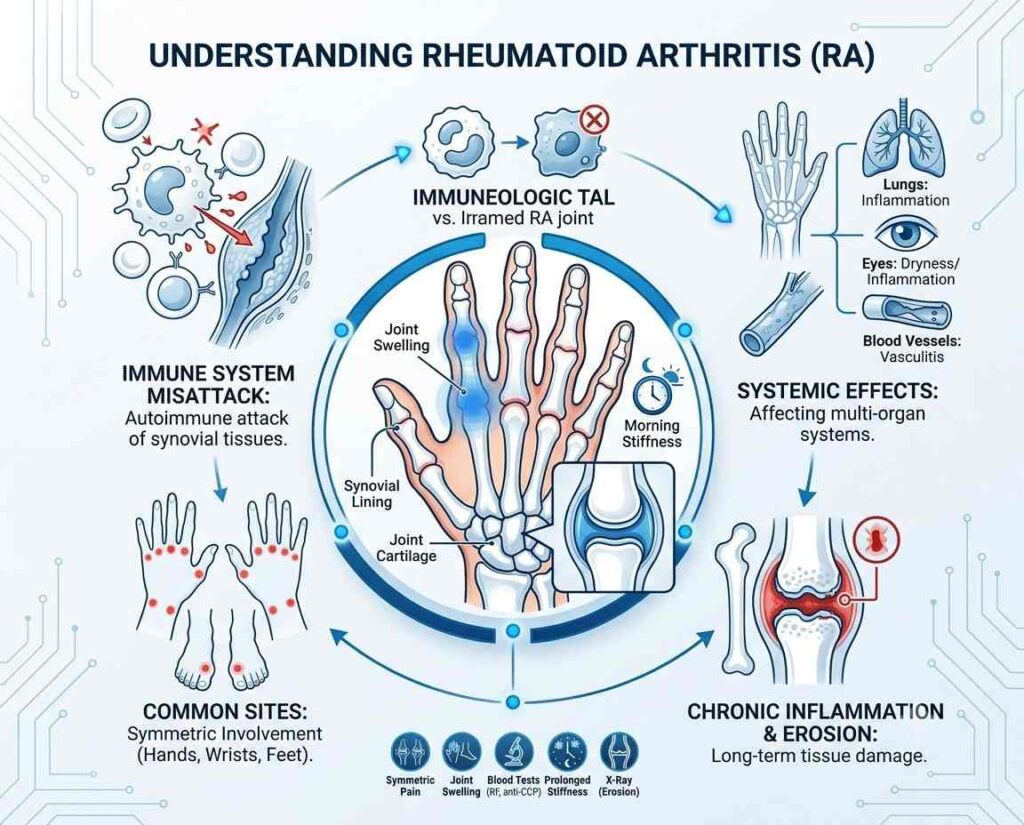
Rheumatoid arthritis (RA) is a long-term autoimmune condition that causes inflammation in the joints. It occurs when the immune system mistakenly attacks tissues in and around the joints, leading to pain, swelling, tenderness, and stiffness.
RA commonly affects joints such as the hands, wrists, and feet, often affecting the same joints on both sides of the body. Unlike osteoarthritis, which is primarily associated with wear and tear, rheumatoid arthritis is driven by an abnormal immune response. RA can also affect other parts of the body.
Symptoms of Rheumatoid Arthritis
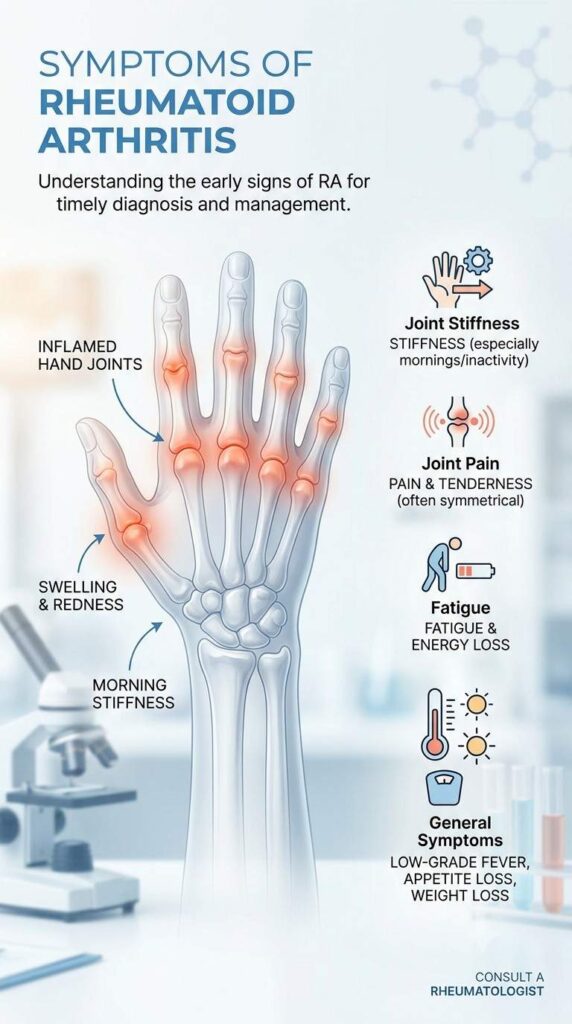
Rheumatoid arthritis symptoms can vary from person to person. They may develop gradually or appear more quickly, and periods of increased symptoms are often called flares.
Joint Pain
Pain or discomfort in affected joints.
Joint Swelling
Inflammation can cause joints to become swollen and tender.
Morning Stiffness
Stiffness is often worse in the morning or after periods of inactivity.
Joint Tenderness
Affected joints may hurt when touched or moved.
Fatigue
Persistent tiredness can occur along with joint symptoms.
Low-Grade Fever
Some people may experience a mild fever as part of the body’s inflammatory response.
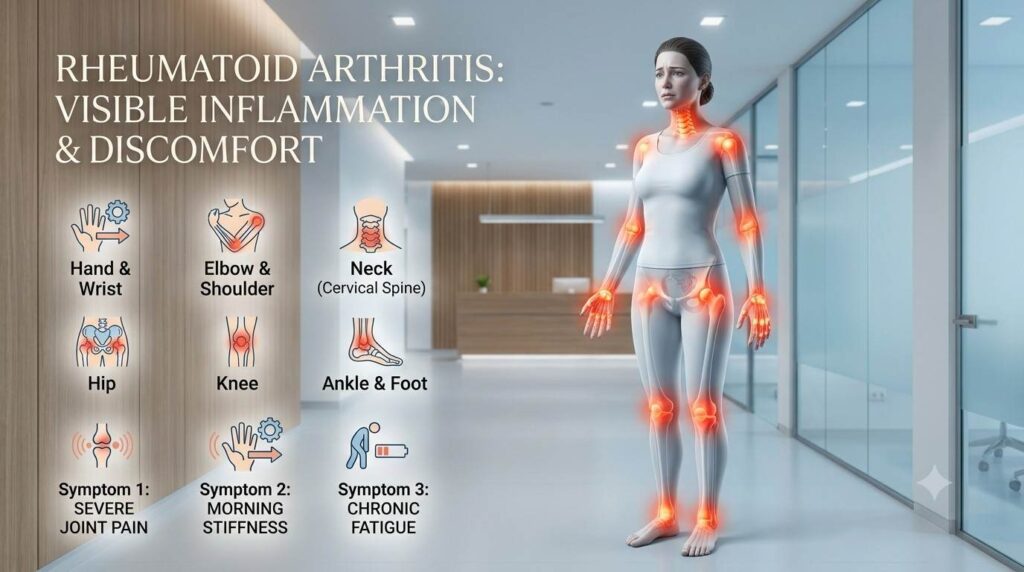
Where Does Rheumatoid Arthritis Affect the Body?
RA often affects multiple joints and can involve the same joints on both sides of the body. Hands, wrists and feet are common locations.

What Causes Rheumatoid Arthritis?
The exact cause of rheumatoid arthritis is not fully understood. Researchers believe that a combination of genetic and environmental factors may influence how the immune system responds and contribute to the development of RA.
Rheumatoid Arthritis vs. Osteoarthritis
| Rheumatoid Arthritis | Osteoarthritis | |
|---|---|---|
| Main mechanism | Autoimmune/inflammatory | Joint wear and structural changes |
| Typical pattern | Often multiple/symmetrical joints | Often individual or specific joints |
| Morning stiffness | Often prolonged | Usually shorter |
| Can affect whole body? | Yes | Primarily joints |
| Inflammation | Major feature | Usually less systemic |
How Is Rheumatoid Arthritis Diagnosed?
Diagnosing rheumatoid arthritis can sometimes be challenging because its early symptoms can resemble those of other conditions. There is no single test that confirms RA on its own. Doctors consider your symptoms, medical history, physical examination, and test results together.
01 — Medical History
Your doctor asks about symptoms, family history and overall health.
02 — Physical Examination
Joints are checked for swelling, tenderness, stiffness and range of motion.
03 — Blood Tests
Tests may include rheumatoid factor (RF), anti-CCP antibodies, CRP, ESR and other tests depending on the evaluation.
04 — Imaging
X-rays or other imaging may be used to evaluate joints and look for changes.
05 — Specialist Evaluation
A rheumatologist may be involved when RA is suspected or requires specialist management.


Rheumatoid Arthritis: Stages & Progression
Rheumatoid arthritis can progress differently from person to person. Persistent inflammation may damage joints over time, which is why early evaluation and appropriate treatment are important.
Rheumatoid Arthritis Treatment
There is currently no cure for rheumatoid arthritis, but treatment can help reduce inflammation, relieve symptoms, slow disease progression, protect joints, and improve daily function. Treatment is individualized according to the person’s condition and overall health.
Medicines
Treatment may include disease-modifying antirheumatic drugs (DMARDs), biologic medicines and other medicines depending on the condition.
Physical Activity & Therapy
Physical or occupational therapy can help maintain movement, strength and daily function.
Rest & Joint Protection
During periods of increased symptoms, balancing activity with appropriate rest can help reduce stress on affected joints.
Surgery
In cases of significant joint damage, surgery or joint replacement may sometimes be considered.


Living With Rheumatoid Arthritis
Stay Active
Choose appropriate physical activity as advised by your healthcare professional.
Maintain a Healthy Weight
Reducing excess joint stress can support mobility.
Avoid Smoking
Smoking is a recognized RA risk factor.
Prioritize Rest & Sleep
Adequate rest can help you manage fatigue.
Manage Stress
Stress management can be part of overall RA self-care.
Follow Your Treatment Plan
Regular follow-up and taking Regular follow-up and taking prescribed treatment as directed are important for disease management.
Can Rheumatoid Arthritis Affect Other Parts of the Body?
RA is not limited to the joints. WebMD discusses potential effects involving the lungs, heart and blood vessels, eyes, skin, kidneys/liver and other systems.
Heart & Blood Vessels
RA-related inflammation can be associated with cardiovascular problems.
Lungs
RA can affect the lungs in some people.
Eyes
Dryness and other eye problems may occur.
Bones
Inflammation and reduced activity can contribute to bone health problems.
Skin
Some people may develop rheumatoid nodules or other skin-related symptoms
WHEN SHOULD YOU SEE A DOCTOR?
Consider speaking with a healthcare professional if you have persistent joint pain, swelling, tenderness or morning stiffness, particularly when multiple joints are affected. Early evaluation can help determine whether symptoms are caused by rheumatoid arthritis or another condition.

A rheumatologist or other qualified healthcare professional can evaluate your symptoms and recommend appropriate testing and treatment.Lorem ipsum dolor sit amet, consectetur adipiscing elit. Ut elit tellus, luctus nec ullamcorper mattis, pulvinar dapibus leo.
Don't Ignore Persistent Joint Pain
Persistent joint pain, swelling and morning stiffness should not always be dismissed as normal aging. A proper medical evaluation can help identify the cause and guide appropriate treatment.