
Digestive Health & Digestive Disorders
Understand your digestive health, recognize common symptoms, and find the right medical care for digestive problems.
From acidity, bloating and constipation to GERD, IBS, gastritis, ulcers and other gastrointestinal conditions, understanding your symptoms is an important first step toward appropriate care.

What Is Digestive Health?
Digestive health refers to how well your digestive system breaks down food, absorbs nutrients and removes waste from the body. The digestive system includes the gastrointestinal tract as well as organs such as the liver, gallbladder and pancreas.
Digestive problems can affect different parts of this system and may cause symptoms such as abdominal pain, bloating, gas, heartburn, nausea, constipation or diarrhea. Persistent, severe or unexplained digestive symptoms should be evaluated by a qualified healthcare professional.
How Does Your Digestive System Work?
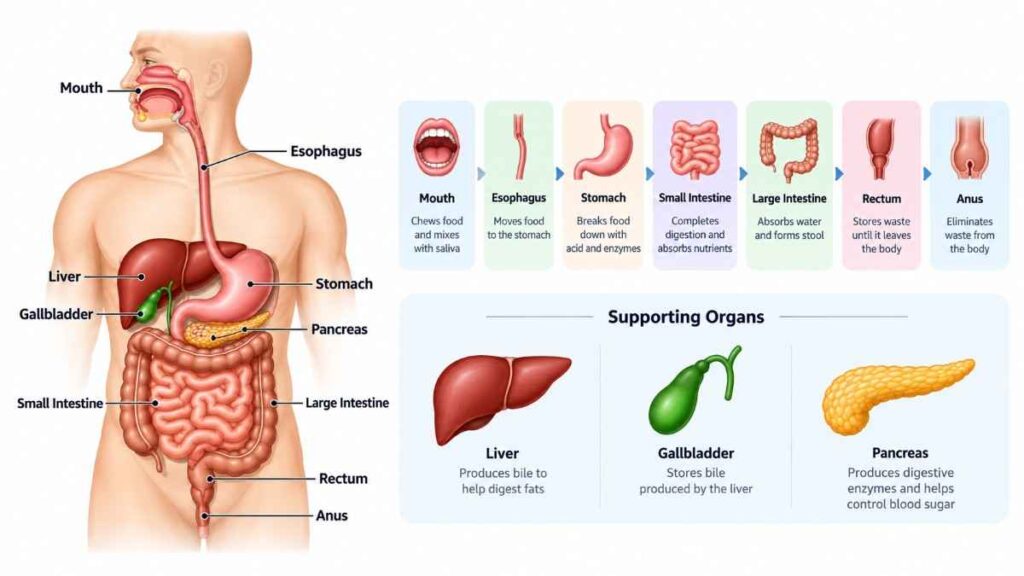
Stomach
Breaks down food and begins the digestive process.
Intestines
Absorb nutrients and water from digested food.
Liver
Produces bile to support digestion and fat processing.
Your digestive system works continuously to break down food, absorb nutrients and move waste through the body. Digestion begins in the mouth and continues through the gastrointestinal tract, with the stomach, intestines, liver, pancreas and gallbladder contributing to the process.
Common Digestive Problems
Acidity & Heartburn
Burning discomfort in the chest or upper abdomen can sometimes be related to acid reflux or GERD.
Learn More →Bloating & Gas
Bloating and excessive gas may occur because of diet, digestive conditions, food intolerance or other causes.
Learn More →Constipation
Hard or infrequent bowel movements can have several causes, including diet, medications and underlying conditions.
Learn More →Diarrhea
Loose or watery stools can result from infections, food-related problems, medications or digestive disorders.
Learn More →Gastritis
Inflammation of the stomach lining can cause abdominal discomfort, nausea and indigestion.
Learn More →Irritable Bowel Syndrome (IBS)
IBS can cause abdominal pain, bloating and changes in bowel habits.
Learn More →Peptic Ulcers
Ulcers in the stomach or upper digestive tract may cause burning pain and other digestive symptoms.
Learn More →Gallstones
Gallstones can sometimes cause abdominal pain and digestive symptoms, particularly after meals.
Learn More →Inflammatory Bowel Disease
Conditions such as Crohn's disease and ulcerative colitis cause inflammation in the digestive tract.
Learn More →Symptom Explore
Learn more about common digestive symptoms
| Abdominal Pain | → |
| Bloating | → |
| Gas | → |
| Heartburn | → |
| Nausea | → |
| Vomiting | → |
| Constipation | → |
| Diarrhea | → |
| Blood in Stool | → |
| Difficulty Swallowing | → |
| Loss of Appetite | → |
| Unexplained Weight Loss | → |
When Should You See a Doctor ?
You may want to seek medical evaluation if digestive symptoms:
- keep coming back
- persist despite basic self-care
- interfere with eating, sleeping or daily activities
- are unexplained
- are becoming more severe
- occur with concerning symptoms
Seek urgent medical attention for symptoms such as:
- vomiting blood
- black or tarry stools
- significant gastrointestinal bleeding
- severe or worsening abdominal pain
- fainting or severe weakness
- severe dehydration
- difficulty breathing or swallowing
We should keep the language medically cautious rather than telling users to self-diagnose.
Need Help With a Digestive Problem?
Meet a Gastroenterologist
A gastroenterologist specializes in diagnosing and managing conditions affecting the digestive system, including the esophagus, stomach, intestines, liver, gallbladder and pancreas.

Simple Ways to Support Digestive Health
Eat a balanced diet
Include a variety of nutrient-rich foods and adequate fiber where appropriate.
Stay hydrated
Adequate fluid intake supports normal digestive function.
Eat mindfully
Eating slowly and paying attention to portion sizes may help some people manage digestive discomfort.
Stay physically active
Regular physical activity can support overall health and bowel regularity.
Manage stress
Stress can affect digestive symptoms in some people.
Don’t ignore persistent symptoms
Recurring or unexplained digestive problems deserve medical evaluation.
Food, Diet & Digestive Health
🥗 Foods That Support Healthy Digestion
🦠 Understanding Probiotics & Gut Bacteria
💧 Hydration & Digestive Health

Latest Digestive Health Articles
Digestive Health FAQs
What does a gastroenterologist treat?
A gastroenterologist specializes in conditions affecting the digestive system, including the esophagus, stomach, intestines, liver, gallbladder and pancreas.
What are common digestive problems?
Common digestive complaints include heartburn, bloating, gas, abdominal discomfort, constipation, diarrhea and nausea. The underlying causes can vary.
When should I see a gastroenterologist?
Consider medical evaluation when digestive symptoms persist, recur frequently, interfere with daily life or occur with concerning symptoms.
Is bloating always a sign of a digestive disease?
No. Bloating can have many causes, including diet and normal digestive processes, but persistent or troublesome bloating may need evaluation.
What is the difference between acidity and GERD?
Occasional acid reflux can occur in many people, while GERD is a condition involving recurrent reflux that may require medical evaluation and treatment.
Don't Ignore Persistent Digestive Problems
Whether you’re dealing with recurring acidity, bloating, abdominal pain, constipation, diarrhea or another digestive concern, getting the right medical evaluation can help you understand what’s causing your symptoms.