
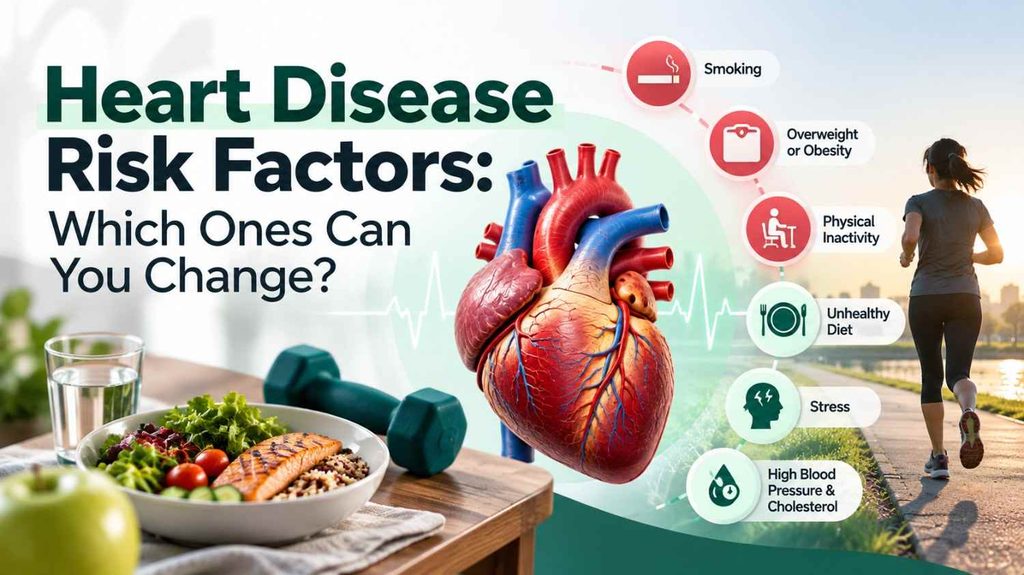
Heart disease can develop due to a combination of health conditions, inherited characteristics, and everyday habits. Some risk factors, such as age and family history, cannot be changed. Others—including smoking, physical inactivity, high blood pressure, and uncontrolled cholesterol—can often be managed to help lower your risk.
Understanding your heart disease risk factors is an important first step toward protecting your long-term health. Even if heart disease runs in your family, taking preventive steps can still make a meaningful difference.
In this guide, we explain which risk factors you can change, which you cannot, and how to take practical steps toward better heart health. You can also explore our guide to heart disease to understand common heart conditions and their effects on the body.
What Are Heart Disease Risk Factors?
Heart disease risk factors are characteristics, medical conditions, or habits that increase the likelihood of developing a heart-related condition. They may contribute to damage in blood vessels, plaque buildup in arteries, increased strain on the heart, or problems with its electrical system.
Common risk factors include:
- High blood pressure
- High LDL cholesterol
- Diabetes and elevated blood sugar
- Smoking or other tobacco use
- Physical inactivity
- Overweight or obesity
- An unhealthy dietary pattern
- Older age and family history
Having one or more risk factors does not automatically mean you will develop heart disease. Your overall risk depends on how these factors interact, their severity, your medical history, and other individual characteristics.
8 Heart Disease Risk Factors You Can Change or Manage
Many important risk factors can be improved through lifestyle changes, medical treatment, or both. Here are eight areas worth discussing with a healthcare professional.
1. High Blood Pressure
High blood pressure, also called hypertension, makes the heart work harder to circulate blood. Over time, uncontrolled blood pressure can damage blood vessels and increase the risk of heart attack, stroke, and heart failure.
What can you do?
- Check your blood pressure regularly.
- Reduce excess salt, especially from packaged and highly processed foods.
- Eat a balanced diet rich in vegetables, fruits, legumes, and whole grains.
- Maintain regular physical activity.
- Take prescribed blood pressure medicines as directed.
High blood pressure often causes no noticeable symptoms, so feeling well does not necessarily mean your blood pressure is healthy. Do not stop prescribed medication without consulting your clinician.
2. High Cholesterol
Cholesterol is a fatty substance the body needs, but high levels of LDL cholesterol can contribute to plaque buildup inside arteries. This process, called atherosclerosis, can restrict blood flow and increase the risk of coronary artery disease.
High cholesterol usually cannot be identified by symptoms alone. A blood test is needed to assess your cholesterol levels.
What can you do?
- Limit foods high in saturated fat and avoid trans fats where possible.
- Include fibre-rich foods such as oats, beans, lentils, vegetables, and fruit.
- Stay physically active.
- Avoid smoking.
- Discuss cholesterol testing and treatment with your healthcare professional.
Some people need cholesterol-lowering medication because of their LDL level, inherited risk, or overall cardiovascular risk, even when they follow healthy habits.
Learn more about coronary artery disease and how plaque buildup can affect blood flow to the heart.
3. Smoking and Tobacco Use
Smoking is a major preventable risk factor for cardiovascular disease. Tobacco smoke damages blood vessels, contributes to plaque buildup, and makes blood more likely to clot. Exposure to second-hand smoke can also increase cardiovascular risk.
Other tobacco products are not automatically safe for the heart. Nicotine-containing products may increase heart rate and blood pressure, and vaping should not be considered risk-free.
What can you do?
- Set a plan to stop smoking or using tobacco.
- Seek professional help if quitting feels difficult.
- Ask a healthcare professional about evidence-based cessation support.
- Avoid second-hand smoke whenever possible.
Quitting can benefit cardiovascular health at any age. If you have tried before, another attempt with appropriate support can help.
4. Physical Inactivity
A sedentary lifestyle can contribute to high blood pressure, unhealthy cholesterol levels, excess weight, and poor blood sugar control. Regular movement helps improve several of these risk factors simultaneously.
What can you do?
- Aim for at least 150 minutes of moderate-intensity activity per week, if appropriate for your health.
- Try brisk walking, cycling, swimming, or another activity you enjoy.
- Break up long periods of sitting with short movement breaks.
- Start gradually if you have been inactive for a long time.
People with existing heart disease, chest discomfort, or significant exercise limitations should ask a healthcare professional which activities are appropriate before starting vigorous exercise.
5. Diabetes and High Blood Sugar
Diabetes increases the risk of cardiovascular disease because persistently elevated blood glucose can damage blood vessels and affect the body’s normal metabolic processes. The risk may be greater when diabetes occurs alongside high blood pressure, abnormal cholesterol, or smoking.
What can you do?
- Monitor blood glucose as recommended.
- Attend scheduled diabetes reviews.
- Follow an individualised nutrition and physical activity plan.
- Take prescribed medicines consistently.
- Discuss cholesterol and blood pressure management as part of your overall care.
Lifestyle changes can help manage blood sugar, but they may not be enough on their own. Do not change diabetes medication or insulin without medical guidance.
6. Overweight or Obesity
Excess body fat, particularly around the abdomen, can contribute to high blood pressure, insulin resistance, abnormal cholesterol, and type 2 diabetes. These conditions can increase cardiovascular risk.
Body weight is influenced by many factors, including genetics, medication, sleep, stress, environment, and other medical conditions. It should not be treated as a measure of personal discipline.
What can you do?
- Build regular physical activity into your routine.
- Choose balanced meals with vegetables, protein sources, and fibre-rich foods.
- Reduce frequent consumption of sugary drinks and highly processed foods.
- Seek professional support if weight management is difficult.
The goal is to improve health sustainably rather than pursue rapid weight loss. Even modest, sustained weight changes may improve some cardiovascular risk factors in people who would benefit from losing weight.
7. Unhealthy Eating Habits
A dietary pattern high in salt, saturated fat, trans fat, added sugars, and heavily processed foods can contribute to several heart disease risk factors. Eating habits affect blood pressure, cholesterol, blood glucose, and body weight.
What can you do?
Include more:
- Vegetables and fruits
- Whole grains
- Beans, lentils, and other legumes
- Nuts and seeds in appropriate portions
- Protein sources such as fish, eggs, and lean meats, or suitable plant-based alternatives
- Unsaturated oils in place of fats high in saturated fat
Reduce excess salt, sugary drinks, and frequent consumption of foods high in saturated or trans fats.
You do not need an expensive or complicated diet to support heart health. Affordable everyday foods, including dal, beans, seasonal vegetables, whole grains, and fruit, can be part of a balanced eating pattern.
8. Excessive Alcohol Consumption
Excessive alcohol intake can raise blood pressure and triglyceride levels and may contribute to abnormal heart rhythms and weakening of the heart muscle. Its effects depend on the amount consumed, drinking pattern, and individual health.
What can you do?
- Avoid binge drinking.
- Consider reducing alcohol intake or avoiding it altogether.
- Seek medical advice if you find it difficult to cut down.
- If you drink heavily every day, consult a healthcare professional before suddenly stopping, because alcohol withdrawal can be dangerous.
Alcohol is not necessary for heart health, and starting to drink is not a recommended prevention strategy.
Heart Disease Risk Factors You Cannot Change
Some risk factors cannot be eliminated, but knowing about them can help you make informed decisions about screening and prevention.
1. Age
The risk of many heart conditions increases with age because changes in blood vessels and the accumulation of other risk factors can affect cardiovascular health over time.
What you can do: Keep up with recommended health checks, stay active within your abilities, and manage blood pressure, cholesterol, and blood sugar.
2. Family History and Genetics
Having a close relative who developed heart disease at a young age can indicate a higher inherited risk. Some people also inherit conditions that cause very high cholesterol or affect the heart muscle or rhythm.
What you can do: Tell your healthcare professional which relatives were affected and at what age. You may need earlier or more frequent assessments, or specific tests for inherited conditions.
3. Sex and Hormonal Factors
Cardiovascular risk patterns differ between men and women and can change with age and hormonal transitions. Pregnancy-related conditions, including preeclampsia and gestational diabetes, may also be associated with higher long-term cardiovascular risk.
What you can do: Share your relevant reproductive and medical history during healthcare visits. Ask whether it changes your screening or prevention plan.
4. Ethnic Background and Social Circumstances
Cardiovascular risk can differ among populations due to a combination of genetic, environmental, social, and healthcare-access factors. People of South Asian ancestry, including many people in India, may develop cardiometabolic risk at comparatively lower body weights.
Ethnicity alone does not determine an individual’s outcome, and these differences should not be interpreted as personal failings.
What you can do: Discuss your overall risk with a clinician rather than relying on body weight or age alone. Ask about appropriate blood pressure, glucose, and cholesterol assessments.
Can You Still Prevent Heart Disease if It Runs in Your Family?
Yes. A family history may increase your risk, but it does not make heart disease inevitable.
You may not be able to change your inherited characteristics, but you can often improve other contributors to cardiovascular risk. Depending on your circumstances, this may include stopping tobacco use, being more active, improving your diet, managing blood pressure and cholesterol, and treating diabetes.
If several close relatives developed heart disease at a young age, mention this when arranging a medical assessment. A clinician may recommend earlier screening or investigate an inherited condition.
How to Assess Your Risk of Heart Disease
You do not need to wait for symptoms to discuss prevention. A healthcare professional can assess your risk using your medical history, family history, lifestyle, examination, and appropriate tests.
Depending on your circumstances, an assessment may include:
- Blood pressure measurement: Identifies elevated blood pressure.
- Lipid profile: Measures cholesterol and triglycerides.
- Blood glucose testing or HbA1c: Helps assess diabetes risk or blood sugar control.
- Weight and waist assessment: Provides additional information about metabolic risk.
- Further tests when indicated: Your symptoms, examination, and medical history determine whether an ECG or another heart investigation is appropriate.
Not everyone needs every test. Routine ECGs, echocardiograms, or advanced cardiac imaging are not automatically necessary for every person without symptoms. Your clinician can explain which tests are suitable for your situation.
For an overview of possible heart conditions and their evaluation, visit the Ghaziabad Clinic Heart Disease page.
A Practical Plan to Lower Your Heart Disease Risk
You do not need to change every habit at once. Start with steps you can maintain and build from there.
- Know your numbers: Ask when you should check your blood pressure, cholesterol, and blood sugar.
- Move regularly: Build up to a suitable weekly activity target.
- Improve your meals: Eat more fibre-rich foods and reduce excess salt and unhealthy fats.
- Avoid tobacco: Seek support if you smoke or use other tobacco products.
- Take prescribed medicines: Follow your treatment plan and discuss side effects or concerns with your clinician.
- Protect your sleep: Most adults should aim for around seven to nine hours of sleep, although individual needs vary.
- Attend follow-up appointments: Review your risk factors and adjust your plan when needed.
These actions can reduce important risk factors, but no prevention plan can guarantee that heart disease will never develop.
When Should You Seek Medical Help?
Arrange a routine medical appointment if you have high blood pressure, high cholesterol, diabetes, a strong family history of early heart disease, or concerns about your cardiovascular risk.
Seek emergency medical care immediately if you experience chest pressure or discomfort that may indicate a heart attack, particularly with shortness of breath, cold sweating, nausea, faintness, or discomfort spreading to the arm, back, neck, or jaw. Do not delay care while trying home remedies or waiting for symptoms to pass.
Frequently Asked Questions
1. What are the biggest risk factors for heart disease?
Major risk factors include high blood pressure, high LDL cholesterol, smoking, diabetes, physical inactivity, and overweight or obesity. Age and family history also matter. The importance of each factor depends on the individual.
2. Which heart disease risk factors can I change?
You can often improve tobacco use, physical activity, dietary habits, blood pressure, cholesterol, blood glucose, and weight-related risk. Some factors require medication or professional support in addition to lifestyle changes.
3. Can young adults develop heart disease?
Yes. Heart disease can occur in young adults, particularly when inherited conditions, smoking, diabetes, high blood pressure, or other significant risk factors are present. Healthy habits and appropriate screening can be useful well before older age.
4. Does a family history of heart disease mean I will develop it?
No. Family history can increase risk, but it does not guarantee that you will develop heart disease. Knowing your family history helps your healthcare professional decide whether you need earlier screening or additional preventive care.
5. Can exercise reduce heart disease risk?
Regular physical activity can help improve blood pressure, cholesterol, blood glucose, and weight management. Adults are generally advised to aim for at least 150 minutes of moderate-intensity activity each week, with adjustments for individual health and ability.
6. How often should I check my blood pressure and cholesterol?
The appropriate schedule depends on your age, previous results, medical conditions, family history, and overall risk. Blood pressure should be checked regularly, and cholesterol testing may be needed more often if you have existing risk factors. Ask your healthcare professional for an individual schedule.
7. Can heart disease be prevented completely?
No method can guarantee complete prevention. However, managing modifiable risk factors and identifying inherited or medical risks early can lower the likelihood of many cardiovascular problems.
Conclusion
Heart disease risk factors include both characteristics you cannot change and conditions or habits you can often manage. Age, family history, and inherited factors may increase your risk, but healthy eating, regular activity, avoiding tobacco, and appropriate management of blood pressure, cholesterol, and diabetes can make a meaningful difference.
Start by understanding your personal risk rather than waiting for symptoms. If you have concerns or several risk factors, speak with a healthcare professional about an appropriate prevention plan.
Learn more about common conditions, risk assessment, and available care through the Heart Disease guide at Ghaziabad Clinic.
