
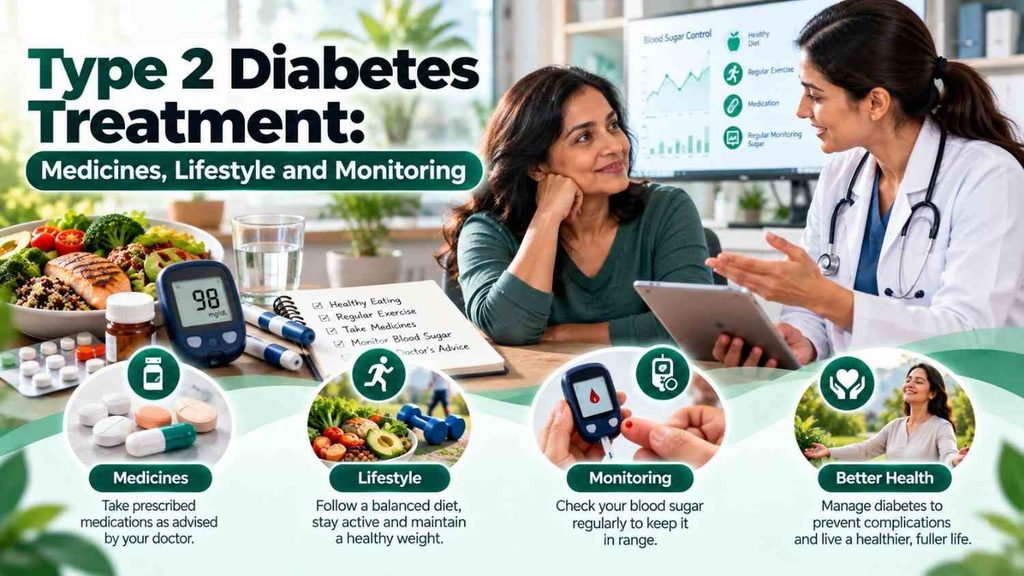
Type 2 diabetes treatment focuses on controlling blood sugar, improving the body’s response to insulin, and reducing the risk of long-term complications. A treatment plan may include prescription medicines, balanced meals, regular physical activity, weight management, and routine blood glucose monitoring. The right approach depends on a person’s blood sugar levels, overall health, existing medical conditions, and individual treatment goals.
Type 2 diabetes is a long-term condition in which the body does not use insulin effectively or cannot produce enough insulin to maintain healthy blood glucose levels. Although treatment may change over time, consistent care can help many people manage the condition and protect their health.
What Is Type 2 Diabetes Treatment?
Type 2 diabetes treatment is a personalized approach to managing blood glucose and lowering the risk of complications affecting the heart, kidneys, eyes, nerves, and blood vessels.
Treatment usually involves several connected steps:
- Medication: Taking prescribed medicines to improve blood glucose control when needed.
- Healthy eating: Choosing balanced meals and managing carbohydrate portions.
- Physical activity: Exercising regularly to improve insulin sensitivity and overall health.
- Weight management: Working toward a healthy, sustainable weight when appropriate.
- Blood sugar monitoring: Checking glucose levels as recommended by a healthcare professional.
- Regular medical checkups: Monitoring HbA1c, blood pressure, cholesterol, kidney health, and eye health.
Lifestyle changes are important, but they do not replace medication when medication is medically necessary. Your healthcare professional can help determine the most suitable combination of treatments.
1. Medicines Used for Type 2 Diabetes Treatment
Diabetes medicines work in different ways. Some reduce the amount of glucose produced by the liver, while others help the body use insulin more effectively, increase insulin release, or help the kidneys remove excess glucose.
The choice depends on factors such as blood glucose levels, heart and kidney health, body weight, side effects, affordability, and personal preferences.
Metformin
Metformin is a commonly used medicine for type 2 diabetes. It reduces glucose production in the liver and helps the body respond more effectively to insulin.
What to know:
- It is usually taken by mouth.
- It generally has a low risk of causing hypoglycemia when used alone.
- Digestive side effects, such as nausea or diarrhoea, may occur.
- Kidney function should be assessed before and during treatment as advised by a clinician.
Metformin is not suitable for everyone, and it is not automatically the best choice for every patient. Current treatment guidelines encourage individualized medication selection rather than relying on a single medicine for all people.
SGLT2 Inhibitors
Sodium-glucose cotransporter-2 (SGLT2) inhibitors help the kidneys remove more glucose through urine.
These medicines may be particularly useful for some people with type 2 diabetes who also have heart failure, chronic kidney disease, or certain cardiovascular risks.
Possible considerations include genital infections, dehydration, and, rarely, diabetic ketoacidosis. A clinician should assess whether this class of medicine is appropriate for your health circumstances.
GLP-1 Receptor Agonists and Related Medicines
GLP-1 receptor agonists help regulate blood glucose by supporting glucose-dependent insulin release, reducing inappropriate glucagon secretion, and slowing stomach emptying. Some also reduce appetite and support weight loss.
They may be considered for people who need additional glucose control or who could benefit from weight management or cardiovascular risk reduction. Depending on the medicine, treatment may involve injections or an oral formulation.
Possible side effects include nausea, vomiting, diarrhoea, or constipation. Suitability, precautions, and availability vary by medicine.
Other Diabetes Medicines
Other options may include:
- DPP-4 inhibitors: Help regulate hormones involved in blood glucose control.
- Sulfonylureas: Stimulate the pancreas to release more insulin but can cause low blood sugar and weight gain.
- Thiazolidinediones: Improve insulin sensitivity but may not be appropriate for people with certain conditions, including some forms of heart failure.
- Insulin: May be needed when blood glucose is very high, symptoms are significant, other treatments are insufficient, or particular medical circumstances require it.
Some people need more than one medicine to reach their treatment goals. Combination therapy should be selected and reviewed by a healthcare professional.
Important: Never start, stop, or change the dose of a diabetes medicine without medical guidance. Do not assume insulin means that treatment has failed; it can be an appropriate and sometimes necessary part of diabetes care.
2. Lifestyle Changes for Better Blood Sugar Control
Lifestyle changes are a central part of type 2 diabetes management. Small, sustainable adjustments often work better over time than strict routines that are difficult to maintain.
Follow a Balanced Diet
A balanced eating pattern can help manage blood glucose, body weight, blood pressure, and cholesterol.
Try to include:
- Non-starchy vegetables such as spinach, cauliflower, cucumber, beans, and other locally available vegetables.
- Protein sources such as lentils, beans, eggs, fish, tofu, or lean meat.
- Whole grains and high-fibre foods in portions suited to your needs.
- Whole fruits rather than relying on fruit juices.
- Healthy fats in moderate amounts, such as nuts, seeds, and suitable vegetable oils.
You do not necessarily need to eliminate rice, roti, or other carbohydrate-containing foods. Portion size, preparation, the overall meal, and your individual glucose response all matter.
Limit sugary drinks, frequent sweets, and highly refined foods. A registered dietitian or qualified healthcare professional can help you build an eating plan that fits your culture, preferences, budget, and health needs.
Manage Carbohydrate Portions
Carbohydrates generally have a greater direct effect on blood glucose than protein or fat. However, the amount and type of carbohydrate, along with the other foods in a meal, can influence the glucose response.
Practical strategies include:
- Keeping meal portions consistent when advised.
- Pairing carbohydrate foods with vegetables and protein.
- Choosing higher-fibre options when possible.
- Avoiding large quantities of sweetened beverages.
People respond differently to foods. Blood glucose records can help you and your healthcare professional identify patterns.
Aim for a Healthy Weight When Appropriate
For people who have overweight or obesity, gradual weight loss may improve insulin sensitivity and blood glucose control. Even modest, sustainable progress can benefit overall health.
Avoid crash diets, unverified diabetes cures, and extreme fasting plans. If you take insulin or medicines that can cause hypoglycemia, major changes to food intake may require medication adjustments under medical supervision.
3. Exercise and Physical Activity
Regular physical activity helps muscles use glucose and can improve insulin sensitivity, cardiovascular fitness, mood, and sleep.
For many adults, a useful goal is to work toward at least 150 minutes of moderate-intensity aerobic activity per week, spread across several days, along with strength-building activity when appropriate. Your personal target may differ depending on your health and fitness.
Examples include:
- Brisk walking.
- Cycling.
- Swimming or water-based exercise.
- Dancing.
- Strength exercises adapted to your ability.
- Breaking up long periods of sitting with short movement breaks.
If you are not active currently, begin gradually and increase your activity as tolerated. Consult a healthcare professional before starting strenuous exercise if you have significant complications, chest symptoms, mobility limitations, or other concerns.
If you use insulin or certain glucose-lowering medicines, exercise can cause blood sugar to fall. Ask your care team whether you need to check glucose before or after activity and how to prevent or treat low blood sugar.
4. How to Monitor Blood Sugar Levels
Blood glucose monitoring helps you understand how meals, physical activity, illness, stress, and medicines affect your glucose levels.
Your healthcare professional may recommend a home glucose meter, a continuous glucose monitor (CGM), or periodic laboratory testing. Not everyone needs the same monitoring schedule.
Common Times to Check Blood Glucose
Depending on your treatment plan, you may be asked to check:
- Before breakfast or after an overnight fast.
- Before or after meals.
- Before and after exercise in certain circumstances.
- At bedtime.
- Whenever symptoms suggest that blood sugar is too low or too high.
People who use insulin or medicines that can cause hypoglycemia may need more frequent monitoring than people whose treatment has a low risk of low blood sugar.
Record readings alongside relevant details, such as meal times, exercise, medication timing, illness, or symptoms. A single reading is only a snapshot; repeated patterns are usually more useful for treatment decisions.
What Blood Sugar Levels Should You Aim For?
Blood glucose targets vary with age, pregnancy status, duration of diabetes, other medical conditions, and the risk of hypoglycemia.
For many nonpregnant adults with diabetes, commonly used targets are:
| Measurement | Common reference target |
|---|---|
| Before meals | 80–130 mg/dL |
| 1–2 hours after the start of a meal | Below 180 mg/dL |
| HbA1c | Often below 7% for many adults |
These are general clinical targets, not universal rules. Your clinician may set different goals based on your individual circumstances. These targets are also not the same as diagnostic thresholds for diabetes.
Understand HbA1c
The HbA1c test estimates average blood glucose over approximately the previous two to three months. It helps healthcare professionals assess longer-term control and determine whether a treatment plan needs adjustment.
For many nonpregnant adults, an HbA1c goal below 7% may be appropriate, but some people need a less stringent or more stringent target. Conditions that affect red blood cells can also influence how HbA1c is interpreted.
Ask your healthcare professional how often you should have this test based on your current control and treatment changes.
5. Regular Health Checks and Complication Prevention
Managing type 2 diabetes involves more than measuring blood glucose. Regular reviews can help identify problems before they become more serious.
Depending on your medical history, your care plan may include:
- Kidney checks: Blood and urine tests to assess kidney function and detect early kidney damage.
- Eye examinations: Retinal screening to identify diabetes-related eye disease.
- Foot checks: Assessment for skin damage, reduced sensation, circulation problems, or wounds.
- Blood pressure monitoring: High blood pressure can increase cardiovascular and kidney risks.
- Cholesterol testing: Helps assess cardiovascular risk and guide treatment.
- Dental care: Good oral hygiene and regular dental visits help manage gum health.
- Smoking cessation: Avoiding tobacco reduces cardiovascular and other health risks.
The frequency of these checks depends on your risk factors, previous results, and the recommendations of your healthcare team.
6. When Does Type 2 Diabetes Treatment Need to Change?
Diabetes treatment may need adjustment when blood glucose remains above or below the agreed targets, side effects develop, other health conditions arise, or your lifestyle and care needs change.
Contact your healthcare professional if:
- Your glucose readings repeatedly exceed your target range.
- You experience recurring low blood sugar.
- You develop new medication side effects.
- Your weight changes significantly without explanation.
- You have difficulty following your current plan or obtaining prescribed medicines.
- You become pregnant or are planning a pregnancy.
Do not wait for symptoms before arranging routine diabetes reviews. High blood glucose can sometimes cause few noticeable symptoms while still increasing the risk of complications.
Can Type 2 Diabetes Go Into Remission?
Some people with type 2 diabetes achieve remission, often following substantial and sustained weight loss or other intensive interventions. Remission generally means blood glucose remains below the diabetes range for a period without glucose-lowering medication.
Remission is not the same as a permanent cure. Blood glucose can rise again, and ongoing health checks remain important. Do not stop prescribed medicines in an attempt to achieve remission without working with your healthcare professional.
7. When to Seek Medical Help
Arrange a medical appointment if you have persistent high blood glucose, frequent urination, unusual thirst, blurred vision, unexplained weight loss, or ongoing fatigue.
Seek urgent medical care for severe weakness, confusion, fainting, repeated vomiting, difficulty breathing, or signs of significant dehydration. If you use glucose-lowering medicines and develop severe hypoglycemia, confusion, seizures, or unconsciousness, someone should seek emergency help immediately. Do not give food or drink to a person who is unconscious.
If you are unwell and have diabetes, follow the sick-day instructions provided by your healthcare team. Some medicines may require temporary review during dehydration or acute illness, but you should not make medication changes without an appropriate plan.
Frequently Asked Questions
What is the best treatment for type 2 diabetes?
There is no single best treatment for everyone. The most suitable plan may combine medicines, balanced eating, physical activity, blood glucose monitoring, and management of cardiovascular and kidney risks. Treatment should be tailored to your needs by a qualified healthcare professional.
Can type 2 diabetes be controlled without medicine?
Some people may initially manage their blood glucose with lifestyle changes, but many need medication as well. Whether medicines are necessary depends on glucose levels, symptoms, other health conditions, and individual treatment goals. Do not delay prescribed treatment while trying lifestyle changes alone.
Which medicine is commonly used for type 2 diabetes?
Metformin is a commonly used option, but it is not the right choice for every person. Other medicines may be preferred or added because of their effects on heart health, kidney health, body weight, or glucose control. Your clinician can explain the options appropriate for you.
How often should I check my blood sugar?
The frequency depends on your medicines, glucose control, risk of hypoglycemia, and whether you use a glucose meter or continuous glucose monitor. Follow the schedule recommended by your healthcare professional.
What foods should people with type 2 diabetes avoid?
Rather than focusing on a universal list of forbidden foods, limit sugary drinks, frequent sweets, and highly refined foods. Pay attention to carbohydrate portions and choose a balanced eating pattern with fibre-rich foods, vegetables, suitable protein sources, and healthy fats.
Is type 2 diabetes treatment lifelong?
Type 2 diabetes is a long-term condition, and ongoing monitoring is important even when glucose improves. Some people may achieve remission and reduce or stop glucose-lowering medicines under medical supervision, but they still need follow-up care.
Take the Next Step Toward Better Diabetes Management
Effective type 2 diabetes treatment combines an individualized medication plan, sustainable lifestyle habits, regular blood glucose monitoring, and preventive health checks. The goal is not only to improve glucose readings but also to support long-term well-being and reduce the risk of complications.
If you have questions about diabetes symptoms, blood sugar levels, prevention, or ongoing management, explore the Diabetes & Endocrine health resources at Ghaziabad Clinic.

Pingback: What Is Insulin Resistance? 7 Key Facts and Diabetes Risk