
Understanding your blood sugar levels is an important part of protecting your long-term health. If your doctor has recommended an HbA1c test or you have recently received your report, you may be wondering whether your result is normal, indicates prediabetes, or falls within the diabetes range.
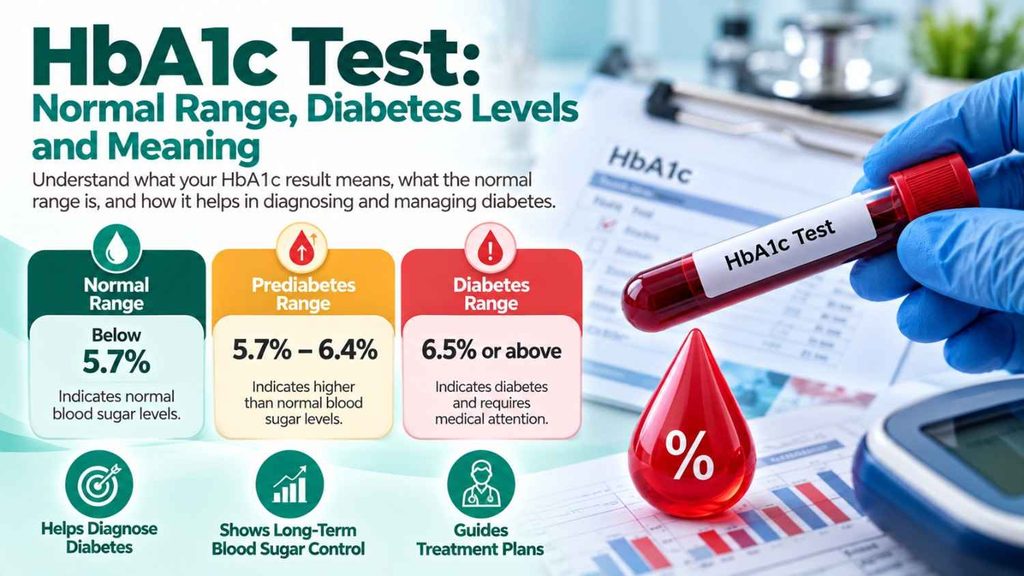
The HbA1c test normal range is generally below 5.7% for diagnosing diabetes in non-pregnant adults. Results between 5.7% and 6.4% indicate prediabetes, while a result of 6.5% or higher is within the diabetes diagnostic range. However, an abnormal result may need confirmation, and your medical history can influence how it should be interpreted.
Unlike a routine blood sugar test that measures glucose at a particular moment, the HbA1c test provides an estimate of your average blood glucose levels over approximately the previous two to three months.
In this guide, we explain the normal HbA1c range, diabetes and prediabetes levels, the meaning of different results, how the test works, and what you should discuss with your healthcare professional.
What Is an HbA1c Test?
The HbA1c test, also known as the haemoglobin A1c test, glycated haemoglobin test, or glycosylated haemoglobin test, is a blood test used to diagnose prediabetes and type 2 diabetes and monitor long-term blood glucose management.
Haemoglobin is a protein found in red blood cells that carries oxygen throughout your body. When glucose circulates in your bloodstream, some of it attaches to haemoglobin. The HbA1c test measures the percentage of haemoglobin that has glucose attached to it.
When blood glucose levels remain elevated over time, the percentage of glycated haemoglobin generally increases.
Healthcare professionals use this information to understand your longer-term blood sugar pattern rather than relying on a single glucose reading.
What Does the HbA1c Test Measure?
The HbA1c test measures the percentage of haemoglobin that has glucose attached to it. Because red blood cells typically circulate for around three months, the result reflects blood glucose exposure over that period, with more recent weeks contributing substantially.
For example, an HbA1c result of 6.0% does not mean your blood sugar is 6.0 mg/dL. It means that approximately 6% of the haemoglobin measured in the test is glycated.
A higher percentage generally indicates higher average blood glucose levels.
HbA1c Test Normal Range: Diabetes Levels Chart
The HbA1c test normal range is commonly interpreted using the following thresholds for diagnosing diabetes and prediabetes in non-pregnant adults.
| HbA1c result | Interpretation |
|---|---|
| Below 5.7% | Normal range |
| 5.7%–6.4% | Prediabetes range |
| 6.5% or higher | Diabetes diagnostic range |
These thresholds are widely used in clinical guidelines. A result in the diabetes range does not always establish a diagnosis on its own. Unless there is clear evidence of diabetes, healthcare professionals generally confirm the diagnosis with a repeat or another abnormal diagnostic test.
Pregnancy and certain medical conditions require different considerations.
What Is a Normal HbA1c Level?
An HbA1c below 5.7% is generally considered within the normal range for diabetes screening.
A normal result suggests that your average blood glucose has not reached the diagnostic threshold for prediabetes or diabetes. However, it does not rule out every blood sugar problem.
If you have symptoms of high blood sugar, a strong family history of diabetes, or other risk factors, your doctor may recommend additional testing even if your HbA1c result is normal.
What Does an HbA1c Level of 5.7% to 6.4% Mean?
An HbA1c between 5.7% and 6.4% falls within the prediabetes range.
Prediabetes means your blood glucose levels are higher than normal but below the usual threshold for diagnosing diabetes. It is associated with an increased risk of developing type 2 diabetes, although progression is not inevitable.
Your healthcare professional may recommend lifestyle changes, assessment of other risk factors, and follow-up blood glucose testing.
What Does an HbA1c of 6.5% or Higher Mean?
An HbA1c of 6.5% or higher falls within the diabetes diagnostic range.
This result suggests that your average blood glucose has been elevated over time. If you do not have clear symptoms or unequivocal hyperglycaemia, your doctor will generally confirm the finding with a repeat HbA1c test or another diagnostic blood test.
A higher HbA1c does not, by itself, determine the severity of every aspect of diabetes or whether complications are already present. Your healthcare professional will interpret it alongside other test results and your medical history.
HbA1c Levels Chart: What Do Different Percentages Mean?
Looking at individual HbA1c values can help you understand how your report compares with common diagnostic thresholds.
| HbA1c level | General interpretation |
|---|---|
| 4.5% | Within the normal range |
| 5.0% | Within the normal range |
| 5.6% | Within the normal range, close to the prediabetes threshold |
| 5.7% | Beginning of the prediabetes range |
| 6.0% | Within the prediabetes range |
| 6.4% | Upper end of the prediabetes range |
| 6.5% | Beginning of the diabetes diagnostic range |
| 7.0% | Diabetes diagnostic range; may be a treatment target for some people already diagnosed |
| 8.0% | Elevated result that warrants clinical assessment if used for diabetes monitoring |
| 9.0% or higher | Substantially elevated result that requires timely medical review |
Important: This table provides general educational interpretations, not individual diagnoses. An HbA1c result of 7%, for example, has a different role when diagnosing diabetes than when monitoring someone who already has the condition.
For people living with diabetes, the appropriate treatment target depends on age, duration of diabetes, other health conditions, medication-related risks, and individual circumstances.
How Is HbA1c Different From a Blood Sugar Test?
Although HbA1c and blood glucose tests both help assess diabetes, they measure different things.
A fasting blood glucose test measures your blood sugar after you have not eaten for at least eight hours. A random blood glucose test measures your level at a particular time, regardless of when you last ate.
An HbA1c test estimates your average glucose exposure over the previous two to three months.
| Feature | HbA1c test | Fasting blood glucose test |
|---|---|---|
| What it measures | Average glucose exposure over approximately 2–3 months | Blood glucose at one point in time |
| Fasting required | Usually no | Yes, at least 8 hours |
| Result format | Percentage | mg/dL or mmol/L |
| Main use | Diagnosing diabetes and prediabetes; monitoring diabetes | Diagnosing diabetes and prediabetes; assessing current glucose |
| Important limitation | Can be affected by certain blood conditions | Can be affected by short-term factors and normal biological variation |
Your doctor may use one test or combine several tests depending on your symptoms, medical history, and clinical circumstances.
Do You Need to Fast Before an HbA1c Test?
In most cases, you do not need to fast before an HbA1c test. You can usually eat and drink normally before providing your blood sample.
This makes the HbA1c test convenient for people who want to understand their longer-term blood glucose levels without arranging an overnight fast.
However, if your doctor orders other blood tests at the same appointment, such as a fasting glucose or certain lipid tests, fasting may still be necessary for those tests.
Follow the instructions provided by your laboratory or healthcare professional.
What Is the HbA1c Test Procedure?
The HbA1c test is generally a straightforward blood test performed at a diagnostic laboratory or healthcare facility.
The process usually involves three steps:
- Blood sample collection: A healthcare professional collects a small blood sample, commonly from a vein in your arm.
- Laboratory analysis: The sample is analysed using an appropriate method to measure glycated haemoglobin.
- Report interpretation: Your doctor reviews the result alongside your symptoms, risk factors, and any other relevant test results.
The procedure typically takes only a few minutes. You may experience brief discomfort or mild bruising at the collection site.
The time required to receive your report varies by laboratory.
What Can Affect HbA1c Test Results?
Although HbA1c is a useful test, certain medical conditions can make the result less reliable.
Anaemia and Iron Deficiency
Some types of anaemia and iron deficiency can affect HbA1c results. The direction and extent of the effect depend on the underlying condition and other factors.
If you have anaemia or are being treated for iron deficiency, tell your doctor before interpreting an unexpected HbA1c result.
Kidney Disease and Liver Disease
Certain forms of kidney disease and liver disease can affect red blood cell turnover or other factors that influence HbA1c measurement.
Your doctor may compare your HbA1c with direct blood glucose measurements when the results do not appear consistent.
Haemoglobin Variants
Some inherited haemoglobin variants, including certain forms associated with thalassaemia or sickle cell disease, can interfere with particular HbA1c testing methods.
If you have a known haemoglobin disorder, your healthcare professional can determine whether your test method is suitable.
Pregnancy and Recent Blood Loss
Pregnancy, recent blood loss, blood transfusions, and conditions that change the lifespan of red blood cells can affect the relationship between HbA1c and average blood glucose.
HbA1c is not the standard test for diagnosing gestational diabetes. Pregnancy-specific screening and diagnostic methods should be used as recommended by your healthcare professional.
Why Your HbA1c and Blood Sugar Results May Not Match
Sometimes an HbA1c result appears normal even though a fasting or post-meal blood glucose test is elevated, or the reverse may occur.
This difference can result from biological variation, the timing of glucose measurements, or factors that affect HbA1c accuracy.
Your doctor may recommend repeating the tests or using a different diagnostic method rather than relying on one number alone.
What Is a Good HbA1c Level for Someone With Diabetes?
The HbA1c level used to diagnose diabetes is not the same as the treatment target for someone already living with diabetes.
For many non-pregnant adults with diabetes, an HbA1c target below 7% may be appropriate. However, it is not a universal target.
Your healthcare professional may recommend a different goal based on your age, how long you have had diabetes, other medical conditions, risk of low blood sugar, treatment plan, and personal preferences.
For example, some people may benefit from a more stringent target, while others may need a less stringent target to reduce treatment-related risks.
Do not change your medicines or treatment plan solely because your HbA1c is above or below a particular number. Discuss the result with your treating clinician.
How Can You Improve Your HbA1c Levels?
If your HbA1c is elevated, your healthcare professional can help you develop a realistic plan to manage blood glucose levels. The right approach depends on whether you have prediabetes or diagnosed diabetes, as well as your overall health.
1. Follow a Balanced Eating Pattern
Include a variety of vegetables, pulses, whole grains, protein sources, and fibre-rich foods in appropriate portions.
Pay attention to the amount and type of carbohydrate you consume, including sugary drinks and highly refined foods. You do not necessarily need to eliminate all carbohydrates; portion sizes and overall dietary quality matter.
A registered dietitian or qualified healthcare professional can help you create a plan that fits your needs and food preferences.
2. Stay Physically Active
Regular physical activity can improve insulin sensitivity and help your body use glucose more effectively.
Many adults can work toward at least 150 minutes of moderate-intensity aerobic activity each week, alongside suitable strength-building activity. Start at a level appropriate for your health and gradually increase activity as advised.
If you have complications or other medical conditions, ask your doctor which activities are safe for you.
3. Take Prescribed Medicines as Directed
If you have diabetes and have been prescribed medication or insulin, follow your treatment plan as directed.
Do not stop, increase, or reduce your medication without discussing it with your healthcare professional. Your treatment may need adjustment based on your HbA1c results, glucose readings, and risk of low blood sugar.
4. Monitor Your Blood Glucose When Recommended
HbA1c provides a longer-term picture, while home glucose monitoring or continuous glucose monitoring can show patterns throughout the day.
Your doctor can advise whether monitoring is necessary and how frequently to check your levels. Monitoring needs differ depending on the type of diabetes and the treatment being used.
5. Attend Follow-Up Appointments
Regular reviews help your healthcare professional assess progress, review medicines, and identify any complications or additional risk factors.
HbA1c is commonly checked about every three months when treatment has changed or goals are not being met. For people whose glucose levels are stable and who are meeting their treatment goals, testing may be needed about twice a year.
The appropriate interval should be decided with your treating clinician.
When Should You See a Doctor About Your HbA1c Result?
You should discuss your HbA1c result with a healthcare professional if:
- Your result is within the prediabetes or diabetes diagnostic range.
- Your HbA1c has increased compared with previous reports.
- Your result does not match your home or laboratory blood glucose readings.
- You have symptoms such as excessive thirst, frequent urination, unexplained weight loss, or persistent fatigue.
- You have risk factors for diabetes even if your HbA1c is currently normal.
If your report shows a very high glucose level and you develop vomiting, abdominal pain, deep or rapid breathing, confusion, or severe drowsiness, seek emergency medical care. These symptoms can indicate a serious complication and should not wait for a routine appointment.
Early evaluation can help you understand what your result means and determine the next appropriate steps.
Frequently Asked Questions
What is the normal HbA1c range?
An HbA1c below 5.7% is generally considered normal for diabetes screening in non-pregnant adults. A result of 5.7%–6.4% falls within the prediabetes range, while 6.5% or higher falls within the diabetes diagnostic range.
Is an HbA1c level of 5.8% normal?
No. An HbA1c of 5.8% falls within the commonly used prediabetes range. It does not mean you will definitely develop diabetes, but it is a reason to discuss your risk factors and follow-up plan with your healthcare professional.
Does an HbA1c of 6.0% mean diabetes?
An HbA1c of 6.0% falls within the prediabetes range, not the usual diabetes diagnostic range. Your doctor may recommend lifestyle changes and appropriate follow-up testing based on your overall health.
Is an HbA1c level of 6.5% diabetes?
An HbA1c of 6.5% meets the usual laboratory threshold for diagnosing diabetes. Unless there is clear evidence of diabetes, the result generally requires confirmation with a repeat or another abnormal diagnostic test.
What does an HbA1c of 7% mean?
For someone without a previous diagnosis, an HbA1c of 7% is within the diabetes diagnostic range. For someone already living with diabetes, it may be close to their individual treatment target. Your clinician should interpret the number according to your circumstances.
Can I eat before an HbA1c test?
Yes. Fasting is usually not required for an HbA1c test. However, follow your healthcare professional’s instructions if other tests are being performed at the same time.
How often should HbA1c be checked?
People with diabetes often have their HbA1c checked about every three months when treatment changes or glucose goals are not being met, and about twice a year when their condition is stable. People with prediabetes or other risk factors may need a different schedule.
Can HbA1c be normal even if blood sugar is high?
Yes. Some conditions can make HbA1c less reliable, and the test may not capture every short-term glucose fluctuation. If HbA1c and other glucose measurements do not match, your doctor may recommend further testing.
Is the HbA1c test used to diagnose gestational diabetes?
HbA1c is not the standard diagnostic test for gestational diabetes. Pregnancy-specific screening and diagnostic tests should be used according to your healthcare professional’s recommendations.
Understand Your Blood Sugar and Take the Next Step
Understanding the HbA1c test normal range can help you make sense of your blood test report and have a more informed conversation with your healthcare professional.
A result below 5.7% is generally within the normal range, 5.7%–6.4% indicates prediabetes, and 6.5% or higher falls within the diabetes diagnostic range. However, diagnosis and treatment decisions should always consider the full clinical picture, including other tests and conditions that may affect the result.
If you want to learn more about diabetes, blood sugar management, and related hormonal health conditions, explore the Diabetes & Endocrine Health section at Ghaziabad Clinic.
Explore relevant health information and discuss your concerns with a qualified healthcare professional to understand which tests, monitoring strategies, and care options may be suitable for you.
