Ghaziabad Clinic

What Are Bones & Joints?

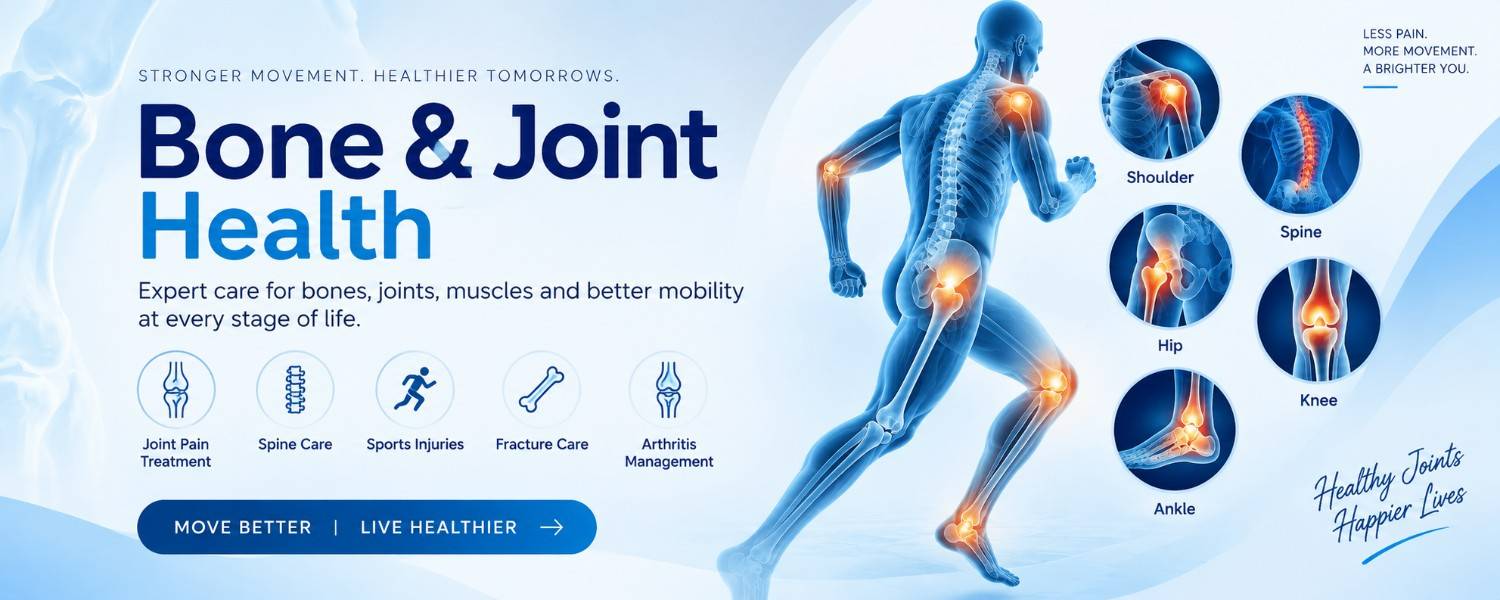
Bones provide structure and support to the body, while joints connect bones and allow movement. Muscles, tendons, ligaments and cartilage work together with bones and joints to help us walk, bend, lift and perform everyday activities.

Good bone and joint health is important at every age. Problems can develop because of aging, injuries, inflammation, excessive weight, nutritional deficiencies, genetics or certain medical conditions.

Common Bone & Joint Problems

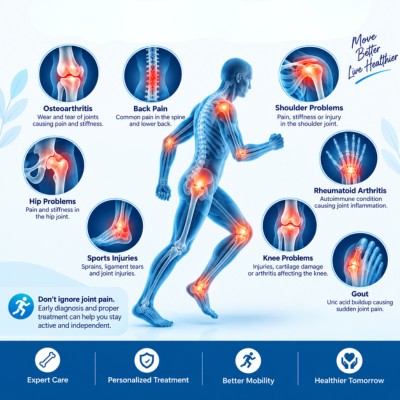
Osteoarthritis

Osteoarthritis is one of the most common forms of arthritis. It develops when tissues within a joint gradually change and break down, affecting cartilage, bone and other joint structures.

Osteoporosis

Osteoporosis is a bone disease in which bone mass or density decreases and bones become weaker, increasing the risk of fractures. It is often called a silent disease because many people have no symptoms until a fracture occurs.

How Are Bone & Joint Problems Diagnosed?

Doctors may use several methods depending on the symptoms.

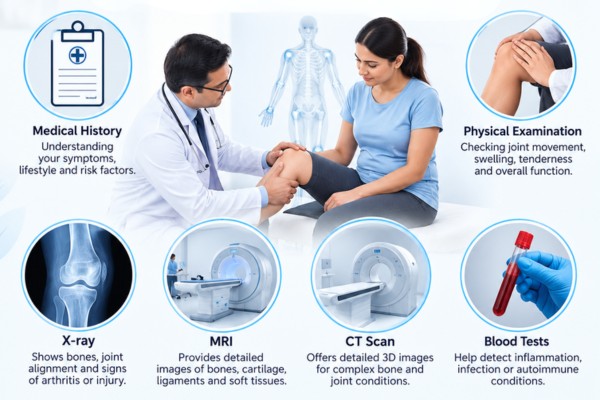
Medical History
  • Where the pain occurs
  • When it started
  • Previous injuries
  • Family history
  • Other medical conditions
  • Medicines and supplements
  • Activities that make symptoms better or worse

The doctor may check:

  • Joint movement
  • Swelling
  • Tenderness
  • Muscle strength
  • Joint stability
  • Walking pattern

Depending on the problem, tests may include:

  • X-ray
  • MRI
  • CT scan
  • Ultrasound
  • Bone mineral density test

Treatment for Bone & Joint Problems

Treatment depends on the specific condition and its severity.

Possible treatments include:


  • Rest and activity modification
  • Physiotherapy
  • Exercise
  • Weight management
  • Pain-relieving medicines
  • Anti-inflammatory medicines when appropriate
  • Steroid injections in selected conditions
  • Medicines for arthritis or osteoporosis
  • Mobility aids
  • Braces or supports
  • Surgery for certain severe injuries or joint damage

Exercise for Strong Bones & Healthy Joints

Regular physical activity can support muscle strength, mobility and bone health. Good options may include:

  • Walking
  • Strength training
  • Stretching
  • Balance exercises
  • Swimming
  • Cycling
  • Low-impact exercises
  • Yoga, when appropriate

If you already have significant joint pain, an injury or a diagnosed bone condition, ask your doctor or physiotherapist which exercises are safe for you.

Maintaining a Healthy Weight

Maintaining a healthy weight can reduce stress on weight-bearing joints such as the knees and hips.

A healthy approach includes:

  • Balanced meals
  • Regular physical activity
  • Adequate protein
  • Good sleep
  • Limiting highly processed foods
  • Gradual, sustainable weight management

Bone & Joint Health at Different Ages

Children & Teenagers
Focus on nutrition, physical activity, healthy growth and injury prevention.
Young Adults
Sports injuries, repetitive activities and poor posture can contribute to musculoskeletal problems.

Middle Age
Joint pain, back problems and early arthritis may become more common.
....
Older Adults
Osteoarthritis, osteoporosis, falls and fractures become increasingly important concerns.


When Should You See a Doctor?

See a healthcare professional if:

  • Joint pain continues or keeps returning
  • Pain affects sleep or daily activities
  • Swelling keeps coming back
  • Joint stiffness is persistent
  • You have unexplained bone pain
  • You have difficulty walking
  • You experience repeated falls
  • You have a history of fractures
  • Your symptoms are getting worse

Persistent joint pain should be evaluated rather than self-diagnosed.

Which Doctor Treats
Bone & Joint Problems?

Depending on the problem, you may need to see:

Untitled design 10-100kb
Untitled design 11-100kb
Screenshot 2026-09-16 122008-100kb

Orthopedic Doctor

For bones, joints, fractures, sports injuries and many musculoskeletal problems.

Rheumatologist

For arthritis, autoimmune diseases and inflammatory joint conditions.

Physiotherapist

For rehabilitation, movement, muscle strength and recovery after many injuries.

General Physician

For initial evaluation of unexplained bone or joint symptoms and referral to the appropriate specialist.

What You Can Do

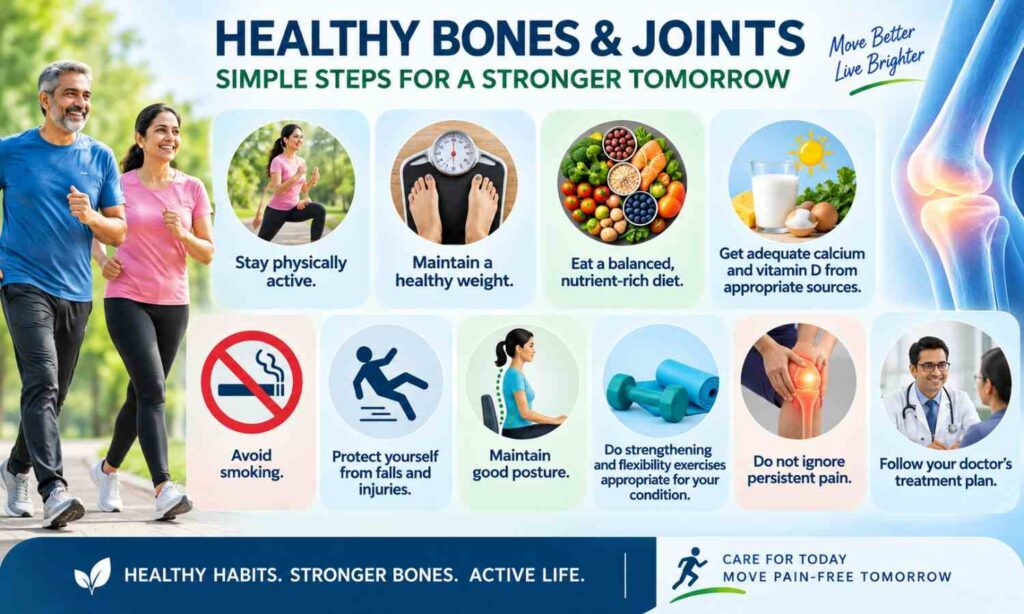
  • Stay physically active.
  • Maintain a healthy weight.
  • Eat a balanced, nutrient-rich diet.
  • Get adequate calcium and vitamin D from appropriate sources.
  • Avoid smoking.
  • Protect yourself from falls and injuries.
  • Maintain good posture.
  • Do strengthening and flexibility exercises appropriate for your condition.
  • Do not ignore persistent pain.
  • Follow your doctor’s treatment plan.
Translate »
Scroll to Top